
- Background checks
- Closing loopholes
- Banning assault weapons
- Implementing Red Flag Laws
- Mandating safe storage
- Requiring training and licensing
- Improving mental health services
Comprehensive Background Checks
Effective gun reform begins with comprehensive background checks. Instituting thorough checks before purchasing firearms serves as the first line of defense in preventing individuals with a history of violence, mental illness, or criminal records from obtaining guns.
Background checks, when done properly, can significantly reduce the likelihood of gun-related incidents. By screening for violent pasts, mental health flags, and criminal records, we create barriers that make our communities safer.
Ensuring comprehensive checks at every level—gun shows, private sales, and retail shelves—closes the gaps that allow guns to end up in the wrong hands. It's a step towards a safer society, making it more difficult for potentially dangerous individuals to acquire weapons.
Establishing exhaustive background checks forms the bedrock of sensible gun reform. Like a gatekeeper, it doesn't entirely stop violence but certainly makes it tougher for threats to slip through unnoticed.

Closing Gun Show and Private Sale Loopholes
One of the most glaring gaps that needs immediate attention is the gun show and private sale loophole. At present, many states allow individuals to buy firearms at gun shows or through private transactions without undergoing a background check.
Closing these loopholes isn't just a bureaucratic necessity; it's a common-sense reform. When gun sales at shows and through private transactions require the same stringent background checks as those at retail outlets, we ensure consistency in safety standards.
Proper documentation and regulation of all gun sales create a much-needed paper trail. This aids in tracing guns used in crimes and promotes accountability among sellers and buyers. It acts as a deterrent for illegal sales and ensures that if a gun is misused, law enforcement can quickly trace its origins.
Implementing these changes would also respect responsible gun owners who already follow the rules. It levels the playing field and underscores the message that owning a gun carries responsibilities—not just rights.
To handle this issue, we need uniformity in our laws—a patchwork of regulations is far too easy to exploit. By requiring background checks at every point of sale, we send a clear message that safety and responsibility are non-negotiable.
Closing gun show and private sale loopholes is about ensuring that every gateway to gun ownership is guarded by the same protective measures. It's a straightforward step toward a safer society, demonstrating our commitment to ensuring that every firearm in our communities is possessed by someone who fully passed through the necessary checks.

Banning Assault Weapons
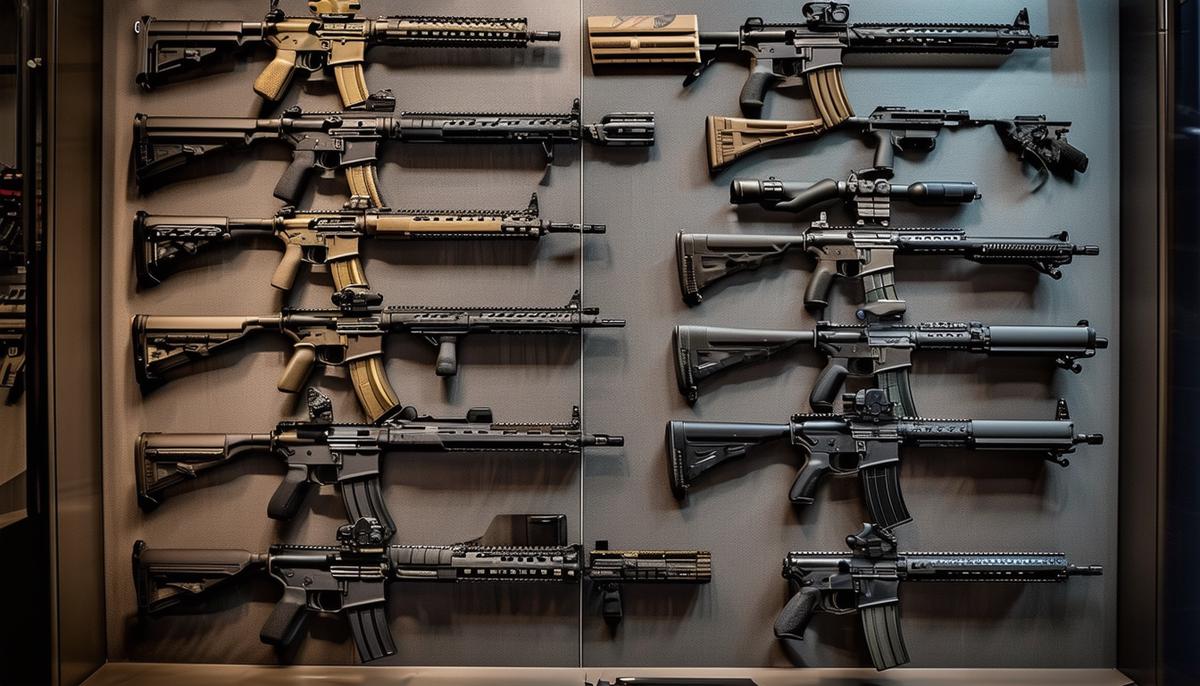
Banning military-style assault weapons and high-capacity magazines is a necessary step in the journey towards meaningful gun reform. These firearms, designed originally for military use, are intended to inflict maximum damage in the shortest amount of time. This efficiency in causing destruction does not translate well into civilian life.
Assault weapons have been the firearm of choice in numerous mass shootings, resulting in significant losses. Events like the tragic shooting in Orlando's nightclub and the rampage in Las Vegas during a concert underscore the impact these firearms can have. When mass shootings occur, assault weapons often figure into the equation, elevating the death toll.
Banning these weapons isn't about stripping responsible gun owners of their rights. It's about prioritizing lives and acknowledging that in the hierarchy of needs, the right to life outweighs the recreational use of military-grade firepower.
Countries that have enacted similar bans have seen substantial decreases in gun violence. Australia's policy shift following the Port Arthur massacre is a salient example. In the years following their comprehensive gun control measures, which included banning semi-automatic rifles and shotguns, Australia has not experienced a single mass shooting on the scale of Port Arthur.
The act of prohibiting these firearms would support existing law enforcement efforts. It would provide a level of consistency in regulations that would help police officers in their day-to-day operations. By reducing the circulation of such high-risk firearms, we protect potential victims and make the jobs of those sworn to protect us safer and more manageable.
At its core, the ban on military-style assault weapons and high-capacity magazines is about aligning our policies with our values. It's about ensuring that we prioritize the safety of our communities and make it clear that some weapons are simply too dangerous to be in civilian hands.
Red Flag Laws
Red Flag Laws enable law enforcement and family members to petition for the temporary removal of firearms from individuals deemed to be a threat to themselves or others. These laws act as a preemptive measure, aimed at preventing potential tragedies before they occur.
The effectiveness of Red Flag Laws in preventing gun violence is significant. In states where they have been implemented, there have been numerous instances where potential mass shootings and suicides have been thwarted. These laws provide a sensible approach to addressing situations where individuals may pose an imminent threat.
One key benefit of Red Flag Laws is their focus on the context rather than just the individual. By assessing threats holistically, these laws allow for interventions based on behavior and risk, rather than waiting for a crime to occur. This shifts the focus from reactive to proactive, emphasizing prevention over punishment.
Red Flag Laws typically include rigorous due process protections to ensure fair and justified implementation. The petitions for removal of firearms require evidence and are often subject to judicial review, ensuring that actions taken are both justified and temporary.
These laws not only focus on preventing violence but also often involve provisions for mental health support. Once a firearm is temporarily removed, individuals can be connected to the resources they need to address the underlying issues causing concern, thereby supporting their long-term well-being.
Red Flag Laws also bolster community safety and offer reassurance to those who may be living in fear of an individual's potential for violence. It offers a sense of agency to family members and law enforcement officers who might otherwise feel helpless.
The integration of Red Flag Laws into the broader structure of gun reform is about striking a balance between protection and freedom. It's an acknowledgment that while gun ownership is a right, it comes with responsibilities that include ensuring the safety of oneself and others.
By implementing Red Flag Laws, we take a significant step towards a safer society, where potential threats can be addressed before they escalate into tragedy. This form of legislation underscores our commitment to proactive safety measures, establishing a framework where preventing violence is as critical as addressing it after the fact.

Comprehensive Background Checks
At the heart of effective gun reform is the commitment to comprehensive background checks. This foundational step serves as a crucial barrier against potential threats, making it significantly harder for dangerous individuals to obtain firearms. By prioritizing this measure, we take a decisive leap toward a safer society.
Comprehensive background checks involve:
- Closing loopholes in existing background check systems
- Extending checks to all gun sales, including private and online transactions
- Improving the quality and completeness of records in background check databases
- Increasing the time allowed for checks to be completed before a sale can proceed
Studies have shown that states with universal background check laws have lower rates of gun-related deaths. Implementing these checks nationwide could significantly reduce gun violence and keep firearms out of the wrong hands.
However, background checks alone are not enough. They must be part of a broader strategy that includes:
- Licensing requirements for gun ownership
- Mandatory waiting periods
- Restrictions on high-capacity magazines
- Safe storage laws
- Red flag laws to temporarily remove guns from those deemed a risk
By combining comprehensive background checks with these additional measures, we can create a more robust system to prevent gun violence while respecting the rights of responsible gun owners.
"Comprehensive background checks are not about taking guns away from law-abiding citizens. They're about keeping guns out of the hands of people who shouldn't have them." – Gun safety advocate
Implementing universal background checks will require political will and cooperation between federal and state governments. While challenges exist, the potential to save lives makes this reform a critical priority in addressing America's gun violence epidemic.