
Historical Context and Evolution of UBI
Universal Basic Income (UBI) has roots stretching back to the 19th century. Economists, politicians, and thinkers have contributed to its evolution over time. Juliet Rhys-Williams, a British economist, suggested a social security transfer to cover basic subsistence in 1943. In the 1960s, Milton Friedman proposed a negative income tax, while James Tobin made a case for an income guarantee.
Philippe Van Parijs further developed these ideas, co-founding the Basic Income Earth Network (BIEN) in 1986. This network facilitated global discussions on UBI, with leaders from various countries evaluating its potential.
Modern proponents have linked UBI to concerns about automation and job losses. Figures like Timotheus Höttges of Deutsche Telekom have lent credibility to the concept. Pope Francis has also entered the debate, proposing UBI as a tool for social justice.
In South Africa, discussions have centered on transforming temporary distress grants into a UBI format. The COVID-19 pandemic unexpectedly demonstrated how emergency payments could spur recovery and make UBI seem more achievable.
This ongoing discourse involves leaders, economists, and visionaries across continents, each adding new perspectives to the concept of UBI. Whether addressing social safety nets or preparing for technological changes, UBI remains a persistent topic in efforts to address poverty and inequality.
Economic Implications of UBI
Universal Basic Income (UBI) could potentially serve as a catalyst for economic change. Advocates argue that by providing a steady income floor, UBI could effectively reduce poverty and alleviate economic hardships in many communities.
The potential ripple effects of monthly cash transfers are significant:
- Parents, freed from worrying about basic expenses, could invest in their children's education or save for emergencies.
- Studies, such as the one conducted in Kenya, have shown improved diets and increased entrepreneurship among UBI recipients.
UBI might also help narrow income inequality by recalibrating financial disparities. However, this doesn't imply redistributing wealth from the rich to the poor, but rather creating a more level economic playing field.
A key debate surrounding UBI concerns its impact on labor markets. Critics argue it could reduce the incentive to work, while proponents suggest it might fuel creativity, innovation, and self-employment by freeing people from menial, uninspiring jobs.
Funding remains a central challenge. While critics warn of potentially high taxes, proponents suggest alternatives such as taxing the wealthy or redistributing existing welfare funds. Crafting a balanced, fair tax strategy is crucial for UBI's financial feasibility.
The relationship between UBI and existing welfare systems is another point of contention. Some view UBI as a replacement for complex benefit systems, while others advocate for it to complement existing social safety nets.
UBI represents a significant shift in economic thinking, with the potential to reshape economies as profoundly as past industrial revolutions. It aims not just to address symptoms of financial inequity, but to fundamentally alter how we approach economic fairness and opportunity.

UBI and Social Justice
Universal Basic Income (UBI) carries the promise of social justice at its core, offering a platform for genuine equality. It aims to alleviate disparities that have persisted, especially for marginalized groups. As income inequality widens, UBI presents a potential corrective measure, enabling those historically sidelined due to race, gender, or economic background to thrive.
The universality of UBI acknowledges the inherent dignity of all people, moving from a system of conditional aid to one where support is a birthright. This approach could help address racial and gender inequities rooted in historical injustices.
"We believe that the federal government is responsible and obligated to give every person employment or a guaranteed income." – Black Panther Party's 10-point platform, 1966
The concept of targeted universalism within UBI, known as UBI+, offers a nuanced approach to reparative justice. It acknowledges the unique challenges faced by communities of color, potentially serving as an indirect form of reparations for historical exclusions and inequities.
UBI+ recognizes that while everyone benefits from a basic income, those who've faced historical oppression might need additional support to truly level the playing field. This approach aims to empower the most disenfranchised, potentially uplifting society as a whole.
Activists and leaders globally view UBI not as charity, but as a matter of fairness. It represents a fundamental shift in societal values, ensuring that economic barriers no longer dictate one's life trajectory. UBI champions a world where financial security is a given, allowing everyone the freedom to aspire beyond immediate survival.
By prioritizing social equity through UBI, we're not just addressing economic inequities on a surface level, but potentially reshaping our socio-economic structure with compassion and justice at its core.
Global Perspectives and Case Studies
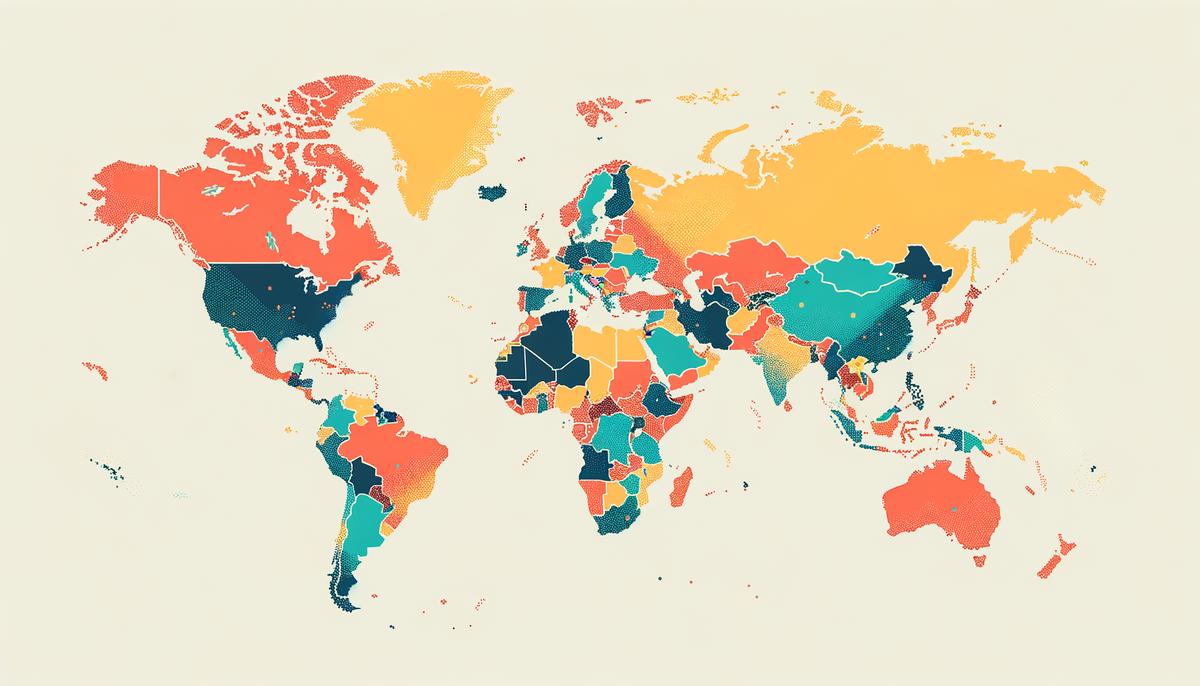
Universal Basic Income (UBI) trials and discussions worldwide offer diverse insights into its potential implementation and effects. Finland's 2017-2018 UBI experiment, where 2,000 unemployed individuals received a monthly €560 payment, showed improved well-being and reduced stress among participants, though it didn't significantly change employment rates. This trial highlighted the psychological and social benefits of UBI, demonstrating that financial security can boost morale and trust in government systems.
In India, policymakers have considered UBI as a potential replacement for complex welfare schemes, aiming to address poverty and corruption. However, implementing UBI nationwide presents significant fiscal challenges given India's large population, making it a topic of debate rather than immediate action.
South Africa's approach to UBI is deeply tied to its socio-political context. The country has considered transforming temporary Covid-19 relief grants into a full-fledged UBI to tackle widespread inequality. While there's strong support from civil society groups, financial and political realities pose significant hurdles.
Key Insights from Case Studies:
- Finland: Focus on mental health benefits
- India: Fiscal challenges in a large population
- South Africa: Political considerations in transforming existing grants
These case studies provide distinct insights into UBI's potential and limitations. Each example emphasizes that while UBI can be a universal solution, its implementation requires strategies tailored to each country's unique socio-economic and cultural context.
These international experiences broaden our understanding of UBI's practical applications and impacts, encouraging dialogue on how global lessons can inform local solutions in the pursuit of economic justice.
Challenges and Criticisms of UBI
Universal Basic Income (UBI) faces several challenges and criticisms. A primary concern is its potential impact on work incentives, with critics arguing that a guaranteed income might reduce motivation to participate in the labor market.
Financial sustainability is another significant challenge. Funding a national UBI would likely require substantial tax increases or redirection of existing welfare budgets, which could potentially stifle economic growth or face political resistance. The complexity of dismantling entrenched welfare programs in favor of UBI also presents practical challenges.
Some critics worry that UBI might exacerbate rather than reduce socio-economic divides if not paired with broader reforms in areas like housing, education, and healthcare. There's a concern that UBI could serve as a superficial solution to deeper systemic issues.
However, alternative viewpoints suggest potential scenarios where UBI could thrive:
- Implementing UBI as part of a larger economic strategy that includes full employment opportunities
- Providing educational access to support transitions in volatile labor markets
- Revitalizing economic activity through increased consumer spending power
Successful implementation of UBI may depend on rigorous policy design that draws insights from global trials while adapting to specific cultural, economic, and socio-political contexts. Engaging communities in policy dialogues and ensuring transparency throughout the process could help bridge the gap between aspiration and practice.
While criticisms exist, they serve to refine the approach to UBI, urging consideration of its efficacy when harmonized with other social mechanisms. With careful planning, UBI might contribute to crafting a future where economic justice and opportunity for all become more attainable.

Universal Basic Income represents an ongoing effort to address economic fairness and social justice. It challenges us to reconsider how society can tackle inequality and poverty through transformative change. As we consider its potential, we're reminded that pursuing a more equitable world involves both challenges and opportunities, encouraging us to envision a future where financial security is more widely shared.
- Rhys-Williams J. Something to Look Forward To. Macdonald; 1943.
- Friedman M. Capitalism and Freedom. University of Chicago Press; 1962.
- Tobin J. The Case for an Income Guarantee. Public Interest. 1966;15:31-41.
- Van Parijs P. Real Freedom for All: What (if Anything) Can Justify Capitalism? Oxford University Press; 1995.
- Black Panther Party. Ten-Point Program. 1966.
- King ML. Where Do We Go from Here: Chaos or Community? Harper & Row; 1967.
- Kangas O, Jauhiainen S, Simanainen M, Ylikännö M. The Basic Income Experiment 2017–2018 in Finland. Preliminary results. Reports and Memorandums of the Ministry of Social Affairs and Health. 2019;9.