
Historical Context and Legislative Progress
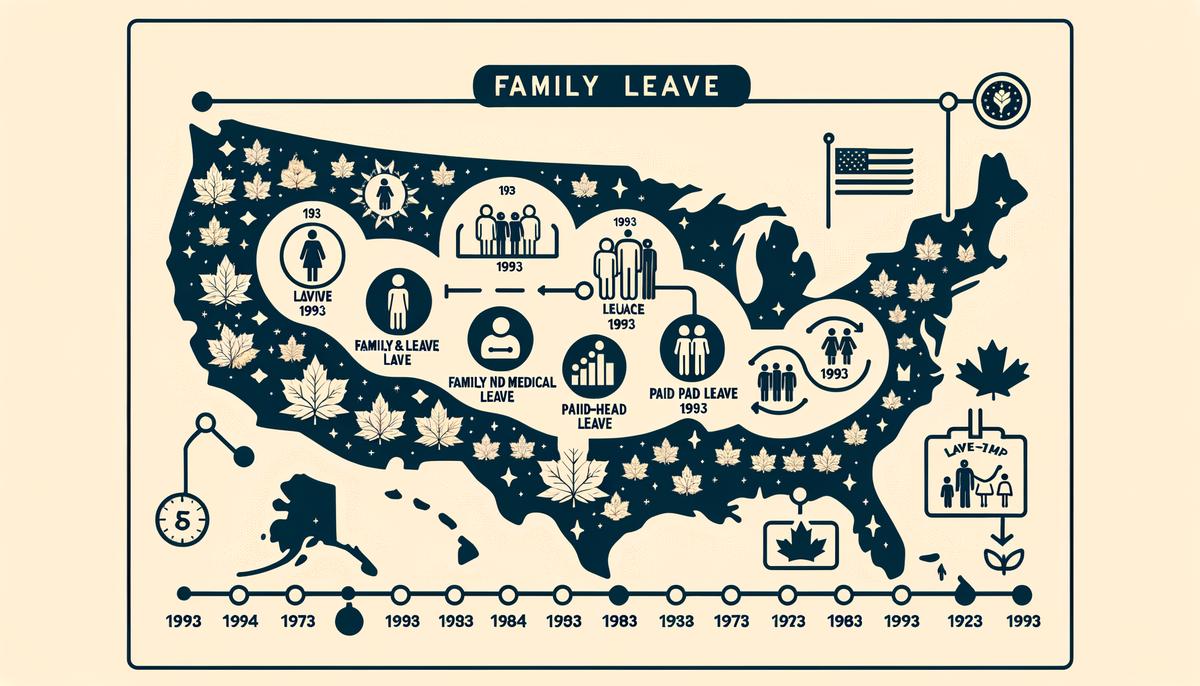
Paid family leave policies have evolved significantly in the United States. The Family and Medical Leave Act (FMLA) of 1993 marked a turning point, offering 12 weeks of unpaid leave. However, it fell short of advocates' vision for comprehensive paid leave.
In recent decades, states have taken the initiative:
- California pioneered in 2004 with its Paid Family Leave (PFL) program, providing partial wage replacement.
- New Jersey followed, sparking a grassroots movement.
These programs demonstrated the feasibility of paid leave, challenging concerns about cost and disruption.
Technological advancements have altered work dynamics, emphasizing the value of workers. Studies linking paid leave to healthier families and increased productivity have strengthened the case for such policies. However, progress has been uneven due to political polarization.
Recent developments, including Minnesota's state law securing paid leave, reflect shifting priorities in Democratic-majority states. These changes underscore a growing recognition of family leave as a necessity, intersecting with issues like gender equality and healthcare.
While legislative victories punctuate a timeline of persistent advocacy, the fight for national consistency continues. Paid family leave remains a focal point for future policy debates, driven by the vision of reconciling work and family responsibilities.
Current Political Climate and Bipartisanship
The evolution of paid family leave policy reflects broader shifts in American politics. Governor Tim Walz's trajectory from bipartisan centrist to progressive leader exemplifies this change. Minnesota's transformation under Walz, with its Democratic-controlled legislature, has enabled ambitious social reforms, including paid family leave implementation.
This shift underscores a responsiveness to evolving societal needs, emphasizing:
- Family well-being
- Gender equality
- Economic stability
However, challenges persist. Political opponents often characterize these initiatives as costly or overreaching, while proponents argue for their long-term societal benefits.
The debate surrounding paid family leave illustrates how partisan divides can both hinder and propel legislative progress. It raises questions about adaptability and consensus-building in an increasingly polarized political landscape, offering insights into the broader quest for social justice and equity in America.

Impact of Paid Family Leave on Families and Society
Paid family leave has far-reaching effects on families and society. Studies have shown its potential to:
- Reduce childhood poverty
- Bolster family stability
- Drive broader societal progress
States with comprehensive leave policies experience lower rates of infant mortality and improved maternal health outcomes, translating to tangible savings for public health systems.
This policy serves as a powerful tool in combating economic inequality, particularly for low-income families where income continuity during medical necessities or caregiving can significantly alter life trajectories. California's early adoption of paid leave policies demonstrates improvements in employee retention and workplace satisfaction, contributing to a more stable labor market.
Paid family leave also addresses gender disparities in the workforce by normalizing leave for all parents and encouraging shared parental responsibilities. This shift promotes gender equality both at home and in the workplace, fostering more inclusive work cultures.
"As more states enact these policies, the societal benefits multiply, signifying a collective step toward prioritizing health, family, and community well-being."
The expansion of paid family leave reflects a growing appreciation for work-life balance and supports a more equitable society.
Challenges and Criticisms Against Paid Family Leave
Skepticism surrounding paid family leave often centers on economic concerns. Critics argue that mandating paid leave could:
- Inflate business costs
- Force companies to reduce workforce sizes
- Pass expenses onto consumers
Small businesses, in particular, express apprehension about their ability to shoulder such costs without jeopardizing operations.
Political opposition further complicates progress. Some frame paid family leave as government overreach, challenging the ethos of free-market autonomy. These ideological divides accentuate the difficulties of advancing legislation at both state and federal levels.
Implementing these policies also poses practical obstacles. Logistical challenges such as determining funding mechanisms and establishing administrative frameworks present significant hurdles. States must address the intricacies of designing programs that efficiently deliver benefits without overburdening public resources.
The issue of equitable access remains a concern. Critics highlight that not all populations may benefit equally, potentially exacerbating existing disparities if solutions are not thoughtfully crafted. Addressing these inequalities requires careful consideration of diverse family structures and socioeconomic contexts.
Despite these challenges, the push for paid family leave persists, driven by its potential to uplift families and communities. As policymakers grapple with these critiques, the ongoing dialogue will shape the evolution of paid family leave, striving for a balance between economic pragmatism and social justice.

The journey of paid family leave in America reflects a broader shift in societal values and priorities. It challenges us to envision a future where work and family coexist harmoniously. The progress made thus far represents not just legislative victories but affirmations of collective resolve, urging us toward a more equitable society where every family receives support during crucial moments.
- Karnowski S. Minnesota lawmakers pass 'historic' paid family and medical leave. AP News. May 16, 2023.