
Racial Justice Amendments
The proposed amendments to the New York City Charter aim to reshape racial equity and economic justice. They seek to:
- Acknowledge historical atrocities
- Establish a Racial Equity Office
- Recalculate the city's true cost of living
The Racial Equity Office, led by a Chief Equity Officer, would embed fairness into city governance decisions, budgets, and plans. A commission would ensure agencies implement their equity plans effectively.
The cost of living amendment intends to provide a more realistic metric for determining public assistance eligibility, moving beyond outdated federal poverty limits.
While Mayor Adams supports these changes, their success depends on public action and voter engagement. The amendments strive to transform decision-making processes, ensuring equity becomes a cornerstone of New York City's future.
Environmental Bond Act
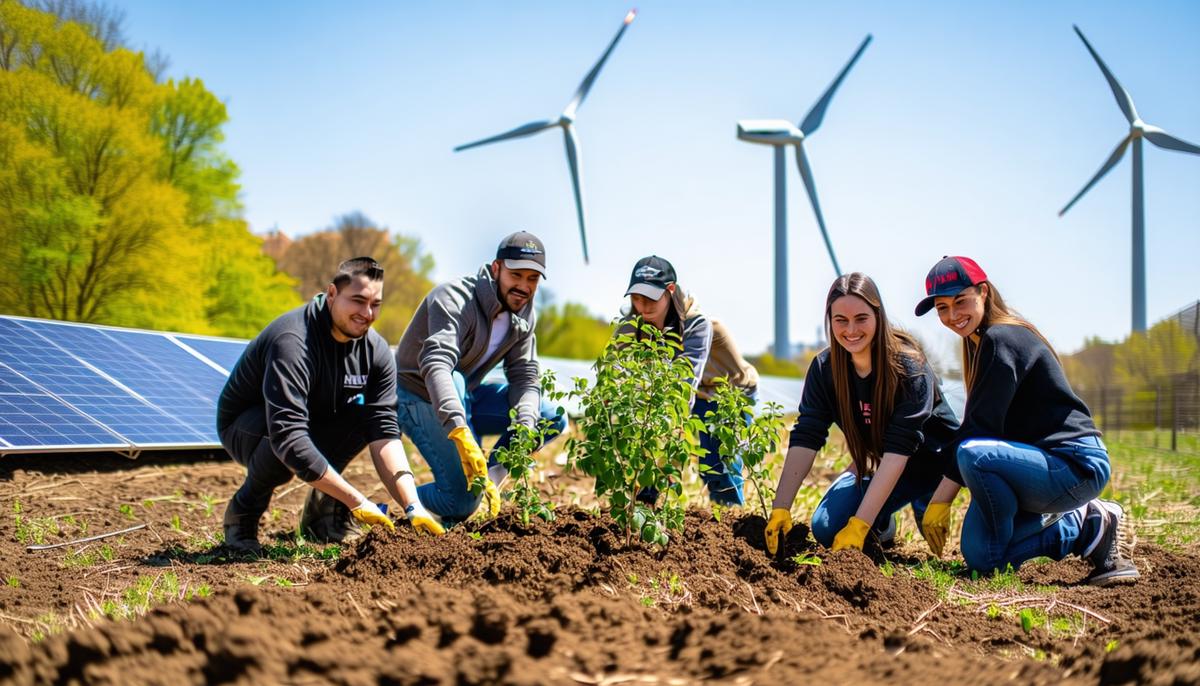
The Environmental Bond Act represents a significant $4.2 billion investment in New York's fight against climate change. It targets:
- Climate change mitigation
- Flood resiliency
- Land conservation
- Water infrastructure improvements
This Act demonstrates New York State's commitment to preserving natural resources while fostering sustainable growth. It aims to reduce greenhouse gas emissions, create jobs in the green economy, and provide a safety net for communities vulnerable to climate disasters.
The Act aligns with New York's ambitious climate goals: substantial emission cuts by 2030 and a shift to renewable energy by 2040. While providing necessary funding, the Act also calls for collective responsibility, urging every New Yorker to embrace sustainability as a way of life.
"The Environmental Bond Act is a once-in-a-generation opportunity for our state to protect clean water, cut pollution, and create thousands of green jobs," said Julie Tighe, President of the New York League of Conservation Voters.
By supporting this Act, voters take a stand for a cleaner, more sustainable world that offers resilience to both the environment and the communities that depend on it.
Economic Justice and Abortion Access
Abortion access is intricately linked to economic security, particularly for low-income individuals and women of color. Insufficient workplace protections and family leave policies create significant barriers for those seeking to maintain financial stability while handling pregnancy.
Research shows that access to abortion can alter an individual's economic trajectory, often serving as a key factor for upward mobility. Those denied the procedure frequently face intensified economic hardship, a situation often exacerbated by lack of policy support.
Current legislative frameworks, such as the Pregnancy Discrimination Act, have not yet developed into comprehensive shields against economic instability. Guaranteed family leave remains largely accessible only to high earners, leaving low-income individuals with limited options.
The high medical costs associated with childbirth further complicate the situation. In environments where healthcare costs remain a formidable barrier, many women forgo necessary medical care, reflecting a broader systemic issue that compounds financial vulnerability.
Advocates call for a reimagining of support systems that consider the nuanced intersections of race, class, and gender. True economic justice is attained when all individuals can make personal decisions without the threat of financial ruin.
Challenges in Public Assistance
Public assistance programs often fall short, particularly for marginalized groups. An outdated federal poverty threshold fails to capture true economic realities, leading to a skewed view of eligibility for assistance.
This misalignment affects the allocation of crucial resources like childcare and family leave. Soaring living costs make essential services unaffordable for many families, disproportionately affecting low-income communities and families of color.
Family leave provisions are often inaccessible to those who need them most. While federal law mandates unpaid leave, this benefit is impractical for minimum wage workers who cannot afford to forgo income. This gap is particularly pronounced for women of color, who disproportionately occupy low-wage positions.
Addressing these issues requires:
- Transitioning to policies informed by realistic measures of the true cost of living
- Rethinking childcare and family leave as integral parts of the economic safety net
- Improving access to efficient, flexible public assistance programs adapted to diverse needs
This approach demands transforming public assistance into a tool for empowerment rather than a temporary fix for pervasive inequalities.
The pursuit of racial, environmental, and economic justice requires more than policy shifts. It calls for a transformation in how we perceive and address the needs of all individuals. By prioritizing equity and sustainability, we can create opportunities for everyone to thrive without the weight of systemic barriers.
- Jones Austin J. Statement on Racial Justice Commission ballot proposals. FPWA. August 25, 2022.
- Tighe J. Statement on Environmental Bond Act. New York League of Conservation Voters. 2022.
- Adams E. Statement on support for Racial Justice Commission initiatives. Office of the Mayor of New York City. May 2022.
- Garrido H. Statement on Racial Justice Commission proposals. DC 37 and AFSCME. May 2022.