
Profile of Progressive Activists
Progressive Activists, comprising 8% of the British public, are a small but influential group in society. Typically younger, university-educated professionals, they significantly impact public debates. Their activism is characterized by:
- Active voting, protesting, and petitioning
- Climate change as their primary concern
- Deep distrust in government
- Rejection of traditional nationalism
They envision a diverse, environmentally friendly UK and view inequality as encompassing racism, sexism, and economic injustice. Despite their fervor, they often feel exhausted by political divisions.
American Progressive Activists share similarities, though with different historical contexts. They're highly engaged in political issues, invested in social justice, and overrepresented in public dialogues. They protest economic disparity and climate change equally, showing high civic engagement but struggling with cynicism about fairness in the U.S.
In both countries, Progressive Activists contribute to cultural shifts, influencing discourse on:
- Immigration rights
- LGBTQ+ protections
- Climate policies
While facing some pushback, their perspectives often start as radical but gradually enter mainstream thought, persistently challenging existing power structures and advocating for inclusive, equitable policy change.
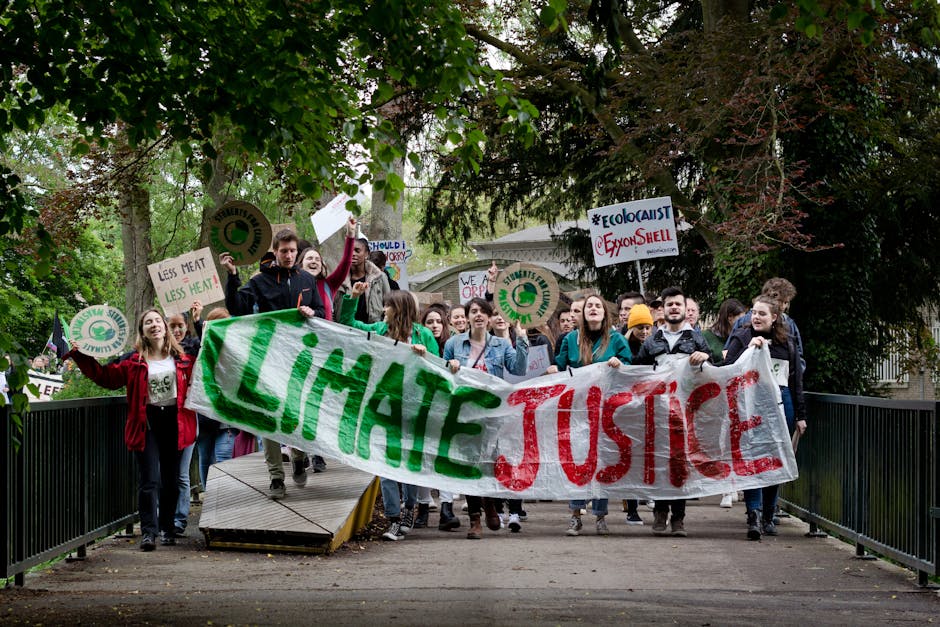
Climate Change Advocacy
Progressive Activists remain committed to climate change advocacy, focusing on corporate responsibility and government intervention. They demand:
- Stringent regulations for industrial giants, especially in the fossil fuels sector
- Restrictions on harmful emissions
- Acceleration of the transition to renewable energy
To shift such massive enterprises, activists work to mobilize public opinion, using social media to educate and galvanize individuals into collective action. This grassroots movement aims to build a broad coalition transcending traditional partisan divides.
They emphasize decisive government action, advocating for:
- Aggressive emission reduction targets
- Substantial investment in green technology
Voting is seen as a moral imperative to elect representatives who prioritize environmental policies.
While systemic change is crucial, they also promote individual engagement. Recycling, reducing consumption, and increasing energy efficiency are steps that, while small individually, contribute to a culture of sustainability.
Progressive Activists shape a narrative emphasizing interconnectivity and shared responsibility, recognizing how climate disruption disproportionately impacts marginalized communities. This holistic vision drives their advocacy, blending urgency with empathy to create a fair, sustainable future for all.
Social and Economic Justice
Progressive Activists extend their vision beyond environmental advocacy to encompass social and economic justice. They focus on dismantling systemic inequalities in:
- Education
- Housing
- Healthcare
- Employment
Their approach to combating inequality and poverty involves innovative strategies for creating economic opportunities and uplifting marginalized communities. Key policies include:
- Fair taxation
- Living wages
- Substantial investment in public services
In promoting these reforms, they use persuasive storytelling, combining data with personal accounts to highlight the experiences of those affected by systemic injustices. Their campaigns often feature diverse voices to shift public opinion and garner support for equitable policies.
They work to reshape societal perceptions of poverty and disadvantage, challenging notions that blame individuals for systemic failures. By highlighting structural factors, they invite collective responsibility to eradicate poverty's root causes through informed policy decisions and grassroots empowerment.
Despite facing opposition, Progressive Activists remain steadfast in their efforts to balance power and opportunity, fostering an inclusive society. They combine bold policy goals with empathetic advocacy to create a future where justice and equality are lived realities for everyone.

Challenges and Backlash
Progressive Activists face significant obstacles in their pursuit of change. Political opposition manifests as:
- Legislative roadblocks
- Media campaigns discrediting the movement
- Influential lobbying groups
Critics argue that progressive policies are unrealistic or too radical, forcing activists to continually adjust their strategies and reinforce their message with solid data.
Public skepticism presents another challenge. While many support social justice and environmental sustainability in principle, translating this support into actionable change is complex. Activists must provide concrete examples of successful policy implementations and engage in open dialogues to bridge the gap between their intentions and public understanding.
Movement fatigue poses an internal obstacle, with passionate individuals experiencing burnout when progress seems slow. Building a culture prioritizing self-care and community support is essential for the movement's longevity.
Backlash against progressive policies often exploits cultural fears or economic anxieties, creating societal divisions. Progressive Activists are learning to navigate this landscape by:
- Forming alliances across diverse segments of society
- Emphasizing dialogue over division
- Showcasing successful case studies as practical models
Addressing these challenges requires adaptability. Progressive Activists are refining their approaches, framing policies as pragmatic steps toward economic stability and societal well-being. Their persistence in the face of adversity shows that their voices are becoming more insightful and strategically focused as they pursue a more equitable society.

Youth Engagement and Future Directions
Youth are essential to the progressive movement, infusing it with energy and innovation. As digital natives, young activists skillfully use technology to rally support and raise awareness on key issues. Their engagement extends beyond online activities to concrete political action, including organizing rallies and leading voter registration initiatives.
Mobilizing young voters requires addressing their specific challenges, such as:
- Economic insecurity
- Environmental sustainability
Progressive groups aim to connect with these issues by promoting policies for economic justice and strong environmental measures.
The future success of youth integration in the progressive movement depends on expanding leadership and innovation opportunities. Nurturing future leaders involves providing mentorship and resources that empower young people to create and execute dynamic campaigns.
Building a coalition that spans generations is vital for maintaining momentum. Youth activists can find common ground with allies across the progressive spectrum, enabling a comprehensive approach to advocacy.
Looking ahead, progressive activism aims to broaden its scope and methods, adapting to the changing political and social landscape. By embracing new technologies, developing youth leadership, and fostering intergenerational collaboration, the movement can solidify its role as a catalyst for change, addressing current demands while preparing for a just and equitable future.

Progressive Activists are committed to pursuing a fair and sustainable future, driven by a desire to transform societal norms and policies. Their efforts aim not just for immediate change but to establish lasting progress.
- Milkis S. Progressivism. In: Encyclopædia Britannica. Encyclopædia Britannica, Inc.; 2023.
- King ML Jr. Letter from Birmingham Jail. Atlantic Monthly. 1963;212(2):78-88.
- Moyer B. The Movement Action Plan: A Strategic Framework Describing The Eight Stages of Successful Social Movements. Social Movement Empowerment Project; 1987.