The aftermath of the Supreme Court's decision to overturn Roe v. Wade has led to a fragmented landscape across the United States. States have adopted vastly different approaches to abortion rights, creating a patchwork of laws that impact millions. This article examines the political, social, and global implications of these divergent paths, highlighting the stakes involved in the upcoming 2024 election.
The Political Landscape Post-Roe v. Wade
States have taken strikingly different paths since the Supreme Court overturned Roe v. Wade in 2022. Arizona briefly reinstated a 19th-century abortion ban before replacing it with a 15-week ban. Florida now has a six-week ban, while states like Colorado and Maryland have fortified abortion rights. The doctor shortage in Idaho has worsened due to anti-abortion laws driving OB-GYNs elsewhere.
The political stage reflects these diverging paths. Kamala Harris has made abortion rights a key campaign issue, vowing to restore Roe's protections through congressional action. Donald Trump, on the other hand, leans on states' rights, avoiding endorsement of a national abortion ban. Real-life stories, like Amanda Zurawski's sepsis scare in Texas or Kate Cox's ordeal in New Mexico, highlight the impact of restrictive abortion laws.
Trump's influence extends to "Project 2025," an ultraconservative blueprint threatening abortion access and broader sexual and reproductive health rights. This project aims to:
- Slash birth control access
- Redefine executive power
- Cut international health aid
Abortion's role in the upcoming election is significant, with ballot measures across ten states, including swing states like Arizona and Nevada. Past votes suggest nonpartisan support for abortion rights, defying old political molds.
The legal landscape remains in flux, affecting where doctors choose to practice and impacting maternal care across the country. Meanwhile, anti-rights movements are not contained within U.S. borders, with restrictive policies gaining traction globally.
The stakes are high as voters consider whether these political maneuvers will ensure reproductive rights for generations or cave under ultraconservative pressures, affecting healthcare and equality globally.
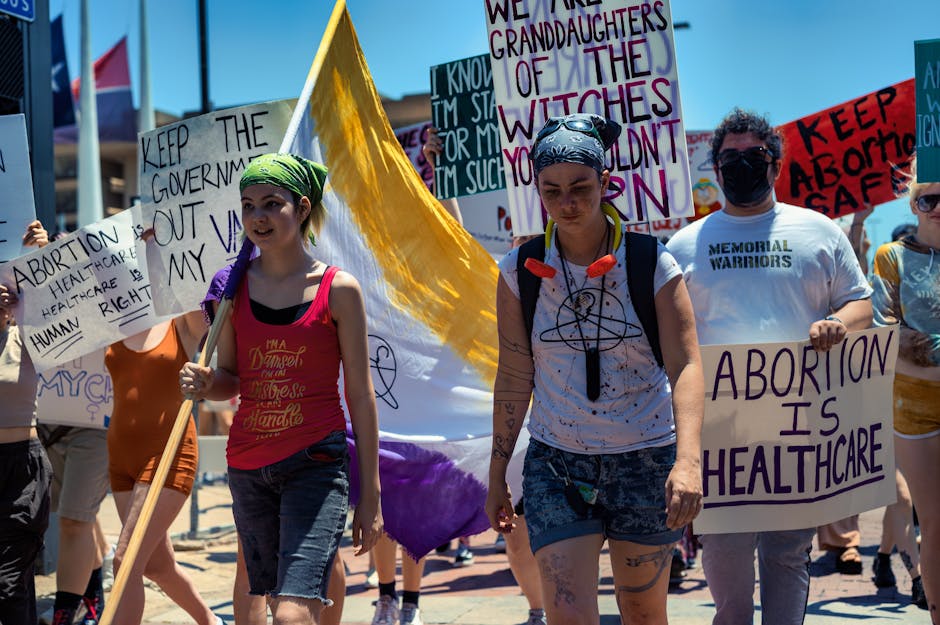
Impact of Abortion Rights on the 2024 Election
Abortion rights are deeply entwined in the 2024 election, with key swing states like Arizona, Florida, and Nevada poised to see abortion-related ballot initiatives. These measures could significantly influence voter turnout and the presidential race outcome.
Kamala Harris advocates vigorously for reproductive rights, targeting traditional Democratic bases and broader national sentiments. Her campaign capitalizes on the widespread support for abortion rights demonstrated through various state ballot measures since Roe's overturn.
Donald Trump's strategy is more complex. He distances himself from a national abortion ban, favoring a states' rights approach, while his administration's legacy and support for "Project 2025" suggest an undercurrent of ultra-conservative policymaking.
In Arizona, the push to include abortion rights in the state constitution reflects a groundswell of activism. Florida's rigid six-week ban may galvanize pro-choice advocates, while Nevada's measure to enshrine abortion rights up to viability provides a stark contrast to more restrictive neighbors.
"She talks about abortion rights, and she talks about it unapologetically," said Kelly Baden, vice president for public policy at the Guttmacher Institute.
Political analysts note that ballot initiatives can drive voter turnout, but their effects on partisan races remain nuanced. Michigan's experience shows the power of direct democracy to reshape political battlegrounds, while Kentucky and Montana highlight the unpredictable nature of these measures.
The November election transcends mere partisan competition; it is a decisive moment for the future of abortion rights and the broader scope of reproductive and gender equality. Voters in key states hold more than their state's future in their hands—they could shape the global discussion on women's health and rights for years to come.

Global Implications of U.S. Abortion Policies
The global implications of U.S. abortion policies, particularly if Trump were to implement "Project 2025," could be profound and far-reaching. These potential policies represent a significant threat to sexual and reproductive health and rights (SRHR) around the world, with the power to reshape international gender equality and health outcomes.
Under Trump's previous administration, the "Global Gag Rule" illustrated the global impact of U.S. abortion policies by cutting funding for international abortion access. "Project 2025" would go further, restricting access to contraception and consolidating executive power under the "unitary executive theory."
Global responses underscore the gravity of these potential changes:
- In Argentina, populist leader Javier Milei has announced plans to repeal abortion rights
- In Hungary, Viktor Orbán has enforced restrictive legislation
- In Côte d'Ivoire, homophobic rhetoric is surging
- In Senegal, abortion remains strictly banned
The security and autonomy of women in these regions could face severe setbacks if U.S. influence continues along an anti-choice trajectory.
International organizations and alliances would also feel the impact. Under "Project 2025," Trump's vision includes redefining human rights to undermine established norms. This could sabotage years of progressive diplomacy and challenge the framework that global institutions operate within.
The potential diminishing of U.S. influence in international organizations could embolden anti-rights movements, leading to tightening restrictions that hinder global progress on gender equality and reproductive health. The ripple effect could extend to Europe, where far-right ideas continue to gain traction.
International solidarity forms the bedrock of countering these anti-rights movements. Stronger alliances and comprehensive feminist diplomacy are essential to maintaining and advancing SRHR. The media plays a critical role in framing these discussions within broader human rights contexts, elevating feminist experts to debunk misinformation and foster informed public dialogue.
The stakes are high for Americans and marginalized communities worldwide. The November 2024 election is poised to resonate deeply beyond U.S. borders, making it imperative that voters consider the extensive global implications before casting their vote.

The Role of Ballot Initiatives in Shaping Abortion Rights
Ballot initiatives are playing a crucial role in shaping abortion rights across various states, offering a direct democratic avenue for citizens to influence legislation on this contentious issue. In the 2024 election, these initiatives are significant in mobilizing voter turnout and potentially altering the political landscape both locally and nationally.
Arizona exemplifies this dynamic, with abortion rights supporters working to pass a measure that would enshrine the right to abortion up until viability in the state constitution. Colorado, already a sanctuary state for abortion access, has a measure aiming to amend the state constitution to prevent government interference with abortion rights and prohibit denying healthcare coverage for abortion. Florida faces a more challenging landscape, with a measure needing 60% of the vote to roll back the recently enacted six-week ban.
Previous ballot initiatives provide valuable insights. In Kansas, voters decisively rejected a proposed abortion ban in a 2022 referendum, mirroring outcomes in other red states like Kentucky and Montana. These instances highlight that abortion rights often transcend traditional partisan lines.
These ballot measures have a profound effect on voter behavior and future legislative actions. In Michigan, a ballot initiative led to significant turnout and contributed to a Democratic sweep in state elections. However, it's important to recognize the complexity of these measures' impacts, as seen in Kentucky and Montana, where abortion rights were upheld without significant partisan shifts.
The outcomes of these ballot initiatives could reverberate beyond the immediate election cycle. Successful measures could inspire similar efforts in other states, while unsuccessful initiatives might bolster conservative efforts to impose further restrictions.

Strategies for Advocating Abortion Rights
Advocacy for abortion rights requires a multi-faceted approach, incorporating:
- Media representation
- Public demonstrations
- International solidarity
- Efforts from feminist organizations
- Support from sympathetic governments
Media representation is crucial for fostering greater public understanding of reproductive rights and dispelling misinformation. Featuring expert commentaries and real-life stories can humanize the issue and make the case for reproductive freedoms more compelling. The experiences shared by individuals who faced life-threatening situations due to restrictive abortion laws underscore the need for empathetic, fact-based reporting.
Public demonstrations and grassroots activism create visible support for abortion rights and bring attention to legislative failures. International solidarity extends beyond public demonstrations, involving collaboration among feminist organizations across borders.
Feminist organizations play an indispensable role in shaping policy and legal frameworks. The Guttmacher Institute's research provides critical data that informs advocacy and policy-making, while entities like EMILY's List support pro-abortion-rights women in politics.
Governments must enact strong measures to protect reproductive rights and resist ultraconservative agendas. Legislative changes, like those proposed in Colorado and Maryland to codify abortion rights into state constitutions, set precedents for other regions to follow. These actions need public support through direct democracy tools such as ballot initiatives.
However, the path to upholding reproductive rights faces challenges. Anti-abortion rights groups use legal challenges, misinformation campaigns, and political lobbying to further their agenda. The legal contestations in states like South Dakota exemplify the hurdles faced by pro-choice advocates.
To counter these strategies, advocates must continue to leverage media, public movements, and international support, backed by strong research and data. The 2024 election serves as a critical juncture for the future of abortion rights both domestically and globally. Continued solidarity, informed advocacy, and unwavering commitment from feminist organizations, supportive governments, and engaged citizens are imperative in shaping a future where reproductive rights are fully realized for all.
The November 2024 election is a pivotal moment for reproductive rights and gender equality. The choices made by voters will influence the global discussion on women's health and rights for years to come. As citizens head to the polls, the future of reproductive freedoms hangs in the balance.