
The Role of Economic Justice in Society
Economic justice is fundamental to societal progress and stability. It involves the equitable distribution of resources and opportunities across all segments of society. When economic justice prevails, it creates conditions where everyone can participate in and benefit from growth, rather than concentrating wealth and opportunities among a privileged few.
The pursuit of economic justice touches various aspects of society:
- In education, it means equal access to quality learning regardless of income
- In employment, it ensures fair wages and working conditions
These elements ripple through society, affecting everything from healthcare access to social mobility.
Economic justice demands courage in policy-making and community-building. It requires a conscience-driven decision-making process that transforms economic activity into an engine for fairness and inclusivity. By promoting active engagement with economic justice, we foster a future where individual worth is measured by contributions to societal upliftment rather than wealth accumulation.

Challenges of the Current Economic Order
The current economic systems perpetuate entrenched inequalities, often failing to adapt to the needs of a complex, evolving society. These shortcomings are deeply woven into the structures designed to support economic function.
One key issue is the skewed valuation of contributions. While technological innovation receives accolades and rewards, essential services like teaching, caregiving, and social work remain largely underrecognized and undercompensated. This misalignment underscores a deeper problem: an economic order predefined by market gains rather than human welfare.
Systemic barriers persist, blocking pathways to opportunity for many individuals. Socio-economic mobility has become increasingly difficult, with:
- Limited access to quality education and healthcare
- Wage stagnation choking aspirations
These issues disproportionately affect marginalized communities, leading to social unrest and disillusionment.
Global crises often expose the fragility of current economic systems, revealing health inequities and unequal resource allocation. Crisis management frequently lacks the empathy needed for sustainable solutions, serving as temporary patches rather than drivers of authentic change.
The call for change is clear: reshape the economic order to reflect the vibrancy of all lives, making progress a shared journey rather than a privilege for the few.

Spiritual and Material Dimensions of Economic Life
The integration of spiritual and material dimensions in economic life creates a sphere where moral values and practical pursuits intertwine. This approach views the economy not as a detached entity but as a participant in the larger human endeavor of crafting a fair and inclusive world.
Aligning material pursuits with moral compasses requires designing pathways where wealth is ethically earned and benevolently deployed. This perspective elevates the purpose of prosperity, viewing it as a vehicle for broad societal progress rather than an endgame of unchecked consumption.
Embedding spiritual principles in economics invites a reevaluation of what dictates value. It questions whether industry should run on self-interest or pivot towards collective benefit. By broadening the lens through which we evaluate economic potential, industry players can become catalysts of positive change, fueling the spread of opportunity.
"Man's merit lieth in service and virtue, and not in the pageantry of wealth and riches."
This alignment doesn't call for eschewing wealth but embracing stewardship—a view where reverence for life surpasses transactions and the ethics of care redefine prosperity's pathways. It reframes the economic journey, charting a course beyond mere existence to a flourishing of human potential.

Redefining Progress and Development
Traditional measures of progress often focus myopically on economic indicators like GDP, glossing over human well-being and environmental concerns. It's time to redefine progress, prioritizing both human flourishing and environmental sustainability over mere numerical growth.
In this revised vision, prosperity is reflected in the quality of life experienced across every neighborhood. It involves crafting policies that elevate the baseline standard of living, investing in society's most valuable asset—its people. Success is measured by:
- Improved health
- Educational attainment
- Community cohesion
Central to this reimagined progress is the imperative to intertwine human endeavors with the rhythms of the natural world. Economic models must flourish within environmental bounds, emphasizing conservation and sustainable resource use. Environmental stewardship becomes the foundation on which all subsequent growth rests.
This approach challenges the notion that relentless competition must underlie development. Instead, it proposes models of cooperation that champion mutual aid over personal gain. Businesses might measure success not just by profit, but by the vitality they bring to communities through job creation, fair wages, and ethical practices.
New models of development harness the power of purposeful synergy across public and private sectors, communities, and individuals. They call for systems of innovation and technology that prioritize human health and environmental balance as indispensable pillars of forward momentum.
By foregrounding cooperation and altruism, we craft a legacy not just for ourselves, but for future generations, cementing progress as a story of human dignity and environmental harmony.
Practical Steps Towards Economic Justice
Implementing economic justice requires action from individuals, communities, and institutions. Each entity holds power to spark change through thoughtful policies, community-driven initiatives, and committed personal actions.
Individual Actions:
- Advocate for fair wages and equal opportunities
- Support ethical businesses
- Engage in civic participation
Community Initiatives:
- Foster collective ownership of resources through cooperative models for housing, agriculture, or finance
- Democratize access to economic benefits
- Cultivate a sense of shared responsibility
Institutional Roles:
- Implement equitable hiring practices and fair compensation structures
- Promote policies that broaden access to quality education and healthcare
- Lay the groundwork for a more level economic playing field
Reevaluating investment strategies is pivotal. Redirecting capital to socially responsible and community-focused initiatives can nourish the roots of economic justice. Advocacy for tax reforms that require higher contributions from wealthier segments can help fund crucial public benefit programs.
Cross-sector collaborations that draw on diverse expertise to solve complex social issues can amplify efforts toward economic justice. This collaborative ethos extends to the global arena, advocating for trade and economic policies that respect human rights and prioritize equitable development.
By injecting intention and mindfulness into daily actions, individuals—joined by their communities and institutions—can craft a more just, inclusive economic landscape. Each practical step contributes to dismantling entrenched inequities, setting forth upon a journey where economic justice elevates humanity as a whole.
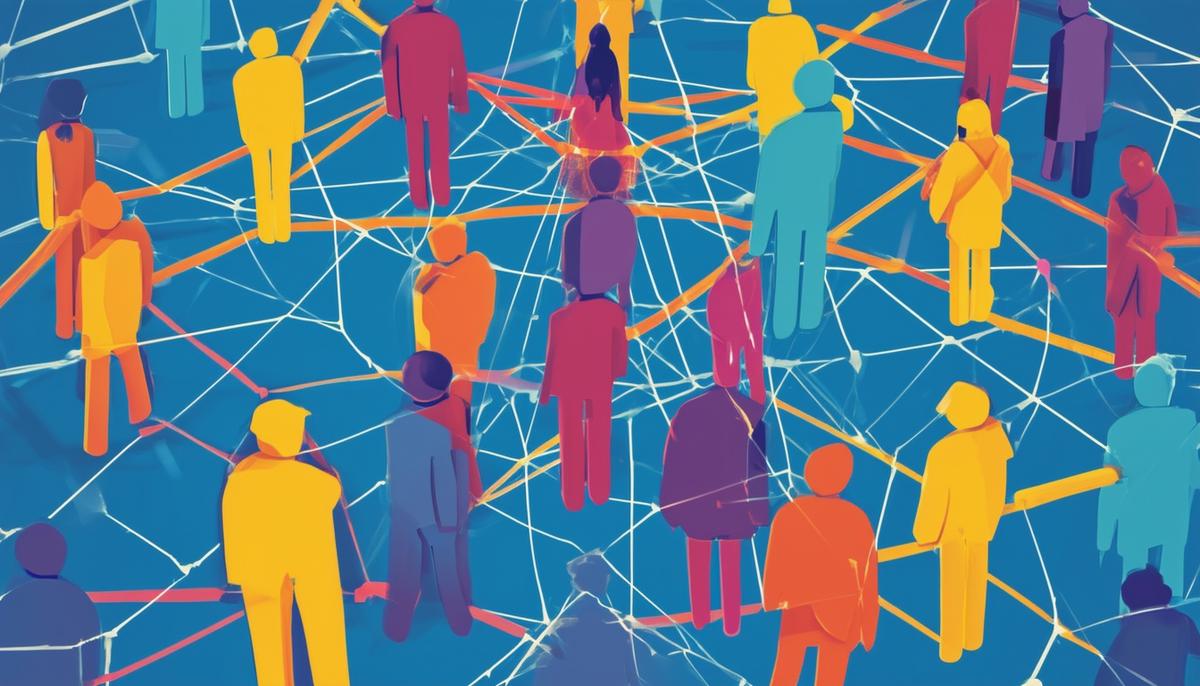
Economic justice stands as a guiding principle, urging society to reevaluate its priorities and embrace a future where fairness is woven into the fabric of everyday life. By addressing the disparities that hinder progress, we can create a world where opportunity and prosperity are shared by all, not just a privileged few.
-
1. Universal House of Justice. Message to the Baha'is of the World. Haifa, Israel: Baha'i World Centre; 2017.
2. Baha'u'llah. Lawh-i-Dunya (Tablet of the World). Wilmette, IL: Baha'i Publishing Trust; 1978.
3. 'Abdu'l-Baha. The Secret of Divine Civilization. Wilmette, IL: Baha'i Publishing Trust; 1990.
4. Baha'u'llah. The Hidden Words. Wilmette, IL: Baha'i Publishing Trust; 1985.