
Addressing income inequality requires thoughtful strategies to uplift individuals and strengthen communities. By focusing on equitable solutions, we can foster an environment where everyone has the opportunity to thrive.
1. Raise the Minimum Wage
Raising the minimum wage to $15 per hour is a crucial step in addressing income inequality in the United States. The current minimum wage of $7.25, unchanged since 2009, fails to meet living costs for millions, pushing many into poverty. Elevating the wage floor ensures workers earn a fair, livable income, helping lift families out of economic hardship and reducing reliance on social safety nets.
Research shows that higher wages boost labor productivity and morale, benefiting businesses through more committed and efficient workforces. Increased purchasing power for low-income workers stimulates local economies as they spend more on goods and services, creating a positive ripple effect. This measure empowers workers and strengthens economic stability and growth.
Key benefits of raising the minimum wage:
- Lifts families out of poverty
- Boosts worker productivity and morale
- Stimulates local economies
- Reduces reliance on social programs

2. Expand the Earned Income Tax Credit
Broadening the Earned Income Tax Credit (EITC) can provide financial relief for working families, especially those supporting children. This reform would offer substantial tax credits to low-income households, empowering parents to invest more in their children's futures—whether through education, extracurricular activities, or alleviating daily financial stress.
The expanded EITC promotes economic mobility by incrementally increasing benefits with earnings until reaching a peak, facilitating a gradual climb out of poverty. Research shows that children in families benefiting from the EITC demonstrate academic improvements and better health outcomes, offering a path to break generational cycles of poverty.
"By advocating for this expansion, we create a pattern of fairness and opportunity, embodying economic justice for all."

3. Universal Access to High-Quality Education
Investing in universal access to high-quality education represents a commitment to nurturing a more equitable society. By focusing on early childhood education, we address developmental disparities before they become entrenched barriers. High-quality early education programs, such as Universal Pre-K, have the potential to close achievement gaps by providing enriching learning experiences that foster essential cognitive and social skills.
Children who attend these programs enter kindergarten better prepared, with a foundation that supports lifelong learning and emotional resilience. The advantages extend beyond the classroom, as these children are more likely to:
- Graduate high school
- Pursue higher education
- Secure gainful employment
This fosters economic mobility and contributes to overall economic productivity and innovation.
Expanding access to quality education doesn't just uplift individual students; it forges stronger, more cohesive communities. When all citizens are empowered with the knowledge and skills needed to thrive, society as a whole prospers—paving the way for a future where opportunity is determined by potential rather than circumstances of birth.

4. Promote Affordable Housing and End Segregation
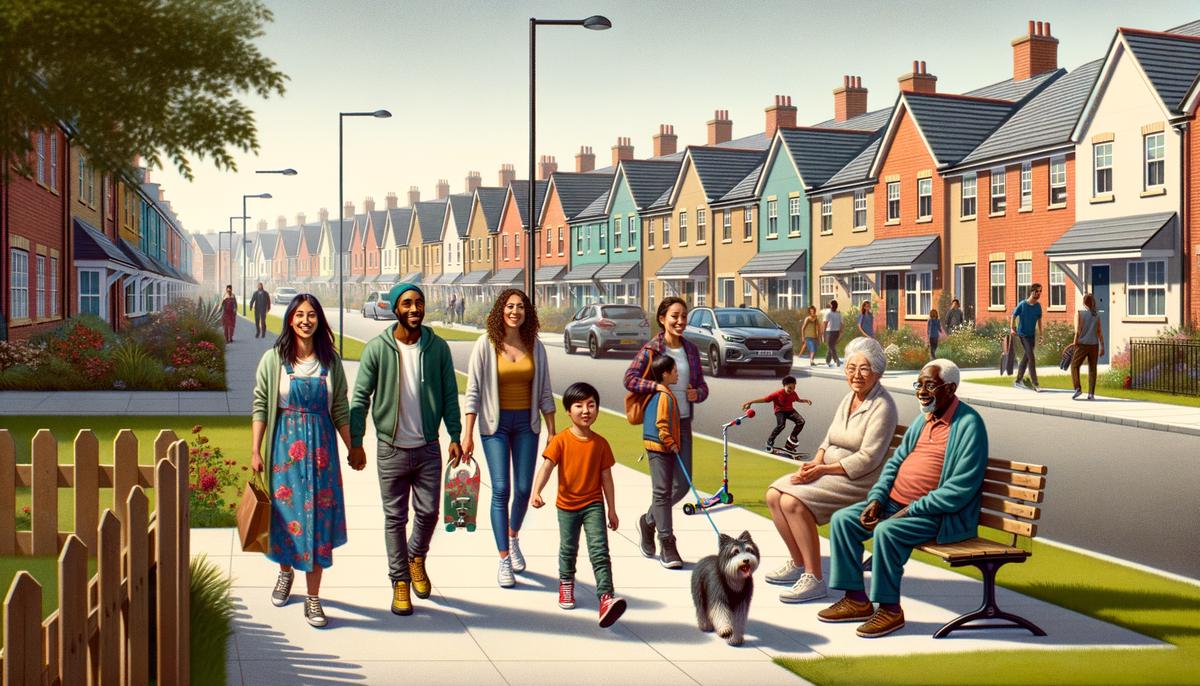
Addressing residential segregation and ensuring affordable housing are critical steps in enhancing economic mobility and reducing income inequality. In communities where affordable homes are accessible, individuals and families gain access to a wider array of resources, including quality schools, healthcare, and employment opportunities.
Residential segregation often confines low-income and minority populations to areas with fewer resources, perpetuating cycles of poverty. By developing inclusive housing policies, we can create more interconnected communities where everyone has a fair chance at success. Expanding affordable housing in mixed-income neighborhoods fosters social integration, allowing families to benefit from broader networks and support systems.
Benefits of affordable housing in diverse areas:
- Promotes stability and self-sufficiency
- Enhances access to quality education and healthcare
- Increases employment opportunities
- Fosters social integration and community cohesion
Through innovative policies and community-driven initiatives, we can lay the groundwork for a society that values equity and inclusivity.
5. Progressive Taxation and Closing Loopholes
Reforming the tax code to enhance progressivity and close loopholes is an effective approach to combating income inequality. The current system often favors wealth accumulation among the affluent through various means of reducing taxable burden. Progressive taxation aims to ensure that those with greater financial means contribute an equitable share to public resources.
By applying higher tax rates to larger incomes, we can generate revenue to support vital public services that disproportionately benefit low- and middle-income families. When wealthier individuals and corporations pay their fair share, it enables governments to invest in programs that address the root causes of economic disparity.
| Income Bracket | Current Tax Rate | Proposed Progressive Rate |
|---|---|---|
| $0 – $50,000 | 10% | 8% |
| $50,001 – $100,000 | 15% | 15% |
| $100,001 – $500,000 | 25% | 28% |
| $500,001+ | 35% | 40% |
Closing tax loopholes that allow for tax evasion and avoidance is crucial. These loopholes often provide an unfair advantage to those who can afford expensive financial advice, diverting resources from public services. Tightening these gaps in the tax code promotes a more equitable distribution of tax liabilities.
Progressive taxation and closing loopholes reinforce the social contract and community solidarity. This approach levels the playing field and empowers our nation to tackle broader challenges together, united in the pursuit of a just and equitable future.

Implementing these policies prioritizes equity and justice, paving the way for a future where prosperity is shared more broadly and reinforcing our collective commitment to a fair society.
- Blanchard O, Rodrik D. We Have the Tools to Reverse the Rise in Inequality. MIT Press; 2021.
- Chetty R, Grusky D, Hell M, Hendren N, Manduca R, Narang J. The fading American dream: Trends in absolute income mobility since 1940. Science. 2017;356(6336):398-406.
- Saez E, Zucman G. Wealth Inequality in the United States since 1913: Evidence from Capitalized Income Tax Data. The Quarterly Journal of Economics. 2016;131(2):519-578.
- Organization for Economic Cooperation and Development. A Broken Social Elevator? How to Promote Social Mobility. OECD Publishing; 2018.