Unions and Income Inequality
Labor unions play a crucial role in supporting workers and reducing income inequality. Union members typically earn significantly more than nonunion workers, with this effect influencing pay scales across industries. The impact extends beyond members, as even non-union workers may see slight increases in their wages due to the standards unions establish.
Black and Hispanic workers experience even greater benefits from union involvement. According to the Economic Policy Institute:
- Unionized Black workers earn over 13% more compared to similar nonunion Black workers
- Hispanic workers see an increase of almost 19%
These gains translate to tangible benefits, such as improved housing options or retirement savings, helping to narrow the racial wealth gap.
Women also find advantages through union membership. On average, unionized women make 94% of what men do, compared to the national average where nonunion women earn around 78%. This narrower gender pay gap within unions demonstrates their role in promoting wage equity.
Beyond wages, unions impact benefits like health insurance and retirement plans. The Bureau of Labor Statistics shows that:
- 85% of unionized workers participate in employer-sponsored retirement schemes
- Only 51% of nonunion workers have such plans
This union-driven security also applies to health care, making it more accessible and affordable for many families.
Historically, strong union representation has been associated with decreased economic disparity. The period from 1945 to 1980, often called "the Great Compression," saw a reduction in income inequality coinciding with strong union presence. This trend reversed after 1980 as union influence declined, highlighting the role of unions in wage equity.
States with higher union densities tend to experience more equitable economic conditions, including better minimum wage levels and broader social benefits. This relationship suggests that unions help support economic justice on a broader scale.
Racial and Gender Wage Gaps
Collective bargaining is a powerful tool in addressing racial and gender wage gaps. Unions effectively use this tool to advocate for wage structures that recognize and address disparities often found in traditional pay scales.
For Black and Hispanic workers, union membership drives significant change:
- Black union members can earn about 13% more than nonunion Black workers
- Hispanic union members experience an even higher wage increase of 18.8%
These figures represent real dollars that can transform lives, from easier tuition payments to comfortable retirement.
Female workers also find unions supportive for career and income growth. The persistent gender pay gap is significantly reduced within unions:
- Unionized women earn 94% of what their male counterparts do
- Nonunion women earn just 78% of men's wages
Collective bargaining promotes a broader view on pay equity by creating transparent compensation structures and ensuring their implementation. This openness benefits union members and establishes a precedent for non-unionized workplaces, helping to close gaps across industries.
Unions also champion pay transparency legislation, pushing employers to disclose salary ranges and wage data. This transparency empowers employees to advocate for fair treatment and equitable pay.
While closing racial and gender wage gaps remains complex, unions bring tangible progress to this effort. Through collective strength and strategic bargaining, they turn voices into action, shaping an economy where pay equity becomes reality.
Unions and Wealth Accumulation
Union membership significantly impacts wealth accumulation, especially among working-class families. Median wealth for unionized households is notably larger than for nonunion families, providing protection against uncertainties. This effect is particularly strong for Black and Hispanic families, where the financial difference is even more pronounced.
The benefits of union membership extend to future generations. Children of union members often inherit more than tangible assets; they gain stability and opportunity. Research shows these children tend to earn higher incomes compared to peers from nonunion households.
Higher wages combined with better benefits like health insurance and retirement savings contribute to increased wealth accumulation. These factors allow working-class families to:
- Save more
- Invest wisely
- Plan confidently for the future
Unions also promote financial literacy and transparency, vital for wealth accumulation. By advocating for fair wages and equitable treatment, they help families plan effectively, recognize their worth, and demand appropriate compensation.
Intergenerational wealth gained through unions isn't just about bank balances but also about educational opportunities and reduced financial stress for future generations. It creates a cycle of prosperity where one generation's achievements set the stage for the next.

Unions and Worker Protections
Unions act as guardians of worker rights, protecting against unfair dismissals and unsafe working conditions. Central to this protection is the concept of "just cause" rights. Unlike the common "at-will" employment in the U.S., unions negotiate contracts requiring employers to have a valid, documented reason before firing an employee.
Historically, Black and Hispanic workers have been more vulnerable to unfair dismissals. Unions actively work to correct this systemic issue through collective bargaining, enforcing standards that promote fairness and align employment practices with principles of justice and equality.
Unions' protective role extends to creating safer workspaces. They advocate for:
- Workplace safety standards
- Essential safety equipment and protocols
- Environments where workers can raise safety concerns freely
This advocacy significantly reduces workplace injuries and fatalities.
Union contracts often include detailed grievance procedures, allowing workers to challenge unsafe practices or retaliatory actions. When management fails to act, unions mobilize collective action to hold employers accountable, reinforcing the importance of safe and fair workplaces.
As unions continue advocating for 'just cause' rights and safer workplaces, they build a labor market that respects and upholds every worker's inherent rights, making justice a lived reality.
Unions and Democracy
Unions serve as powerful champions of civic engagement, strengthening democracy by ensuring workers have a voice outside the workplace. They significantly boost voter turnout, with research confirming that union members are more likely to vote compared to nonunion peers.
Unions also fight against voter suppression, opposing restrictive laws that threaten to silence marginalized voices. This advocacy is vital in maintaining voting system integrity and ensuring every citizen's voice is heard.
Beyond encouraging voting, unions actively shape policies that impact communities. Their influence extends to creating legislation supporting:
- Labor rights
- Economic programs
- Educational opportunities
Through these efforts, unions promote a political landscape attentive to workers' and families' needs.
Unions provide an essential platform for worker representation in political arenas. They empower workers to:
- Engage with local governments
- Participate in public discussions
- Take on leadership roles
This empowerment is crucial for underrepresented communities, offering a path to leadership and political influence that might otherwise be inaccessible.
The democratic nature of unions is also evident in their internal operations. Transparent decision-making, grassroots organizing, and collective action all exemplify the democratic values society aims to uphold.
As they continue their work, unions guide us toward a strong and inclusive democracy for all, strengthening our social fabric for equitable progress.
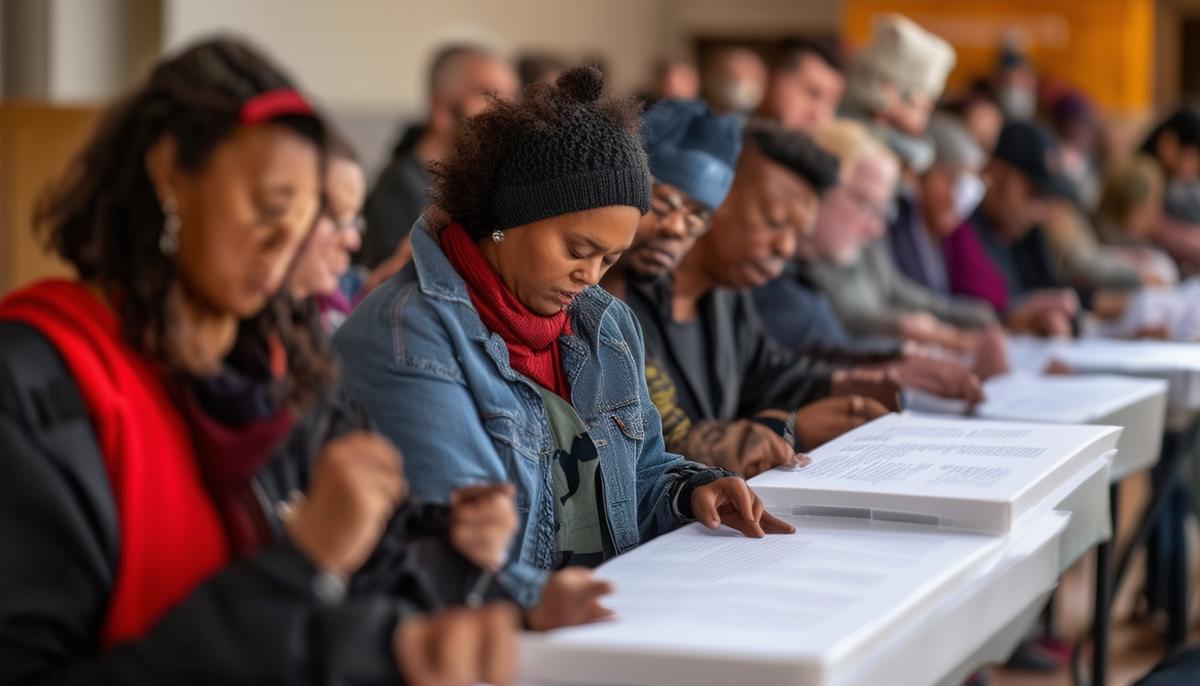
Unions are essential in the pursuit of economic fairness, working to reduce income and opportunity gaps. Their influence reaches beyond workplaces, promoting a more equitable society where workers' rights and voices are strengthened. As they continue supporting these causes, unions lead the way to a future of shared justice and prosperity.
- Economic Policy Institute. Union workers earn higher wages and benefits than nonunion workers. EPI, 2021.
- Bureau of Labor Statistics. Union Members Summary. BLS, 2022.
- Card D. The effect of unions on wage inequality in the U.S. labor market. ILR Review. 2001;54(2):296-315.
- Farber HS, Herbst D, Kuziemko I, Naidu S. Unions and inequality over the twentieth century: New evidence from survey data. Q J Econ. 2021;136(3):1325-1385.
- Zoorob M. Does 'right to work' imperil the right to health? The effect of labour unions on workplace fatalities. Occup Environ Med. 2018;75(10):736-738.