
Economic Inequality's Impact on Voter Turnout
Economic inequality has a troubling effect on democracy, particularly regarding voter turnout. The notion of 'one person, one vote' appears hollow when disparities in wealth dictate whose voice gets heard. Those with fewer resources often find themselves disillusioned and unmotivated to engage politically.
In unequal societies, the wealthy have the upper hand. They can maneuver within the political sphere with ease, donating to campaigns and utilizing their influential circles to gain direct contact with decision-makers. Meanwhile, the economically disadvantaged sit on the sidelines, not because they want to, but because the system bypasses them in favor of those with deeper pockets.
The empirical data is clear: lower turnout correlates with increasing inequality. When citizens perceive that their vote is powerless against the entrenched interests of the wealthy, participation diminishes. This detachment isn't merely a personal choice—it's a structural byproduct of inequality itself.
The decay of political representation further deepens this chasm. Traditional left-wing parties that once acted as beacons for the working class have shifted, wooing middle-class voters and recalibrating their stances. As a result, disadvantaged groups find fewer political advocates echoing their concerns, leading to greater political apathy.
Democracy falters when wealth dictates influence. When offices are bought rather than earned, the notion of self-governance becomes a fairy tale rather than a foundation.
The duty to shift this story rests with both policymakers and voters. Policies must aim to raise the voices of the unseen, offering platforms where the economically sidelined can engage with conviction.
Populism and Political Engagement
Populism is often seen as the banner under which the disillusioned might rally, purportedly giving voice to those left on the fringes of political discourse. However, the effectiveness of populism as an agent of democratic rejuvenation is far more nuanced.
Populist rhetoric frequently promises the reclamation of power for the 'ordinary people' versus an out-of-touch elite. Yet, empirical studies suggest that despite populist parties' claims, their presence alone does not significantly elevate voter turnout. The promises made by populists often falter when faced with the realities of governance and systemic change.
While populist parties can inject fresh topics into political debate, these shifts do not necessarily translate into meaningful engagement for all disenfranchised groups. Populism often thrives on tapping into underlying fears and frustrations, painting issues in stark, emotional strokes. This approach risks reinforcing divisions rather than bridging the gaps necessary for a more inclusive political process.
The challenge extends beyond rhetoric; it involves genuine policy shifts that have palpable impacts on marginalized communities. To truly mobilize disenfranchised voters, populist parties need to offer more than just words—there must be credible plans that address economic inequities head-on, creating pathways to empowerment and political re-engagement.
As we continue to seek solutions for re-engaging disenfranchised voters and countering the sway of economic inequality, it's clear that the answer will not solely lie within populism. A multifaceted approach—where inclusive policies, electoral reforms, and sustained civic education play pivotal roles—remains essential.

AI-Driven Inequality and Democratic Stability
Artificial intelligence (AI) emerges as a double-edged sword, poised to reshape economies and labor markets. While its potential for innovation is celebrated, the dark underbelly of AI-driven economic inequality looms large, casting a shadow over democratic ideals. If unchecked, these technological advances risk exacerbating existing inequalities, tipping the scales further in favor of those already at the top of the economic hierarchy.
AI's expanding role introduces a paradox: as it promises advancement, it simultaneously presents the risk of elite entrenchment. High-level automation can lead to significant job displacement, disproportionately affecting those in lower-skilled positions, while the profits generated through such technologies remain largely concentrated in the hands of a select few.
The allure of AI as a tool for growth cannot be overlooked. However, the consequential socioeconomic shifts it precipitates can lead to an erosion of trust in democratic institutions, particularly if policies fail to equitably address the disparities AI introduces or exacerbates. This imbalance fosters an environment ripe for disillusionment and disengagement, as citizens watch the democratic promise of equal representation slip increasingly out of reach.
AI's capacity to influence public discourse adds another layer to its impact on democracy. Advanced AI systems are capable of shaping stories through targeted content delivery, potentially skewing political dialogue in favor of specific agendas. When compounded by societal inequalities, this can lead to a misinformed electorate, further destabilizing democratic processes.
Policy Interventions for AI-Driven Inequality
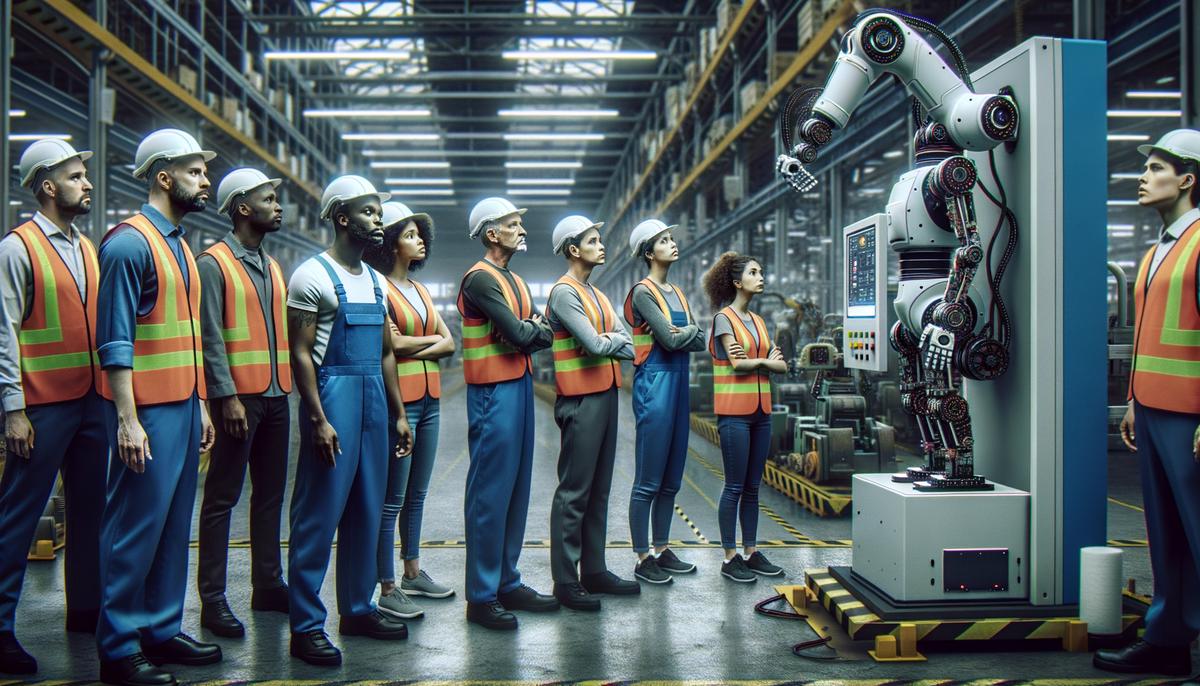
To address these challenges and safeguard democratic stability, strong policy interventions are imperative. These interventions should seek to mitigate the adverse effects of AI-driven inequality while simultaneously strengthening the pillars of democratic governance. Policies must prioritize equity in AI deployment, ensuring that technological advancements benefit a broader spectrum of society rather than a privileged few.
- Empowering workers through labor rights and equitable workforce integration strategies
- Promoting unionization and fostering collective bargaining
- Reforming tax policies to prevent biases against human labor in favor of automation
As we stand at the crossroads of technological advancement and democratic integrity, it becomes imperative to recalibrate our approach to the integration of AI within society. By championing inclusive policy reforms, we can harness the potential of AI to foster shared prosperity rather than amplify existing divides.
Policy Interventions to Address Inequality
To address the challenge of economic inequality and its impact on democracy, policy interventions must be carefully crafted and targeted. These interventions should strive to mitigate inequality and reinforce the foundational structures of democratic governance.
Inclusive Political Reforms
Inclusive political reforms serve as the bedrock for addressing inequality. These reforms encompass measures designed to bolster electoral integrity and enhance political representation. A key focus should be on ensuring transparency and accessibility in voting processes, thereby elevating citizens' political voice and fostering trust in the electoral system. Reducing the sway of economic elites can help restore a more egalitarian political landscape where individual voices carry weight.
Labor Empowerment
Labor empowerment is another critical area of focus. As we confront the challenges posed by AI and automation, giving workers a stake in the evolving economic landscape is imperative. Encouraging unionization and collective bargaining is essential to provide workers with leverage in negotiations about the integration of new technologies. Promoting co-determination, where employees have a say in technological decisions affecting their work, can ensure that AI is harnessed to augment human capabilities rather than replace them.
Economic Reforms
Tax reforms that favor human employment over automation can help preserve jobs and sustain economic participation necessary for a vibrant democracy. In parallel, enforcing antitrust regulations to prevent excessive market concentration can ensure that both economic power and political influence remain more evenly distributed.
Guiding AI Development
At the intersection of technology and policy, guiding AI development is crucial. Governments can play a defining role in steering AI research and development towards human-centric applications that promote societal welfare. Implementing ethical standards for AI deployment to prevent the exacerbation of existing inequalities forms an essential part of a comprehensive approach to ensuring that technological progress contributes positively to societal well-being.
Together, these policy interventions create a strategic framework aimed at both reducing economic disparities and fortifying democratic institutions. By laying this groundwork, we advocate for a democratic system resilient enough to withstand contemporary challenges and strong enough to deliver on its promises of shared prosperity and justice for all.
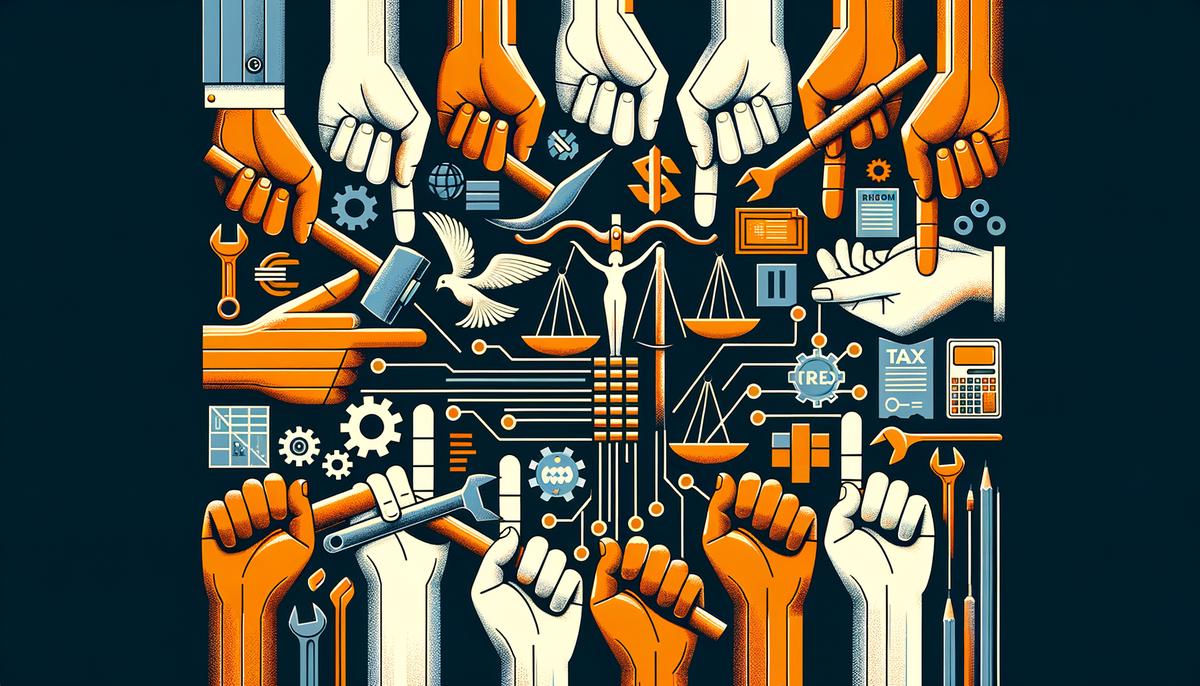
Economic inequality challenges the core of democratic values, often leaving those with fewer resources unheard and disengaged. Addressing this requires a concerted effort to create a more inclusive political landscape where every voice matters.
- Rooduijn M, Van Kessel S, Froio C, et al. The PopuList: An Overview of Populist, Far Right, Far Left and Eurosceptic Parties in Europe. 2019.
- Solt F. The Standardized World Income Inequality Database, Version 8. Harvard Dataverse. 2019.
- International Institute for Democracy and Electoral Assistance. Voter Turnout Database.
- Gallagher M. Proportionality, Disproportionality and Electoral Systems. Electoral Studies. 1991;10(1):33-51.
- Bale T, Green-Pedersen C, Krouwel A, Luther KR, Sitter N. If You Can't Beat Them, Join Them? Explaining Social Democratic Responses to the Challenge from the Populist Radical Right in Western Europe. Political Studies. 2010;58(3):410-426.