
In economic literature, certain works stand out for their insights into inequality and poverty mechanisms. These books challenge conventional wisdom, offering fresh perspectives on how societies can address these pressing issues. By examining historical patterns and current dynamics, they provide a foundation for understanding economic disparities.
1. Poor Economics by Abhijit Banerjee & Esther Duflo
Poor Economics by Abhijit Banerjee and Esther Duflo explores tackling global poverty through a balanced approach. They emphasize the importance of evidence-based research through Randomized Controlled Studies to address poverty effectively. Their innovative approach earned them a Nobel Prize in 2019, highlighting the significant impact of their ideas on economic inequality. This book offers practical solutions that challenge entrenched perspectives on poverty, bridging the gap between theoretical debates and tangible results.
2. The Great Escape by Angus Deaton
The Great Escape by Angus Deaton explores global inequality through 250 years of economic history. Deaton, a Nobel Prize-winning economist, illustrates that while humanity has achieved remarkable progress in health, wealth, and living standards, these gains have not been distributed evenly across the globe or within nations.
Deaton argues that the same forces that push societies forward can also pull them apart, creating winners and losers in the story of progress. He challenges us to rethink traditional approaches to economic development, advocating for policies that spur growth and ensure that the benefits are shared more equitably.
The book blends optimism and caution, celebrating humanity's advances while warning against complacency. Deaton's nuanced understanding—recognizing progress matched with empathy for those left behind—makes The Great Escape resonate with those seeking a fairer world.

3. Capital in the Twenty-First Century by Thomas Piketty
Thomas Piketty's Capital in the Twenty-First Century challenges perceptions of income and wealth distribution in modern economies. This work examines the intricacies of capital and its impact on economic inequality, providing a historical analysis dating back to the eighteenth century. Piketty analyzes data from numerous countries to reveal trends regarding capital accumulation and the widening gap between the wealthy and the rest of society.
Piketty argues that the concentration of wealth is a defining characteristic of capitalism that exacerbates inequality if left unchecked. He presents the thesis that when the rate of return on capital exceeds the rate of economic growth, wealth disparities increase. This phenomenon, encapsulated by the formula "r > g," serves as the backbone of his critique.
Capital in the Twenty-First Century offers policy solutions to combat wealth concentration, including the implementation of a global wealth tax. While debated, Piketty's proposals are rooted in the pursuit of economic justice and provide a blueprint for fostering a more equitable society.

4. The Spirit Level by Richard Wilkinson & Kate Pickett
In The Spirit Level, Richard Wilkinson and Kate Pickett argue that more equitable societies enjoy better health, stronger community bonds, and heightened quality of life. They challenge the assumption that wealthier nations inherently provide better lives for their citizens.
Through analyses of developed countries, the authors reveal that even in affluent societies, it is not sheer wealth that dictates outcomes such as life expectancy, crime rates, or mental health, but rather how equitably the wealth is distributed. The Spirit Level connects income disparity to a wide array of social challenges, from diminished trust and increased anxiety to the erosion of community cohesion.
Wilkinson and Pickett argue that reducing inequality isn't just a moral imperative but a pragmatic strategy to enhance societal well-being. By illustrating how economic disparities undermine communities, The Spirit Level encourages readers to reevaluate policies and practices that have long gone unchallenged.
The book makes a case for systemic shifts required to create societies that prioritize collective health and happiness over individual accumulation, aligning with core values of social justice and equality.
5. Evicted by Matthew Desmond
Evicted: Poverty and Profit in the American City by Matthew Desmond explores the effects of eviction on low-income Americans. Through storytelling and research, Desmond provides a look at the precarious existence of families on the brink, making the systemic failures of housing policy clear.
Set in Milwaukee, Desmond's account follows eight families struggling to maintain stable housing. As these families navigate landlords, legal battles, and bureaucracy, Desmond illustrates how eviction perpetuates poverty. The stories feature single mothers, disabled individuals, and low-wage workers facing significant challenges in their quest for a dignified life.
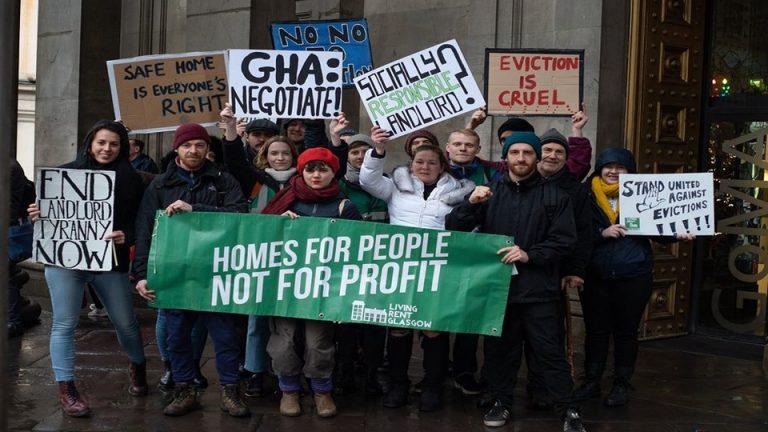
Desmond examines the mechanics of a housing market that prioritizes profit over people, showing how the commodification of basic human needs fuels the cycle of poverty. His fieldwork and portrayal amplify the voices of those often marginalized, providing not just an academic study but a human story that demands attention.
Evicted underscores the need for comprehensive housing reform that upholds the right to shelter as a fundamental human right. It challenges us to rethink our approach to poverty alleviation and to prioritize policies that provide stability and security for all citizens.
6. PostCapitalism by Paul Mason
Paul Mason's PostCapitalism: A Guide to Our Future provides a roadmap to a world beyond the cycles of boom and bust characteristic of neoliberal capitalism. This work calls for redefining the future of the global economy, rooted in technology, environmental sustainability, and social inclusivity.
Mason unravels the flaws of the current capitalist system, showing how it is intertwined with economic crises and growing inequality. He argues that the pursuit of profit and growth at all costs has exacerbated economic disparities and placed our planet in peril.
Mason envisions a future where technology and automation are harnessed to emancipate workers, allowing for a reduction in work hours without sacrificing quality of life. He suggests that technological advancements can be redirected to serve the collective good rather than the enrichment of the few.
PostCapitalism offers concrete steps and policies, such as the implementation of universal basic income and the development of collaborative networks, to facilitate a more equitable distribution of resources. Mason's work encourages a reimagining of economic structures that prioritize people and the planet over unfettered profit.

7. Inventing the Future by Nick Srnicek & Alex Williams
Inventing the Future: Postcapitalism and a World Without Work by Nick Srnicek and Alex Williams envisions a society where work is no longer central to our existence. This book explores the potential of automation and universal basic income as tools to usher in a post-work era.
Srnicek and Williams begin by analyzing the failures of the contemporary left and the dominance of neoliberal ideologies. They propose embracing technology—specifically, automation—as a means to reduce the necessity for labor. The authors argue that this shift must be accompanied by universal basic income to ensure everyone benefits from technological advancements.
The book provides a roadmap for achieving this post-work society, advocating for strategic policy interventions, grassroots movements, and political narratives that champion common good over individual gain. Srnicek and Williams emphasize the importance of constructing new political alliances and networks, empowering citizens to steer societal shifts.
Inventing the Future presents an approach to the challenges posed by systemic inequalities and capitalism. It reimagines a world where prosperity and well-being are accessible to all, urging us to reclaim the future with courage and conviction.

8. Why Nations Fail by Daron Acemoglu & James Robinson
Why Nations Fail by Daron Acemoglu and James Robinson explores the relationship between political power, institutions, and economic success. The authors argue that nations thrive when they develop inclusive political and economic institutions that empower citizens and distribute resources broadly. In contrast, extractive institutions that concentrate power and wealth in the hands of a few lead to stagnation and poverty.
Acemoglu and Robinson illustrate their hypothesis through historical case studies, from the Roman Empire to contemporary Botswana. They highlight how seemingly small differences in institutions can lead to vastly different economic outcomes, such as the divergent paths of North and South Korea.
The work challenges theories that attribute national wealth to geography, culture, or climate, instead emphasizing the role of political institutions. It underscores the importance of inclusive economic policies that support:
- Public participation
- Innovation
- Accountability
For those interested in economic justice, Why Nations Fail offers valuable insights into historical patterns and advocates for policies that promote widespread economic opportunity. The authors' analysis has implications for addressing systemic inequalities and establishing institutions that serve the many rather than the few.

9. Democracy in Chains by Nancy MacLean
Nancy MacLean's Democracy in Chains investigates the efforts of conservative elites to reshape American democracy and influence public policy. The book focuses on James McGill Buchanan, a Nobel Prize-winning economist whose ideas provided the foundation for a campaign against progressive policies.
Through archival research, MacLean uncovers connections between Buchanan's economic theories and political strategies employed by the radical right. She details how these plans were designed to:
- Erode public trust in government
- Diminish the role of democratic institutions
- Implement voter suppression tactics
- Advance deregulation measures
Democracy in Chains serves as both a historical account and a call to vigilance, urging readers to recognize and address threats to democratic processes and economic justice. MacLean's work provides context for understanding contemporary challenges to democracy and inspires action to protect democratic integrity and promote inclusivity.
10. The Price of Inequality by Joseph E. Stiglitz
In The Price of Inequality, Nobel Prize-winning economist Joseph E. Stiglitz examines the structural forces perpetuating economic disparities and their impact on democracy and economic stability. Stiglitz argues that inequality is not merely a byproduct of market dynamics but a consequence of policy choices that disproportionately benefit the wealthy.
The book highlights how rising inequality:
- Hampers economic growth
- Erodes social cohesion
- Leads to wasted potential
- Diminishes opportunities for many
Stiglitz proposes reforms to address these issues, including:
- Progressive taxation
- Greater financial regulation
- Investments in education and healthcare
Combining empirical evidence with relatable anecdotes, Stiglitz makes complex economic concepts accessible. He challenges readers to reconsider justifications for inequality and advocates for systemic change to create a more balanced and inclusive economic system.
The Price of Inequality offers valuable insights for those interested in economic justice, providing a vision for a future where economic opportunity is shared more equitably among all members of society.

These works emphasize the need to reevaluate our approach to economic justice. By implementing inclusive policies and innovative solutions, we can work towards a more equitable distribution of prosperity in society.