
The ongoing journey for universal healthcare in the United States is marked by a complex history and a series of incremental efforts. The path faces challenges and resistance, yet it remains a critical pursuit for achieving equitable access to healthcare for all citizens.
Historical Context of Universal Healthcare
The campaign for universal healthcare in the U.S. has been a long and winding journey since the late 1800s. Teddy Roosevelt's era saw interest in European-style social insurance, but support was scattered. The American Association of Labor Legislation's 1915 proposal for worker health insurance initially had backing, including from the American Medical Association (AMA). However, the American Federation of Labor opposed it, fearing weakened union influence, and private insurers worried about losing their profitable grip on death benefits.
World War I dampened enthusiasm for anything perceived as "German socialist." In the 1930s, President Franklin D. Roosevelt attempted to tie health insurance to Social Security, but faced strong resistance, especially from the AMA. The Wagner Bill in the 1940s was similarly stymied by opponents labeling it as socialism.
President Truman championed universal healthcare, proposing a single insurance plan for all. Yet, conservatives in Congress and the AMA, alongside conservative media, effectively blocked the initiative. The 1960s saw some progress with the Johnson administration's introduction of Medicare and Medicaid, representing incremental steps after decades of inertia.
Throughout this history, labor pushbacks, insurance industry fears, and powerful opposition have continually thwarted ambitious proposals. Even today, echoes of past arguments influence new healthcare reform efforts, as America continues to grapple with this complex issue.
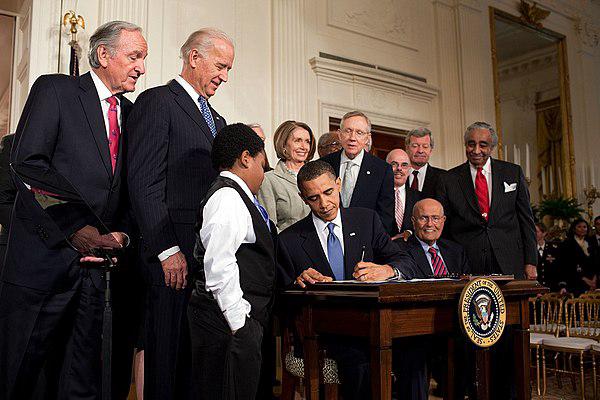
Progressive Realization and UHC
"Progressive realization" is a guiding principle for countries aiming to achieve universal health coverage (UHC). This concept acknowledges that reaching UHC involves a series of incremental steps, recognizing the gap between aspirations and feasible achievements given existing resources.
At its core, progressive realization advocates for constant improvement and scaling up comprehensive healthcare access. It employs "evidence-informed deliberative processes" to decide which health services to prioritize based on:
- Cost-effectiveness
- Severity of conditions
- Need to protect vulnerable populations from financial hardship
Countries must identify key priority services and decide on implementation strategies, whether by adding more services, expanding coverage, or reducing copays on existing services. These decisions need to be made recurrently, considering resource constraints and future needs.
Public accountability is crucial to this process, ensuring that decisions and their rationale are clear and accessible to all. This transparency is vital for building trust and collaboration in the pursuit of universal healthcare.
Ultimately, progressive realization represents a patient, persistent approach to progress, guiding policymakers through the complexities of healthcare reform as they strive for a future where healthcare is a right guaranteed to every citizen.

Public vs. Privatized Health Insurance
The debate between public and privatized health insurance is central to healthcare reform discussions. Privatized public health insurance programs, seen in some Medicare and Medicaid plans, combine public oversight with private administration. This hybrid model raises concerns among progressives about prioritizing profit over people, yet if carefully designed, it might balance universal care with private sector efficiency.
Washington state offers an example, allowing private insurers to run public-option plans on state exchanges. This approach aims to increase competition and drive down costs while maintaining broad accessibility. However, skepticism remains about private carriers' ability to stay true to public purposes.
The key challenge is ensuring accountability and that these hybrid systems deliver equitable health outcomes. Regulatory measures can be used to ensure private players prioritize patient needs over private gain.
For privatized public health insurance to gain wider acceptance, it needs to demonstrate its ability to:
- Expand access
- Maintain quality care
- Embody the spirit of mutual aid
The goal is to transform collective societal responsibility into tangible benefits for individuals, bridging the gap between public and private health efforts to foster a more inclusive and equitable system.

Challenges and Inequities in Current Healthcare
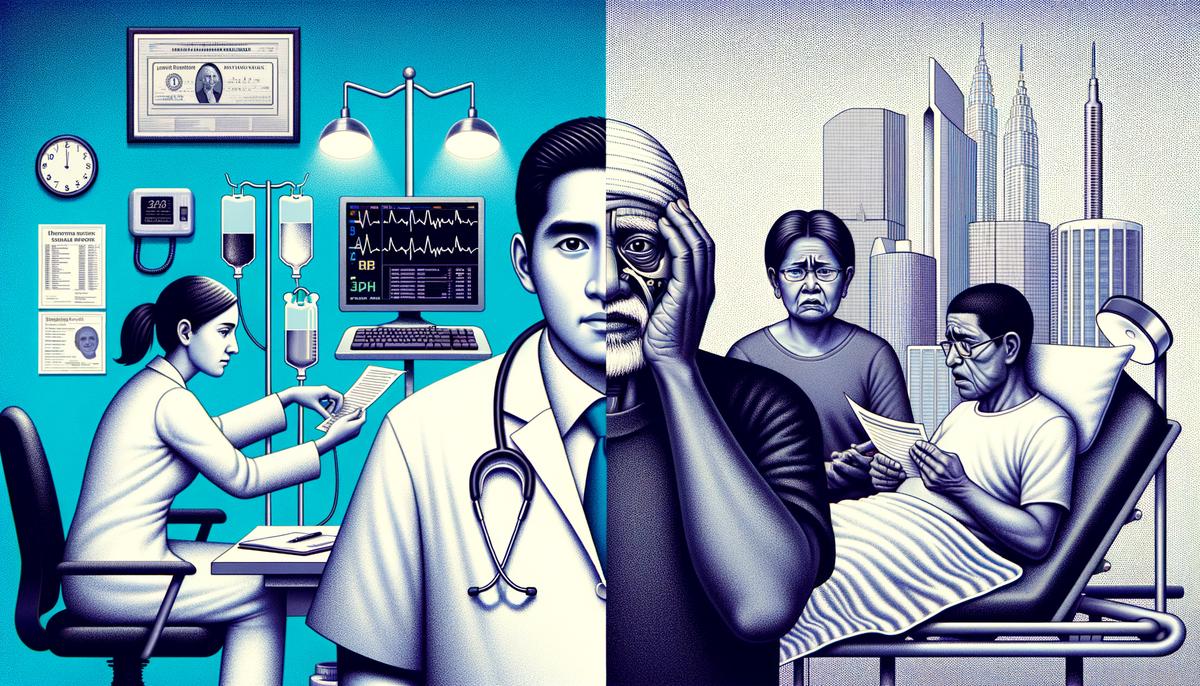
The disparities faced by uninsured and underinsured populations in America's healthcare system are significant. For those without insurance, accessing necessary care, including preventive services, is often out of reach. This leads to preventable illnesses escalating into more severe conditions.
The financial aspect exacerbates the crisis. Uninsured individuals face potential economic ruin from unexpected medical events, with out-of-pocket costs quickly accumulating. Even those with insurance struggle with high deductibles, copays, and coverage limits that can make care prohibitively expensive.
The impact on health outcomes is profound. Those without adequate coverage are at higher risk for worse health outcomes, including higher mortality rates from conditions that could have been manageable if identified and treated early.
These inequalities signal a systemic failure to uphold healthcare as a fundamental right. The cycle of poverty and poor health is perpetuated, with marginalized and economically disadvantaged groups often being the most affected.
Addressing these challenges requires urgent reform to imbue the healthcare system with compassion, inclusivity, and accessibility for all citizens. The quest for universal healthcare is not just an idealistic endeavor but a moral imperative to ensure that every individual can access the care they need to live healthy, dignified lives.
Policy Solutions for Universal Healthcare
Several policy solutions offer potential paths towards universal healthcare in America:
- Public Option: The government offers a health insurance plan that coexists with private insurers, aiming to increase competition and drive down costs.
- Preventive Care Programs: Shifting focus to preventing illness rather than just treating it, making routine health screenings, vaccinations, and wellness checks standard practice.
- Addressing Social Determinants of Health: Implementing policies that ensure affordable housing, equitable education, and reliable transportation to improve access to healthcare facilities and resources.
An integrated approach combining these elements sets the stage for a transformative shift in healthcare. While the change won't happen overnight, it lays the foundation for a sustainable system where healthcare is within reach for every person and family.
These thoughtful policy solutions bring the dream of universal healthcare closer to reality, painting a picture of a fairer, healthier future that stands within reach.

Ultimately, the pursuit of universal healthcare is not just about policy but about ensuring that every individual has access to the care they need. This goal reflects a commitment to health as a fundamental right, demanding continued effort and reform to create a more inclusive and equitable system.
- Nuila R. The People's Hospital. New York, NY: Scribner; 2022.
- Centers for Disease Control and Prevention. National Health Interview Survey, January-March 2024. Accessed May 2024.
- Commonwealth Fund. Health Care Coverage and Access: Findings from the Commonwealth Fund Health Care Affordability Tracking Survey, July-August 2023. Published August 2023.
- Pew Research Center. Public's Top Policy Priorities for 2024. Published January 2024.