
Impact of Allyship on Public Opinion
Allies offering support have a significant impact on public perception. The 2020 Black Lives Matter protests demonstrated this clearly. White allies joining racial justice protests played a part in shifting public opinion among both Black and White communities.
When protests had a significant number of White participants, the usual fears associated with minority-led protests diminished. More White faces meant less fear and fewer preconceptions of violence. This shift in perception often led to feelings of safety and support, particularly among White observers.
Many Black audiences saw White allies as strategic partners—bridge-builders who could attract attention to the movement and potentially reduce heavy policing. While some concerns arose about allies dominating spaces meant for those they were supposed to support, no significant backlash erupted.
On social media, images showcasing diverse protests garnered more engagement. These visuals became powerful tools for spreading the message of unity and solidarity.
While public opinion cannot single-handedly resolve systemic injustices, allies clearly demonstrated their ability to fuel change and push the conversation forward.
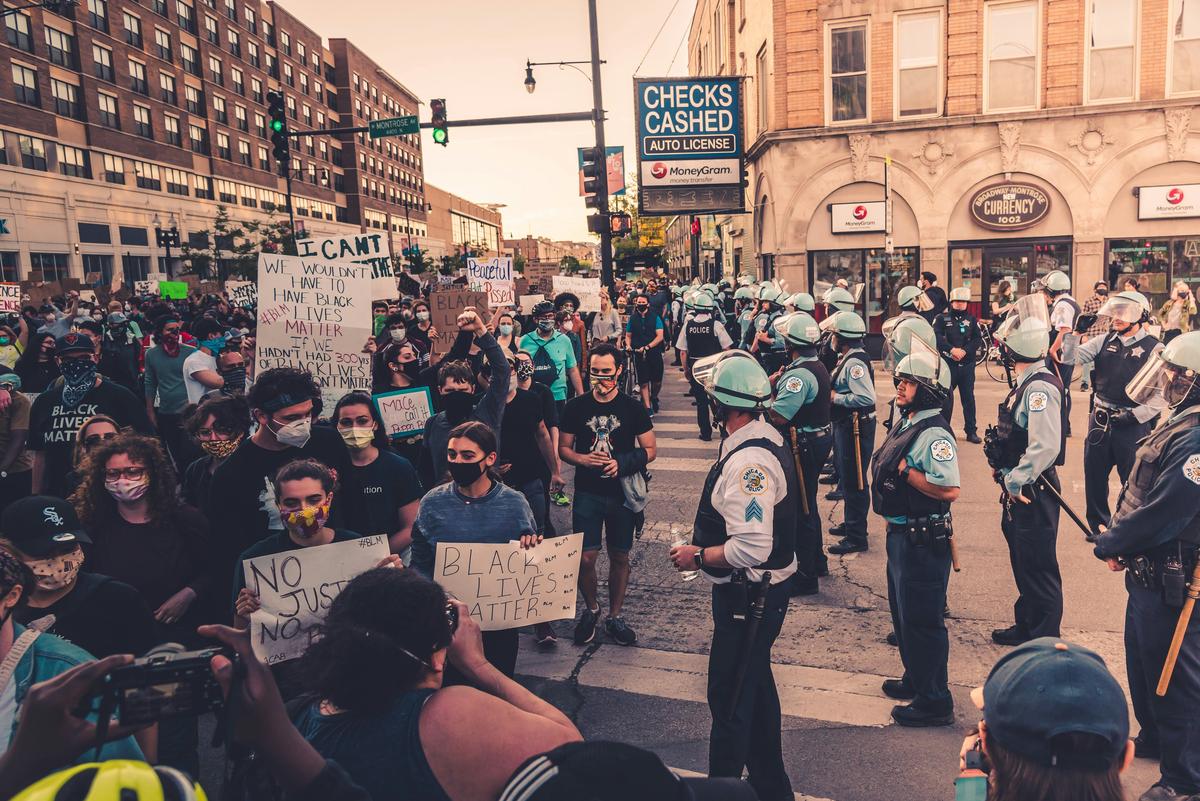
Photo by maxwbender on Unsplash
Benefits and Risks of Allyship
Allyship presents both opportunities and challenges for social movements. The 2020 Black Lives Matter protests exemplify how allies can be both strategic partners and potential pitfalls.
Benefits:
- Amplification of marginalized voices
- Increased media attention
- Deterrence of excessive policing
- Easing of tensions during protests
Risks:
- Shifting focus away from core issues
- Overshadowing lived experiences of marginalized groups
- Potential for cooptation and dilution of movement authenticity
- Challenges in maintaining momentum
An additional challenge emerges in maintaining momentum. Once the initial enthusiasm from allies wanes, can the movement sustain its progress? The BLM experience offers a somber reflection on this: allies must remain conscious of their privilege and responsibility to follow the lead of those with lived experience, rather than steering it.
In the broader context of social justice movements, acknowledging these dynamics ensures allies don't just participate superficially but become steadfast comrades that marginalized communities need. Allies must listen deeply and act with humility, understanding their crucial role without hijacking authentic representation.
Allyship and Police Perception
The dynamics between allyship and policing reveal complex interactions, particularly evident during the 2020 Black Lives Matter movement. A recent study illuminated how White allies reshaped public and institutional responses to protests, potentially reducing perceived threats.
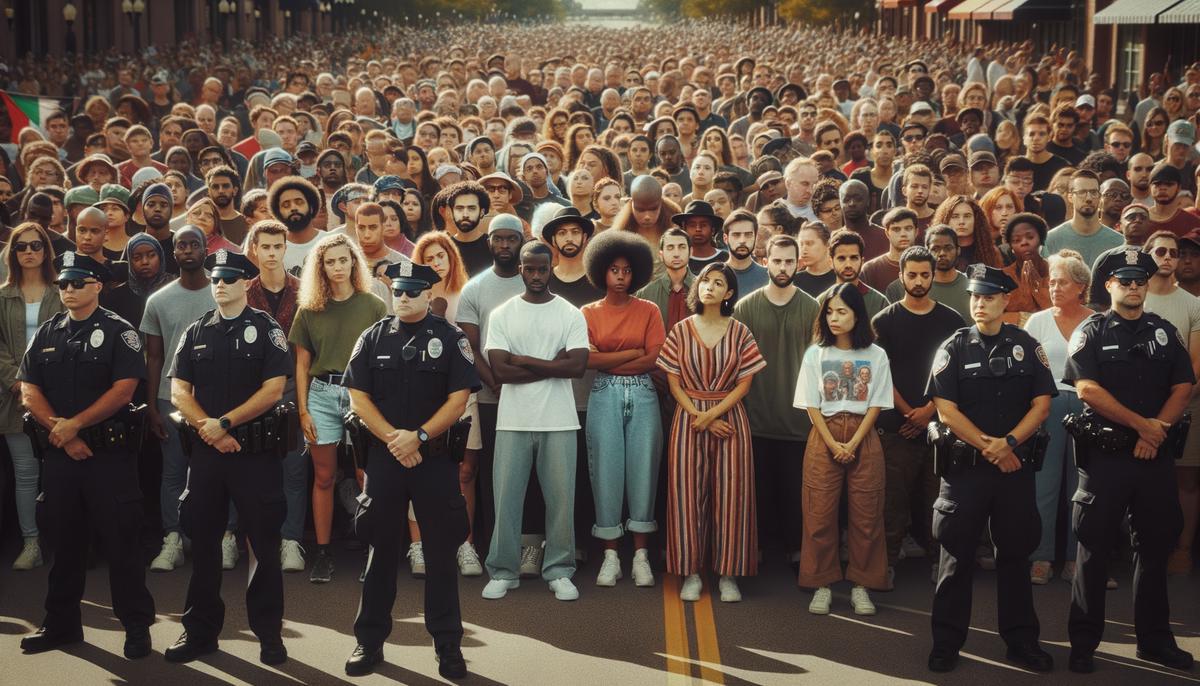
Historically, protests led by ethnic minorities are often preemptively marked as unruly, prompting aggressive police responses. However, the presence of allies, especially White allies, correlated with reduced expectations of police aggression. This presence seemed to act as a de-escalating force in potentially volatile interactions.
Images shared on social media during these events support this observation. Photos featuring diverse groups of protesters saw increased engagement, reshaping the narrative around these demonstrations. Allies, particularly those from advantaged backgrounds, appeared to lend legitimacy to the protests in the eyes of onlookers and law enforcement.
Statistically, when White allies participated in racial protests, the likelihood of escalating police tactics seemed to decrease. This created a delicate balance: allies helped reframe the perception of the protests without diminishing the intensity of the message.
However, this dynamic isn't without complications. There's a risk that ally participation might be seen as absorbing the 'heat' intended for marginalized groups without fully understanding the underlying issues. This poses a challenge in maintaining meaningful ally support and ensuring it addresses real issues rather than merely shielding against accountability.
The BLM protests remind us that while allies can help recalibrate prejudicial fears around police response, a fine balance must be struck. Their role should be to amplify, not overshadow; to support in recalibrating perceptions without diverting focus from those most affected by systemic injustices.
Social Media and Ally Engagement
Social media, particularly Twitter, played a crucial role in amplifying allyship during the 2020 Black Lives Matter protests. These platforms became digital town squares where compelling images of diverse protests became powerful catalysts for engagement.
Photos showcasing White allies standing alongside communities of color became viral linchpins. These images resonated deeply with audiences across digital terrains, telling a story of unity and amplifying the movement's message. Data shows that more racially diverse protest images received higher engagement metrics, translating into likes, shares, and retweets that spread rapidly.
"Our research shows how important allies can be in shaping public opinion and increasing support for social movements." – Dr. Devorah Manekin, Hebrew University
This digital engagement acted as a form of solidarity, allowing allies nationwide to project their support even when physical presence was limited. The analysis of Twitter feeds during this period revealed a shift in public sentiment when allies played active roles in the posted content.
However, the instantaneous nature of social media can also obscure nuance. Allies must be wary of turning activism into performance, where the drive for likes supersedes genuine support. The challenge lies in using these platforms intentionally—boosting essential voices without overshadowing the foundational message.
On this digital stage, allies had an opportunity to amplify movements authentically, functioning as connectors between the realities of protest and global forums ready to magnify these stories. As we reflect on the data and imagery from those landmark protests, it's clear that social media, when thoughtfully integrated into allyship, can transform conversations and set the stage for meaningful societal change.
Allyship can be a powerful catalyst for change, offering crucial support in the ongoing fight against injustice. While allies may not dismantle systemic issues alone, their presence and support can significantly influence public perception and action.
- Manekin D, Mitts T, Grossman G. The politics of allyship: Multiethnic coalitions and mass attitudes toward protest. Proc Natl Acad Sci USA. 2024;121(5):e2314653121.