
Origins and Evolution of Judicial Review
John Marshall's Marbury v. Madison decision in 1803 established judicial review in the United States. Without explicit constitutional backing, Marshall asserted the Supreme Court's power to deem Congressional acts unconstitutional. This concept soon spread beyond American borders, influencing post-World War II constitutions in Europe and Asia.
France established the Conseil Constitutionnel for mixed judicial-legislative review, while Germany, Italy, and South Korea introduced dedicated constitutional courts. These moves reflected a shift towards judicial oversight ensuring the rule of law against majority whims.
During the civil rights era, judicial review became instrumental in dismantling segregation through Brown v. Board of Education. Without this judicial power, the civil rights movement might have faced greater legal obstacles.
The spread of judicial review post-WWII emphasized its role in defending against totalitarian regimes. In Germany and Japan, incorporating judicial review into their post-war constitutions was seen as fortifying democracy.
Different forms of judicial review emerged globally:
- U.S.: Case-by-case reviews
- France: Pre-promulgation checks
- Germany: Fluctuated between abstract and concrete reviews
This adaptability allowed flexibility while ensuring alignment with constitutional principles.
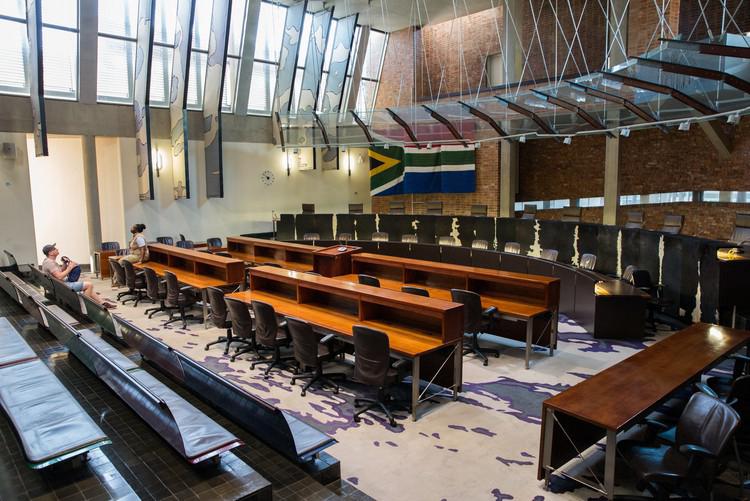
National courts became guardians of these principles, defending against overreach. From South Africa to New Zealand, the echoes of Marshall's 1803 decision shaped modern governance structures.
The shift towards judicial review symbolized trust in a non-elected arbiter. Courts became seen as impartial custodians of constitutional integrity, balancing democratic processes with constitutional safeguards.
The evolution continued with the rise of specialized constitutional courts. Countries adopted judicial review adapted to their unique political landscapes, all holding the primary lens given by Marbury v. Madison: ensuring government acts adhered to constitutional confines.

Mechanisms and Forms of Judicial Review
Judicial review functions in various forms, shaped by a country's legal frameworks and cultural contexts. These mechanisms include concrete vs. abstract review and pre-promulgation vs. post-promulgation review, each serving distinct roles in upholding constitutional integrity.
Concrete Review
Common in the U.S., examines specific cases where constitutional issues arise. This ensures judicial scrutiny is grounded in real-life disputes, providing tangible contexts for interpreting constitutional principles.
Abstract Review
Allows courts to evaluate legislation independent of specific cases. Countries like France and Germany use this method to appraise laws before they come into force, offering a preventative mechanism against unconstitutional legislation.
Pre-promulgation Review
Examines the constitutionality of laws before enactment, prominent in France. This method shields against potentially unconstitutional statutes.
Post-promulgation Review
Seen in Germany and South Korea, assesses laws after they take effect, addressing issues that become apparent through application.
Specialized constitutional courts, like Germany's Federal Constitutional Court, handle constitutional disputes exclusively. This specialization fosters concentrated expertise, enhancing the court's ability to address complex constitutional issues.
Comparing these systems reveals a rich array of judicial methodologies. Each country's approach reflects its historical, cultural, and political milieu while embracing the foundational tenet of constitutional oversight.
The role of specialized courts exemplifies the institutional gravitas underpinning judicial review. Such courts are tasked with nurturing the constitutional equilibrium essential for democratic health, reinforcing the judiciary's capacity to operate autonomously.
Whether through concrete, abstract, pre-promulgation, or post-promulgation review, judicial mechanisms worldwide echo a shared commitment to uphold constitutional values. This commitment, instantiated by specialized constitutional courts or integrated within general judicial systems, underscores the judiciary's paramount role in addressing the intricacies of modern governance while fortifying democratic institutions.
Judicial Review and Democracy
The debate on whether judicial review is anti-democratic touches at the core of how we envision democracy and interpret constitutional safeguards. Critics argue that it allows unelected judges to overturn decisions made by elected representatives, contradicting the principle of majority rule.
Ryan Cooper contends that judicial review was never intended by the Constitution's framers and challenges the legitimacy of the Supreme Court's self-assumed authority post-Marbury v. Madison. These critics emphasize that concentrating such power in the judiciary undermines the will of the people.
However, this argument often overlooks the deeper nature of democracy. True democracy isn't merely about majority rule; it also involves protecting the rights of minorities and ensuring individual freedoms are not trampled upon by transient majorities. The Constitution embodies several anti-majoritarian principles designed to safeguard these rights against potential oppression.
Judicial review emerges as a crucial mechanism to uphold these constitutional guarantees. One of its most compelling arguments is its role in protecting minority rights. Brown v. Board of Education serves as a quintessential example where judicial intervention was necessary to dismantle state-sponsored segregation, which legislative bodies and majority sentiment had maintained for decades.
The judiciary's independence serves as an impartial arbiter capable of enforcing constitutional compliance. This independence is vital in a system of checks and balances where no single branch should wield unchecked power. The judiciary's ability to interpret the Constitution and nullify unconstitutional laws ensures that legislative and executive actions remain within constitutional bounds.
Framing democracy solely as majority rule risks neglecting the core values it seeks to uphold: liberty, equality, and justice. The judiciary, through judicial review, reinforces these democratic principles, often protecting the very essence of democracy from populist transgressions. For instance, Obergefell v. Hodges, which legalized same-sex marriage nationwide, reflected the judiciary's role in affirming the rights of marginalized communities when legislative bodies lagged.
Without judicial review, unconstitutional actions by state or local governments could too easily become entrenched, disproportionately affecting those without sufficient political clout. Decisions like Gideon v. Wainwright, ensuring the right to legal representation, and Loving v. Virginia, overturning state prohibitions on interracial marriage, underscore the judiciary's critical function in protecting constitutional rights that might otherwise be ignored or violated by the majority.
In conclusion, judicial review's role in a democratic society is nuanced and deeply entrenched in maintaining a durable constitutional democracy. While it challenges majority rule, it simultaneously upholds the Constitution's anti-majoritarian principles, ensuring protection for all individuals, especially the most vulnerable. This balance underscores the judiciary's indispensable position in fostering a just and inclusive society.
Impact on Civil Rights and Liberties
Judicial review has been instrumental in safeguarding civil rights and liberties. Landmark cases like Brown v. Board of Education showcase how this judicial tool has driven social change and challenged discriminatory practices. By declaring "separate but equal" facilities inherently unequal, the Supreme Court set a precedent for challenging segregation in all public spheres, catalyzing the broader civil rights movement.
The advancement of incarcerated individuals' rights also demonstrates the power of judicial review:
- Gideon v. Wainwright affirmed the right to legal counsel for defendants who couldn't afford an attorney, ensuring fairer trials.
- Estelle v. Gamble asserted the Eighth Amendment's protection against cruel and unusual punishment, requiring prisons to provide adequate healthcare and reinforcing inmates' humanity.
However, judicial review's path toward equitable civil rights is not without challenges. Despite historic victories, the judiciary has faced criticism for inconsistencies and slow responses to emerging issues. For example, Milliken v. Bradley in 1974 limited desegregation efforts by ruling against cross-district busing, highlighting the court's limitations in addressing systemic segregation.
The struggle for LGBTQ+ rights underscores the evolving landscape of judicial intervention. While Obergefell v. Hodges in 2015 legalized same-sex marriage nationwide, it came after decades of legal battles and shifting public opinion. This reveals a tension: judicial review can lead to significant progress, but often after prolonged periods of marginalization.
The ongoing battle over voting rights exemplifies the judiciary's mixed record. In Shelby County v. Holder (2013), the Supreme Court invalidated key provisions of the Voting Rights Act, leading to a resurgence of restrictive voting laws affecting minority communities. This decision underscores the fragility of civil rights advancements and the need for constant vigilance.
Despite setbacks, judicial review remains crucial for expanding and safeguarding civil liberties. Recent rulings protecting transgender individuals' rights, such as Bostock v. Clayton County, reflect the judiciary's ongoing role in addressing contemporary issues. However, judicial review alone cannot fully address entrenched inequities. It works most effectively alongside legislative advocacy and grassroots activism.
In summary, while judicial review has been powerful in advancing civil rights and liberties, it is not a panacea. The landmark cases demonstrate its profound impact, yet ongoing challenges highlight its limitations and the necessity for continued advocacy and societal engagement.
Contemporary Challenges and Criticisms
Current challenges and criticisms of judicial review reveal a complex landscape filled with tension and debate. One pressing issue is the perceived politicization of the judiciary, particularly the Supreme Court. Critics argue that recent decisions increasingly reflect ideological divides, raising concerns about the Court's impartiality.
This perceived politicization is evident in landmark cases that have significantly impacted social and political landscapes:
- The 2010 Citizens United v. Federal Election Commission decision, allowing unlimited corporate spending in elections, has been criticized for favoring wealthy interests.
- The overturning of Roe v. Wade in 2022 sparked widespread controversy.
These rulings underscore ideological fissures within the Court and amplify concerns about judicial neutrality.
The judicial appointment process has come under scrutiny, with increasing partisanship surrounding Supreme Court nominations. The contentious confirmations of Justices Brett Kavanaugh and Amy Coney Barrett highlight fears that the Court is becoming a political battleground. Such appointments often rest on judges' ideological inclinations, potentially reflecting prevailing political power rather than a commitment to impartial justice.
Recent decisions on voting rights also raise alarms. In Brnovich v. Democratic National Committee (2021), the Supreme Court upheld restrictive voting laws in Arizona, leading to concerns about the erosion of protections under the Voting Rights Act. Critics argue that such decisions disproportionately disenfranchise minority voters, challenging the democratic principle of equal ballot access.
Several reforms have been proposed to address these issues:
- Term limits for Supreme Court justices to reduce the high-stakes nature of appointments and introduce regular judicial renewal.
- A more transparent and standardized appointment process, possibly involving bipartisan commissions to vet candidates.
- Expanding the number of justices on the Supreme Court, though critics caution this could further politicize the judiciary.
- Diversifying judicial appointments to better reflect various socio-economic and regional backgrounds.
Despite these proposed reforms, maintaining the judiciary's foundational principles is crucial. The Court's mandate to uphold constitutional checks and balances requires insulation from partisan pressures and a steadfast commitment to justice.
Addressing the perceived politicization through thoughtful reforms can enhance the judiciary's role in upholding constitutional governance. As society evolves, ensuring that judicial review remains a dynamic and impartial check on governmental power is vital for fostering a more just and equitable future.
Judicial review remains a crucial mechanism in maintaining constitutional governance and protecting civil rights. Despite current challenges, its role as an impartial arbiter is essential for upholding democratic principles and ensuring justice for all.