
[awesome_trivia id=”11″ skip_title=”no”]
The historical roots of racial inequality in America are deep and pervasive, affecting various aspects of life from wealth and education to health and the criminal justice system. Understanding these origins is crucial to addressing the systemic barriers that continue to impact communities of color today.
Historical Context and Origins of Racial Inequality
The roots of racial inequality in America stretch back to its earliest days. Before the founding of the United States, the forced removal of Indigenous peoples from their lands began. European settlers pushed Native Americans off their ancestral territories, violently seizing land and resources. This set the stage for a country built on the systematic subjugation of non-white people.
Slavery, established in the colonies during the 17th century, became a cornerstone of the American economy. Enslaved Africans were brought to provide the labor needed for the nation’s burgeoning agricultural industries. The wealth generated from cotton, tobacco, and sugar plantations was immense but came at an incalculable human cost.
Following the Civil War, the abolition of slavery did not dismantle the infrastructure of racial oppression. Instead, the Jim Crow era ushered in new forms of discrimination. Across the southern United States, policies were enacted to enforce segregation and disenfranchise Black citizens. These laws, coupled with widespread racial violence, deeply entrenched racial disparities.
As America entered the 20th century, racial inequality remained firmly established. The Great Migration saw millions of Black Americans move from the rural South to northern and western cities, seeking better economic opportunities and escaping the harsh Jim Crow laws. But even in their new homes, African Americans encountered systemic racism. Employment discrimination, residential segregation, and exclusionary lending practices like redlining kept Black families in impoverished neighborhoods and limited their opportunities for economic advancement.
Native Americans faced continued marginalization and coercive assimilation policies. Lands were expropriated, cultures suppressed, and children forcibly removed to boarding schools where traditional languages and practices were forbidden. These actions aimed to erase Indigenous identities and dismantle their communities, a legacy that still affects Native populations today.
Legislation continued to solidify racial inequality. The Chinese Exclusion Act of 1882 barred Chinese immigrants, reflecting widespread anti-Asian sentiment. During World War II, Japanese Americans were forcibly relocated and interned in camps, losing homes and businesses—a stark episode of racial injustice sanctioned by the government.
The fight for civil rights gained momentum in the mid-20th century. Landmark achievements like the Civil Rights Act of 1964 and the Voting Rights Act of 1965 aimed to dismantle legal segregation and secure voting rights. Yet, these victories did not erase centuries of discrimination and the deep-seated economic and social disparities that persisted.
Economic disparities remained glaring. Median household incomes for Black and Hispanic families lagged far behind those for white families. The racial wealth gap widened, as assets accumulated over generations provided buffers and opportunities for white families that were largely inaccessible to non-white communities. Health disparities reflected these economic injustices. Higher rates of chronic illnesses and limited access to quality healthcare burdened Black and Hispanic populations.
Educational inequality also persisted. Schools in primarily Black and Hispanic neighborhoods often received less funding and resources, leading to poorer educational outcomes and fewer opportunities for students. The legacy of segregated and unequal education systems continued to haunt minority communities, limiting their economic potential and reinforcing the cycle of poverty.
The historical roots of racial inequality have cultivated an environment where systemic racism can thrive. From the forced removal of Native peoples to the enduring impact of slavery and segregationist policies, these foundational injustices have shaped an America where racial barriers still exist. Addressing these deep-seated issues requires not just legislative change but a broader societal commitment to confront the legacies of its racially unjust past.
Current State of Racial Inequality
Despite significant strides in civil rights over the past century, the current state of racial inequality in America remains a significant challenge. Today, racial inequality manifests in numerous facets of American life, from wealth and education to employment, housing, health, and the criminal justice system.
Wealth disparities remain severe and deeply entrenched. According to recent data:
- For every dollar held by the average white family, Black families have only 24 cents
- Hispanic families have just 23 cents for every dollar held by white families
These discrepancies are largely rooted in historical exclusionary practices such as redlining and discriminatory lending.
In education, disparities begin early and persist through all levels of schooling. Studies show that Black and Hispanic children often attend underfunded schools, significantly impacting their academic achievements and opportunities. In 2019:
- 40% of white adults had earned a bachelor’s degree
- 26% of Black adults had earned a bachelor’s degree
- 19% of Hispanic adults had earned a bachelor’s degree
- 17% of American Indian or Alaska Native adults had earned a bachelor’s degree
Employment statistics reveal that Black and Hispanic adults are disproportionately represented in lower-wage jobs and have significantly lower median incomes compared to their white counterparts. In 2020, the median household income was:
- $46,000 for Black workers
- $55,500 for Hispanic workers
- $75,000 for white households
Regarding housing, segregation and discriminatory practices continue to marginalize communities of color. The legacy of redlining persists, with minority neighborhoods often facing lower property values and inadequate access to affordable housing. Consequently, these neighborhoods frequently lack essential resources and amenities, such as quality schools, healthcare services, and safe recreational spaces.
Health disparities also underscore the deep racial divides in America. Black and Hispanic communities experience higher rates of chronic illnesses such as diabetes, hypertension, and obesity, which are exacerbated by limited access to quality healthcare. The COVID-19 pandemic highlighted these issues, with Black and Hispanic Americans suffering disproportionately higher rates of infection and mortality.
The criminal justice system offers a stark depiction of racial inequality. African Americans and Hispanics are vastly overrepresented in prisons, with Black individuals incarcerated at rates five times higher than white individuals. The punitive measures and over-policing in communities of color have immense social and economic ramifications, tearing apart families and communities, and creating barriers to reintegration and employment post-incarceration.
"The exclusion of communities of color from the ladder of economic opportunity holds back economic growth for the entire country."
– Deputy Secretary of the Treasury Wally Adeyemo
The spillover effects of racial inequality dampen overall national economic productivity and innovation, undermining America’s competitive edge in the global marketplace.
Addressing the current state of racial inequality is not merely a matter of justice for affected communities; it is an urgent economic necessity for the nation. Through comprehensive policy changes, targeted investments in education and healthcare, and a renewed commitment to dismantling systemic barriers, we can create a more equitable future.

Impact of Policy and Legislation
The role of federal, state, and local policies in either perpetuating or mitigating racial inequality is complex. Historically, landmark legislation such as the Civil Rights Act of 1964 and the Voting Rights Act of 1965 aimed to dismantle institutionalized racial barriers, prohibit discrimination, and ensure equal voting rights. These laws brought transformative changes, opening doors that had long been sealed by systemic racism.
However, legislation alone was not enough to eradicate deeply ingrained racial biases. While these laws paved the way for significant progress, they faced resistance. Some states and localities employed tactics to circumvent federal mandates, manifesting in continued disparities in education, employment, and housing.
State-level policies have had a dual impact:
- Progressive states have enacted policies that support racial equity, such as exploring reparations for historical injustices.
- Other states have enacted policies contributing to racial disparities, such as rollbacks of affirmative action in higher education and limitations on voting rights.
Federal policies in recent decades have shown a mixed legacy. The dismantling of regulation, such as the weakening of the Voting Rights Act by the Supreme Court’s 2013 Shelby County v. Holder decision, removed essential protections that had been instrumental in combating racial discrimination in voting. Additionally, economic policies favoring deregulation and reduction in welfare services have adversely affected minority communities, who rely more heavily on social safety nets.
President Biden’s administration has attempted to reverse some of these detrimental trends. Initiatives aimed at promoting racial equity in economic opportunities and addressing systemic barriers have been championed, such as the Executive Order on Advancing Racial Equity and Support for Underserved Communities Through the Federal Government.
Local policies also play a crucial role. Urban planning and zoning laws often maintain segregation and limit economic opportunities for minority residents. Efforts to reform these policies have been uneven. While some cities have embraced inclusionary zoning and affordable housing mandates, others still perpetuate exclusionary practices.
The criminal justice system, heavily influenced by local and state policies, exhibits pronounced racial disparities. Higher rates of policing, arrests, and incarceration for communities of color reflect entrenched systemic biases. Policies supporting criminal justice reform show promise but require sustained commitment and expansion to effect meaningful change.
Mitigating racial inequality demands persistent advocacy, informed policy-making, and unwavering commitment to genuinely inclusive and equitable practices. Federal, state, and local policies must not only correct historical injustices but must also be designed to prevent the perpetuation of inequality. It is through such multifaceted efforts that we can hope to foster a more just society where the promise of equality stands the test of time.

Public Perception and Social Attitudes
The landscape of racial justice in America is shaped by diverse perceptions and attitudes across racial, ethnic, and political lines. White Americans generally view progress toward racial equality more positively than Black or Hispanic Americans. About 58% of white adults believe substantial progress has been made in ensuring equal rights over the past 60 years, compared to only 30% of Black adults.
These varying perceptions are influenced by personal experiences with systemic barriers. A significant majority of Black Americans (83%) believe efforts to ensure racial equality have fallen short, compared to 58% of Hispanic Americans and 44% of White Americans.
Media plays a crucial role in shaping public perceptions, often portraying communities of color disproportionately in terms of struggles rather than successes. This can reinforce stereotypes and perpetuate racial biases.
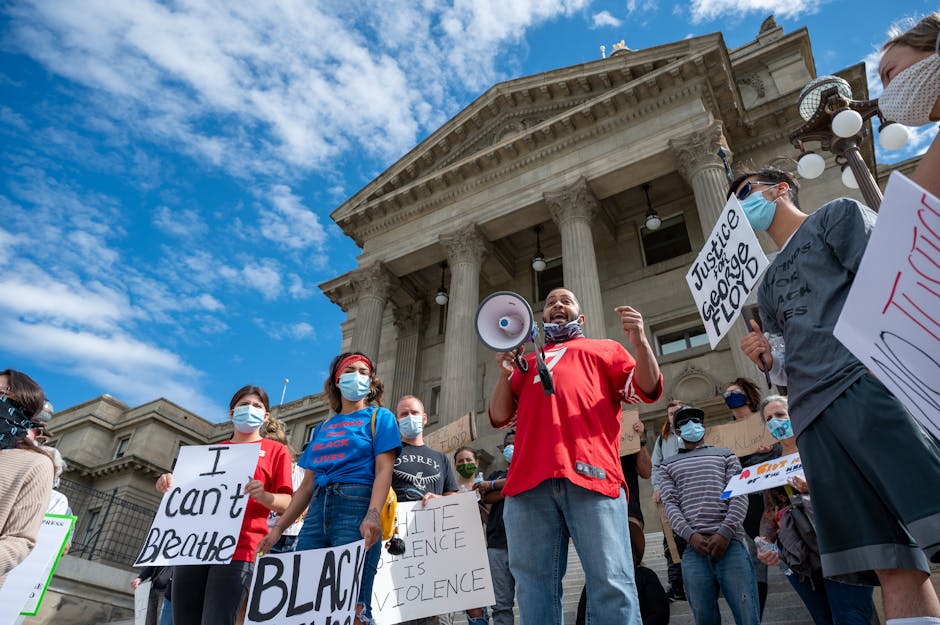
Social movements like Black Lives Matter have emerged as powerful forces for change, bringing issues of police brutality and systemic racism to the forefront. While garnering substantial support among Black Americans, these movements face more divided opinions among White Americans.
Educational and institutional settings serve as arenas for shaping perspectives on race and inequality. While some institutions have embraced diversity initiatives, others have faced backlash against policies perceived as promoting “critical race theory.”
The outlook on achieving racial equality within a lifetime remains pessimistic for many, reflecting the deep-seated challenges in dismantling systemic barriers. Advancing toward a more just society requires addressing these complex dynamics, fostering inclusive dialogues, and amplifying marginalized voices.
Future Prospects and Challenges
The path forward for racial justice in America is marked by both promising initiatives and significant hurdles. Grassroots movements continue to be pivotal in driving change, with local initiatives making tangible differences in areas like community policing, education, and health equity.
Policy proposals at federal and state levels signal steps toward addressing historical injustices. The reintroduction of the H.R. 40 bill, aimed at studying reparations for African Americans, and state-level initiatives like California’s reparations task force reflect growing recognition of past harms.
Efforts to tackle economic disparities are gaining traction, with policies aimed at closing the racial wealth gap through expanded access to affordable housing, credit reform, and investment in minority-owned businesses. The current administration’s focus on “modern supply side economics” prioritizes inclusive growth benefiting all Americans.
However, significant challenges persist. Entrenched systemic racism, rollbacks of affirmative action, and attacks on voting rights threaten to undo progress. Legislation limiting discussions of race in educational settings hampers efforts to foster inclusive dialogue about America’s racial history.
Addressing these challenges requires multifaceted strategies:
- Education: Integrating comprehensive, inclusive histories into curricula to build a more just society.
- Policy reform: Implementing and enforcing anti-discrimination laws and expanding social safety nets.
- Corporate responsibility: Advancing diversity, equity, and inclusion initiatives in workplaces.
The path to racial justice demands an unwavering commitment to equity, inclusion, and systemic change. It involves addressing both visible inequalities and underlying discriminatory structures. As grassroots movements push for justice and policymakers explore innovative solutions, there is hope for a future where equality becomes a reality rather than just an ideal.

The enduring impact of racial inequality in America requires a multifaceted approach. Addressing these deep-seated issues demands policy changes and a societal commitment to confronting and rectifying the legacies of an unjust past. Only through sustained efforts can we hope to build a more equitable future for all.