
Current State of Student Debt
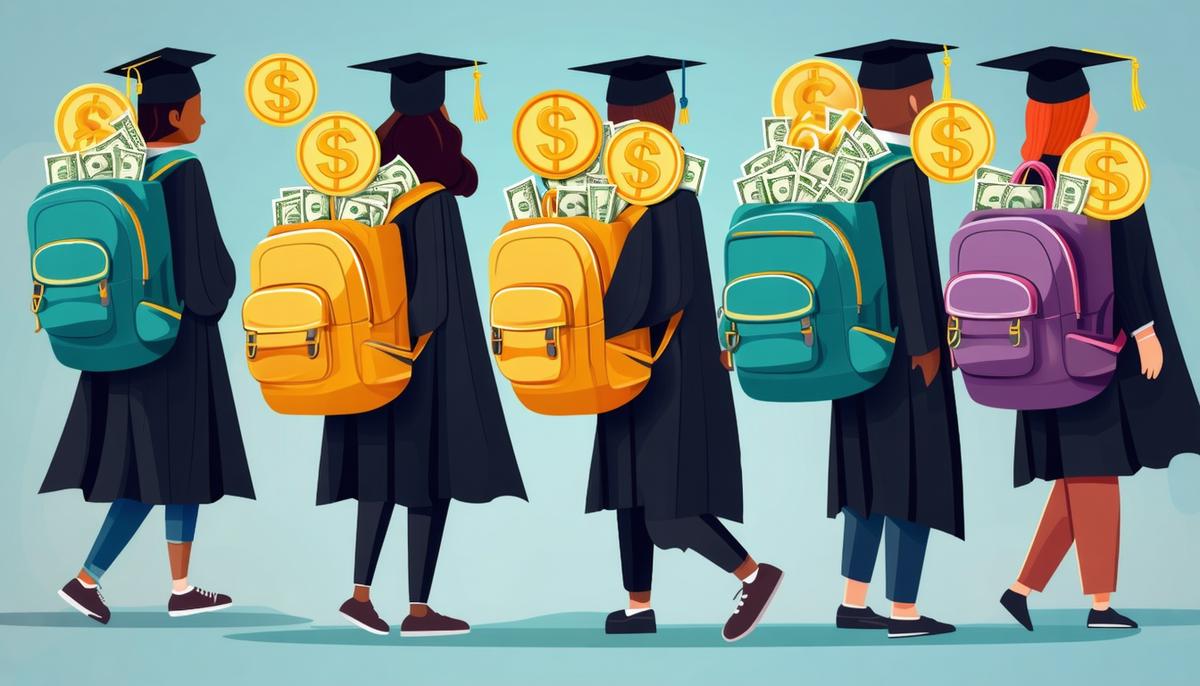
Student debt in America stands as one of the most pressing economic burdens on the nation. With $1.7 trillion owed collectively, it surpasses all auto loans and credit card debt combined. Only mortgages hold a larger debt title. The average graduate owes $30,000, a significant obstacle to financial freedom.
The burden is not evenly distributed. One-third of the total debt belongs to just seven percent of borrowers, each owing over $100,000. Paradoxically, those with modest debts often face greater challenges. Students leaving school without a diploma have a default rate triple that of graduates.
Demographically, the burden falls disproportionately on students of color:
- Black college graduates, on average, owe $25,000 more in loans than their white counterparts.
- Hispanic and Latino students also face steeper financial challenges due to systemic discrimination.
The economic consequences are far-reaching. Loans impede home ownership and entrepreneurship. Even high-paying jobs may not suffice to neutralize towering debt. These loans are notoriously difficult to discharge, even in bankruptcy.
The impact extends across generations. There has been a fivefold increase in borrowers over 60 in the last two decades, affecting retirement savings and income.
While higher education generally aligns with income growth, astronomical tuition hikes outpace reasonable salary increases. This leaves many graduates struggling to balance societal expectations with financial realities. The push for student debt relief thus represents not just an economic recalibration, but a call for equitable support and policy reform.
Government Involvement and Policies
The federal government's role in student loans dates back to post-WWII America, with the Servicemen's Readjustment Act of 1944 allowing veterans to pursue higher education at minimal costs. The Cold War era expanded this involvement through the National Defense Education Act of 1958. By 1965, the Higher Education Act established much of the current financial aid structure.
Today, the federal government holds the majority of the $1.7 trillion student debt. However, critics argue that federal policies have inadvertently enabled rising tuition costs.
The Biden administration has attempted to address this crisis. Their proposal to cancel up to $20,000 in student debt for qualifying borrowers was blocked by the Supreme Court, citing executive overreach. Undeterred, the administration introduced the Saving on a Valuable Education (SAVE) plan, an income-driven repayment scheme designed to ease monthly payments and offer a clearer path to loan forgiveness.
These initiatives primarily target:
- Low-income earners
- Borrowers of color
- Those misled by for-profit institutions
- Long-term borrowers
They aim to address economic equity and fairness, questioning the sustainability of a system that leaves generations financially burdened.
The federal government's role now oscillates between maintaining long-standing policies and pursuing radical reform. Addressing systemic flaws in education financing, restoring faith in education as a pathway to upward mobility, and reimagining policies to reflect contemporary challenges are crucial steps in ensuring education serves as a bridge to opportunity, not a barrier.
Impact of Debt Relief Proposals
Debt relief proposals aim to address long-standing disparities across race, economic status, and gender. Black graduates, burdened with higher loan amounts, stand to benefit significantly from relief efforts that could help narrow racial wealth gaps.
Women, often facing higher student loans and systemic wage disparity, particularly in female-dominated fields like education and healthcare, could find substantial relief. For older Americans, increasingly ensnared in student debt, these proposals could ease pressure on fixed incomes and reduce the need to work beyond retirement age.
"Full student debt cancellation would boost the economy by $1 trillion over 10 years, creating millions of jobs and letting people buy homes, start businesses and pursue their dreams."
Critics argue from a standpoint of fiscal responsibility, questioning the fairness of canceling debts some have managed to repay through personal sacrifice. However, many of these critiques overlook the targeted nature of relief proposals, which focus on historically underserved or economically disadvantaged groups.
The political discourse extends beyond financial considerations into philosophical territory. While some see debt relief as a financial lifeline, others perceive it as a moral hazard that could encourage irresponsible borrowing.
Ultimately, these proposals open a multi-faceted dialogue on how America values education and prioritizes equity. The chosen path should reflect a commitment to fostering a society that supports those seeking a better future through education.

Challenges and Criticisms
The path to student debt relief is complex, with challenges and criticisms fueling ongoing debates. Opponents question the fairness of debt forgiveness, particularly from the perspective of those who have repaid their loans or chose less debt-intensive educational paths.
Economic concerns include:
- Potential burden on taxpayers
- Risk of ignoring underlying issues like high tuition rates
- The "Bennett Hypothesis" suggesting increased federal aid could drive institutions to hike tuition further
The political landscape presents formidable barriers to executing sweeping policy changes. Recent judicial pushback, exemplified by the Supreme Court's blocking of a major loan forgiveness plan, underscores the challenges in implementing such initiatives.
Legal avenues for achieving debt relief must navigate existing frameworks while withstanding challenges from groups wary of executive overreach. Balancing the direct benefits of debt cancellation against broader societal impacts requires nuanced policy-making and bipartisan support—a significant challenge in today's polarized environment.
Addressing these issues requires continual assessment of debt relief initiatives' implications. Open, inclusive dialogues that weigh micro-level benefits against macro-level consequences are essential in crafting responsible solutions that address current debt issues without creating future crises.
Future Directions and Alternatives
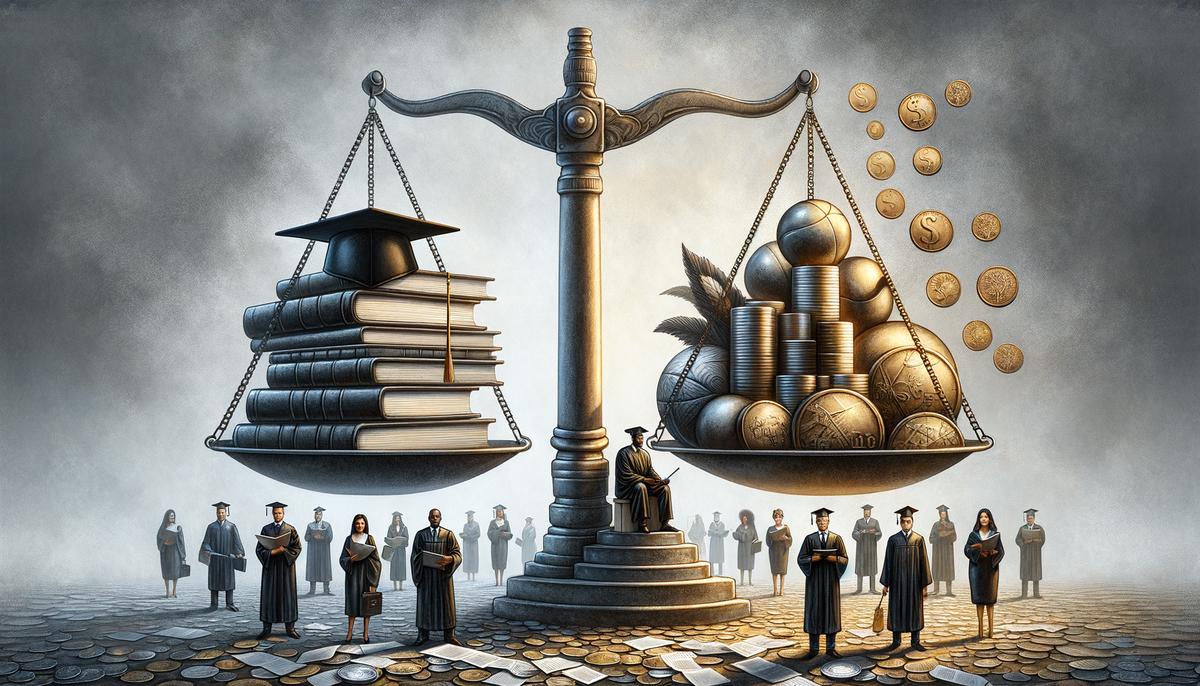
Addressing the student debt crisis requires exploring alternatives beyond outright debt cancellation. These potential solutions involve reimagining how America funds and views higher education.
Altering Higher Education Funding Models
- Increasing public investment to stabilize tuition and improve college accessibility
- Advocating for tuition-free public colleges
Reassessing Vocational Education
Promoting trades such as carpentry, plumbing, and electrical work as viable alternatives could realign educational aims with individual aptitudes and market demands. Expanding apprenticeships and technical training programs can open doors for practical learning, challenging the stigma often attached to non-college careers.
Regulatory Reforms
Enforcing cost controls and accountability on institutions. Tying federal aid eligibility to performance metrics could pressure colleges to prioritize student outcomes over profit. This approach requires transparent oversight to ensure educational quality aligns with financial input.
Support Systems for Marginalized Communities
Creating comprehensive support systems for students from marginalized communities remains essential. Financial literacy programs, academic advising, and early intervention strategies can help students navigate educational pathways more effectively.
The path forward involves systemic rethinking. By embracing diverse educational models, enhancing public investment, and aligning funding with outcomes, policymakers can work towards an education system where opportunity and affordability coexist, ensuring education acts as a gateway to possibility rather than a financial constraint.

In confronting the student debt crisis, the pivotal question remains: how can education be a bridge to opportunity rather than a barrier? The pressing need for reform highlights the importance of crafting policies that prioritize equity and access, ensuring that the promise of higher education is not overshadowed by financial constraints.
- Government Accountability Office. Student Loan Income-Driven Repayment Plans: Clearer Information and Timely Access to Forgiveness Needed. Washington, DC: GAO; 2022.
- Warren E, Merkley J. A New Path Forward: How President Biden's Student Debt Relief Plan Will Help Millions of Americans. Washington, DC: Office of Senator Elizabeth Warren; 2024.
- Federal Reserve Bank of New York. The Labor Market for Recent College Graduates. New York, NY: Federal Reserve Bank of New York; 2019.