Art stands as a profound force, shaping society and challenging norms. Through its vivid expressions, it captures the essence of social movements, bridging past and present, while inviting reflection and action. The interplay between art and activism creates a chorus of voices, each contributing to the story of change.
Art as a Catalyst for Social Change
Art has a unique ability to break down complex societal issues into digestible forms. Murals and visual art can convey messages about inequality or climate change more effectively than lengthy texts, bridging gaps and resonating across cultural barriers. From Picasso's "Guernica" to impactful hip hop anthems, art amplifies voices often overshadowed by the status quo.
In public spaces and on social media, art rallies support for justice movements. Iconic images like Shepard Fairey's "Hope" poster for Obama's campaign can channel collective optimism and unify those seeking change. Art weaves identity and shared purpose into the fabric of society, igniting passion and driving collective action.
Art challenges dominant narratives, exposing hidden power structures and compelling us to question conventional thinking. Through various mediums, it exerts pressure on those in power to address societal issues. This creative force acts as a form of democratic expression, planting seeds of change in public consciousness.
By influencing public opinion, art performs a crucial role in societal transformation. It bypasses defenses, opening minds to new perspectives. From thought-provoking posters to poignant photographs, art educates and shifts perspectives gradually but powerfully. This shift in public sentiment often compels decision-makers to adjust their policies, echoing the calls for change expressed through creative mediums.
Artistic Representation and Preservation
Art serves as both storyteller and keeper of collective memory, etching defining moments of social movements into cultural consciousness. These artistic records bridge past and present, giving shape and voice to stories that might otherwise fade, echoing struggles and triumphs of societies striving for justice and equality.
Art captures the emotions of movements with remarkable clarity. A photograph of a civil rights march or a mural protesting climate inaction brings to life the energy and urgency of those moments. This enables audiences to not just see history, but to feel it, fostering empathy across generations.
By amplifying marginalized voices, art carves out space for stories often sidelined in mainstream discourse. Artists like Jean-Michel Basquiat and Keith Haring have used their platforms to highlight the struggles and resilience of marginalized communities, ensuring these crucial narratives emerge from the peripheries of society.
The power of art lies in its ability to foster empathy and understanding. By engaging with art, viewers experience a visceral awareness, examining their own role in social justice. Art doesn't just chronicle history; it demands reflection, urging us to rewrite stories of exclusion with empathy and inclusivity.
These artistic renditions of social movements compel us to remember, learn, and envision a more equitable future. Art becomes a guiding light, illuminating paths forward and preserving the essence of past struggles to nurture tomorrow's champions of change.
Challenges in Art and Social Movements
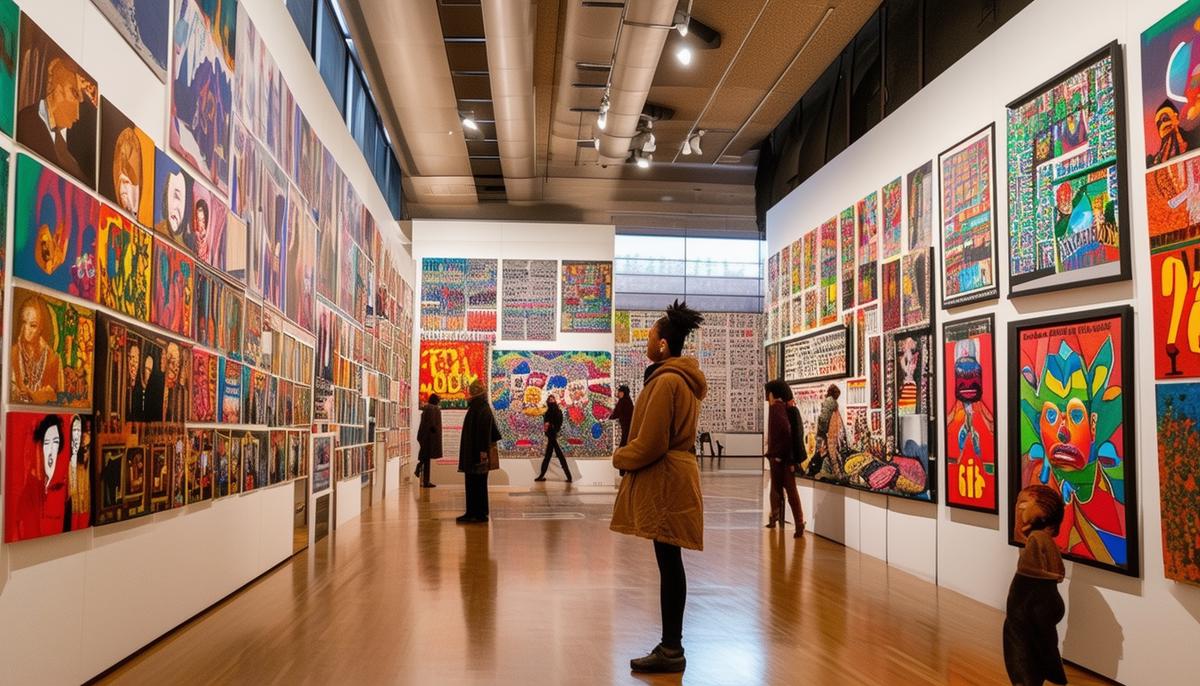
As art navigates societal change, it faces challenges such as accessibility, commercialization, and measuring impact. Each challenge offers an opportunity for growth, ensuring art remains an authentic catalyst for social transformation.
Accessibility is a primary concern. Art must transcend traditional boundaries to resonate with all. The challenge lies in breaking down barriers, making art as accessible as possible to ensure diverse communities can see themselves reflected in and transformed by it. Community art initiatives, public installations, and digital platforms represent exciting frontiers in this quest for inclusivity.
Commercialization poses another challenge, potentially diluting the power of art's original intent. The task is to maintain a balance—to amplify without exploiting—preserving the authenticity of art in the marketplace. Artists must ensure their creations remain powerful calls to action that maintain their social critique.
Measuring impact presents a complex challenge. The non-linear nature of art means its effects are often subtle, influencing individual consciousness and societal norms over time. By fostering dialogue among artists, activists, academics, and audiences, we can develop approaches to better understand art's role in social change. Through storytelling, longitudinal studies, and cross-disciplinary partnerships, we can chart art's influence more effectively.
Addressing these challenges is an opportunity to redefine the capabilities of artistic expression in social movements. Each hurdle crossed deepens our understanding and broadens the impact, ensuring art remains a dynamic force for positive change in our evolving world.
Art and Political Activism
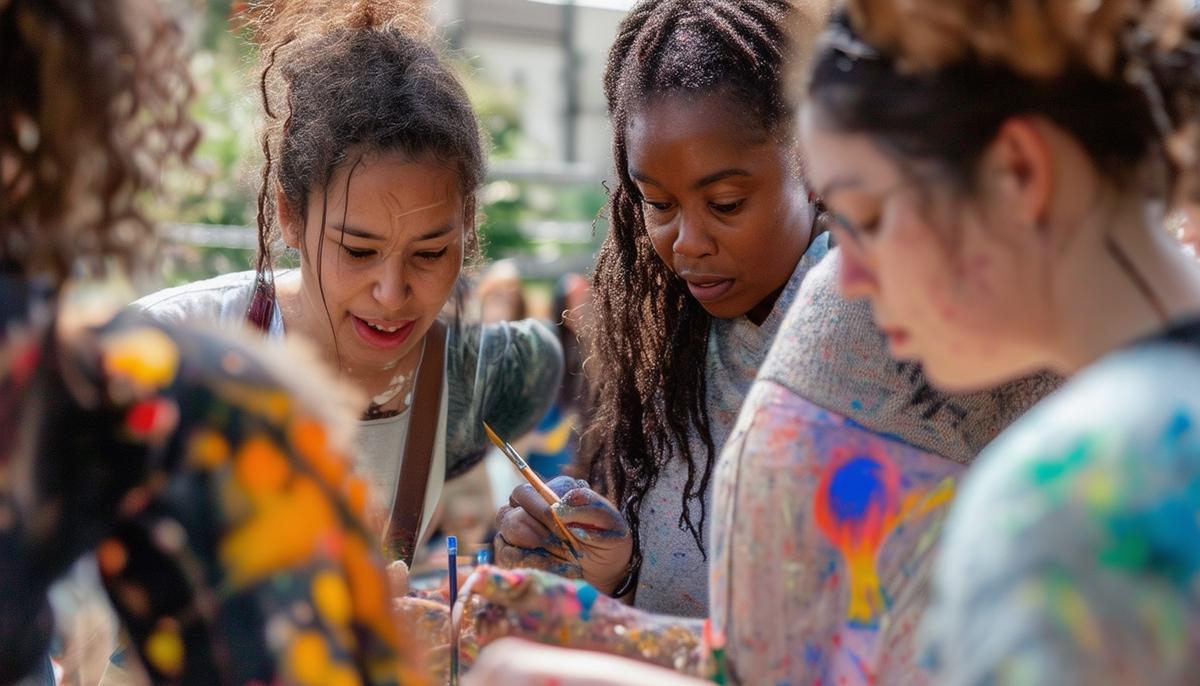
Art and political activism have long been intertwined, with artists often championing causes that ripple through political and social landscapes. Using various mediums, protest art materializes as a vivid display, challenging power structures and advocating for justice and equity.
From ancient cave walls to modern urban canvases, protest art remains a critical vehicle for advocacy. Artists like Ai Weiwei use installations to challenge censorship and demand transparency, serving as a testament to creativity's resilience in the face of suppression.
Artists in activist roles reshape political discourse and spark movements. Banksy, for example, transforms ordinary spaces into platforms for societal critique, addressing issues of war, consumerism, and inequality. Such works ignite dialogue and propel conversations into decision-making spaces.
Artistic advocacy interweaves complex stories that resonate within societies, championing causes and permeating communities. By tapping into the universal language of aesthetics, art can make abstract concepts tangible and compel reconsideration of entrenched beliefs.
The potency of protest art fuels movements, creating emblems of hope and action. Artists like Shepard Fairey mold movements with iconic images that transcend mere visual stimuli, motivating people to engage in civic action.
As we navigate charged political and social climates, the role of artists as advocates becomes increasingly vital. They infuse activism with creativity, turning personal accounts into universal calls for change. Their work ensures that the struggle for a more equitable world remains not just heard but seen, felt, and acted upon.
The Intersection of Art and Social Media
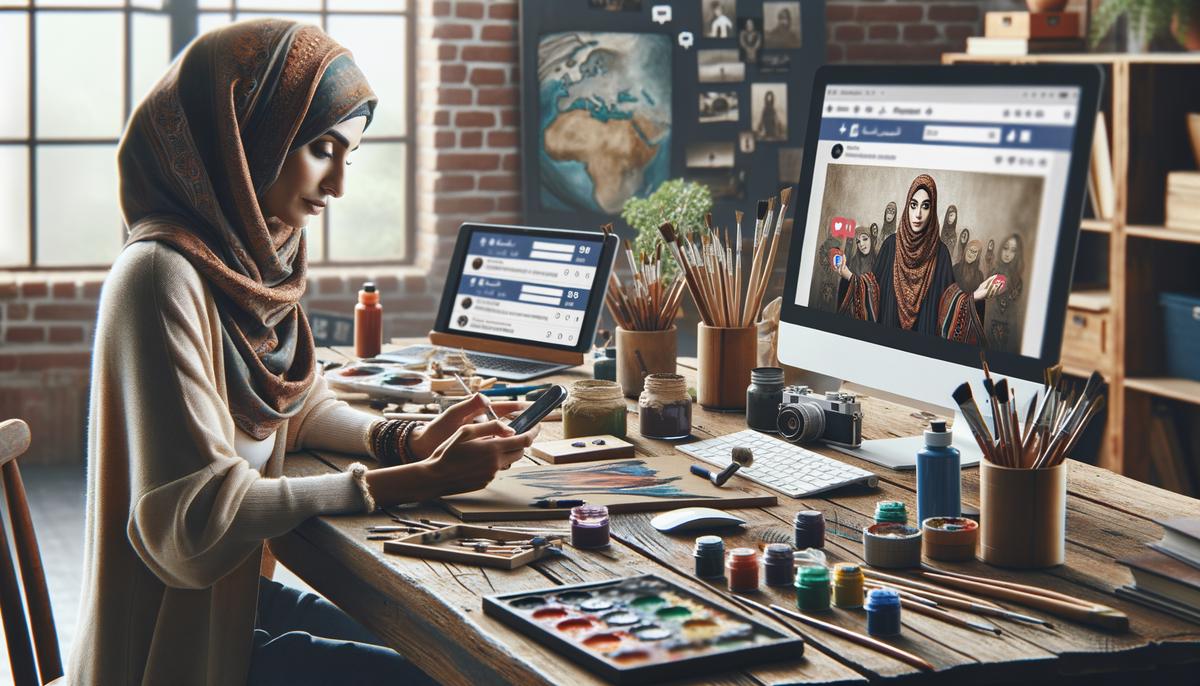
Social media has emerged as a powerful ally in art activism, transforming digital platforms into vast virtual canvases where creativity and change converge. These spaces allow art to be disseminated globally, reaching audiences far beyond traditional galleries. Artists use these platforms to amplify their voices and rally support for causes, engaging millions in conversations about justice and social issues.
Social media has democratized artistic activism, making it accessible and participatory. Hashtags like #BlackLivesMatter and #MeToo demonstrate how online art can ignite widespread awareness and action. These platforms offer immediacy, enabling artists to respond to societal shifts in real time, adding urgency to their campaigns.
However, the open nature of social media presents challenges:
- The risk of virality overshadowing depth exists, where likes and shares may be valued over meaningful dialogue.
- The deluge of content can sometimes reduce complex stories to fleeting trends, diluting their original power.
- Algorithms can challenge the visibility of art that isn't sensationalized, often amplifying mainstream voices over nuanced viewpoints.
Navigating these digital waters requires balance. Artists must craft content that captivates without compromising integrity, ensuring their message remains intact as it spreads online. Integrating cross-platform strategies can bolster the longevity and reach of art activism, ensuring sustained impact.
Despite challenges, social media remains a potent force for change within art activism. It acts as a conduit for connection, enabling marginalized voices to find audiences and build movements. By fostering dialogue and creative synergy, digital platforms have the capacity to turn grassroots movements into global phenomena.
In this intersection of art and social media, the canvas is expansive, and participation is open to all. The challenge moving forward is to embrace the potential of these platforms for artistic activism while critically engaging with the spaces they create, ensuring that shared art continues to influence hearts, policies, and societies.
Art does more than mirror society; it propels it forward, urging us to rethink entrenched paradigms. By capturing the spirit of social movements, it guides us toward a future where justice and equality are not just ideals but realities. This transformative power of art remains a beacon for those striving to reshape the world.
- Schafroth E. Art inspires and expresses societal movement and change. CLIMARTE ART + CLIMATE = CHANGE 2019 festival.
- Baldwin J. The role of the artist. In: The Price of the Ticket: Collected Nonfiction, 1948-1985. St. Martin's Press; 1985.
- Trainor Parker L. Arts can improve and even save lives. In: The Role of Art in Social Change. Arts Council of Australia; 2020.
- Jansen A. Art can change the way we think and feel. In: The Power of Art in Society. Australian Council for the Arts; 2021.