
Historical Context of Disability Rights
The disability rights movement in America has transformed societal perceptions and legal frameworks over time. Early advocacy began in the 1800s, with organizations forming to fight for the interests of marginalized communities. The 1970s marked a significant turning point, driven by collective action against systemic exclusion.
Key milestones include:
- The Rehabilitation Act of 1973, which sparked a sit-in at the San Francisco Federal Building, forcing the government to view disability through a civil rights lens.
- The Education for All Handicapped Children Act of 1975, guaranteeing public education rights for children with disabilities.
- The Americans with Disabilities Act (ADA) of 1990, prohibiting discrimination in workplaces, public transportation, and public accommodations.
Self-advocacy became a core strategy, with organizations like the Disability Rights Education and Defense Fund (DREDF) and Americans Disabled for Accessible Public Transportation (ADAPT) mobilizing public demonstrations. The Capitol Crawl of 1990, where activists abandoned wheelchairs and crawled up the steps of the U.S. Capitol, vividly highlighted physical barriers faced daily.
Through activism and legislation, disability rights have become an integral part of the broader social justice movement. While progress has been made, ongoing efforts are needed to ensure full equality and dignity for all.

Intersectionality in Disability Advocacy
The intersectionality of disability rights with other social justice movements reveals layers of complexity and necessity. Recognizing multiple marginalized identities within the disability community is crucial for effective advocacy.
Disability rights intersect with:
- Racial justice: Systemic racism compounds barriers faced by disabled individuals of color, resulting in disparities in education, healthcare, and employment.
- LGBTQ+ rights: The disability movement shares commonalities in overcoming stigma and reshaping societal norms.
- Economic justice: Economic policies often neglect or adversely affect people with disabilities, exacerbating the cost of living with a disability.
The disability justice framework, with roots in queer and trans communities of color, underscores the importance of an intersectional approach honoring diverse identities and experiences.
By embracing intersectionality, the disability rights movement enhances its own fight for equality while contributing to a universal message of justice. This integrated approach strengthens the push for comprehensive change and dismantling of systemic barriers that maintain inequalities.
Challenges Faced by Disabled Individuals in the South
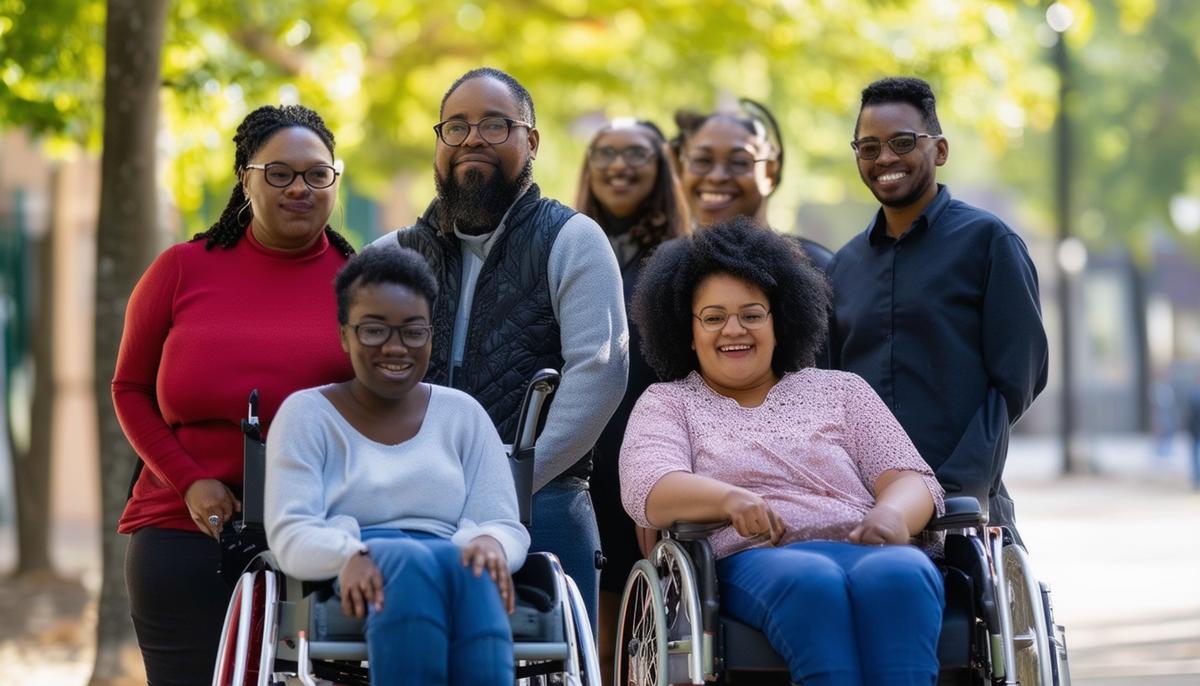
Disabled individuals in the Southern U.S. face unique challenges rooted in historical and systemic inequalities. Poverty, inadequate healthcare, and a punitive criminal justice system create a particularly difficult environment for disabled Southerners.
"The South is home to one third of all disabled people in the United States. Because people with disabilities live at the intersection of all systems of inequality, they are impacted by the problems that plague the South—from high poverty levels to an incredibly harsh criminal justice system—all the more."
Key challenges include:
- Poverty: The South has some of the highest poverty rates in the United States, compounding economic challenges for individuals with disabilities.
- Healthcare access: Several Southern states have refused to expand Medicaid, leaving many disabled individuals without affordable healthcare.
- Criminal justice system: Disabled people, particularly those who are Black, Indigenous, or people of color, face heightened risks of criminalization and incarceration due to misinterpretations of disabilities and racial biases.
Organizations like New Disabled South are working to address these issues through advocacy, policy reform, and community support. Their efforts focus on healthcare policy reform, criminal justice system improvements, and raising awareness about the unique challenges faced by disabled Southerners.

Role of Advocacy and Policy in Advancing Disability Rights
Advocacy and policy play crucial roles in advancing disability rights, serving as catalysts for societal transformation. Organizations like the Disability Rights Education and Defense Fund (DREDF) and Americans Disabled for Accessible Public Transportation (ADAPT) employ strategic advocacy to drive policy changes.
Key strategies include:
- Grassroots mobilization
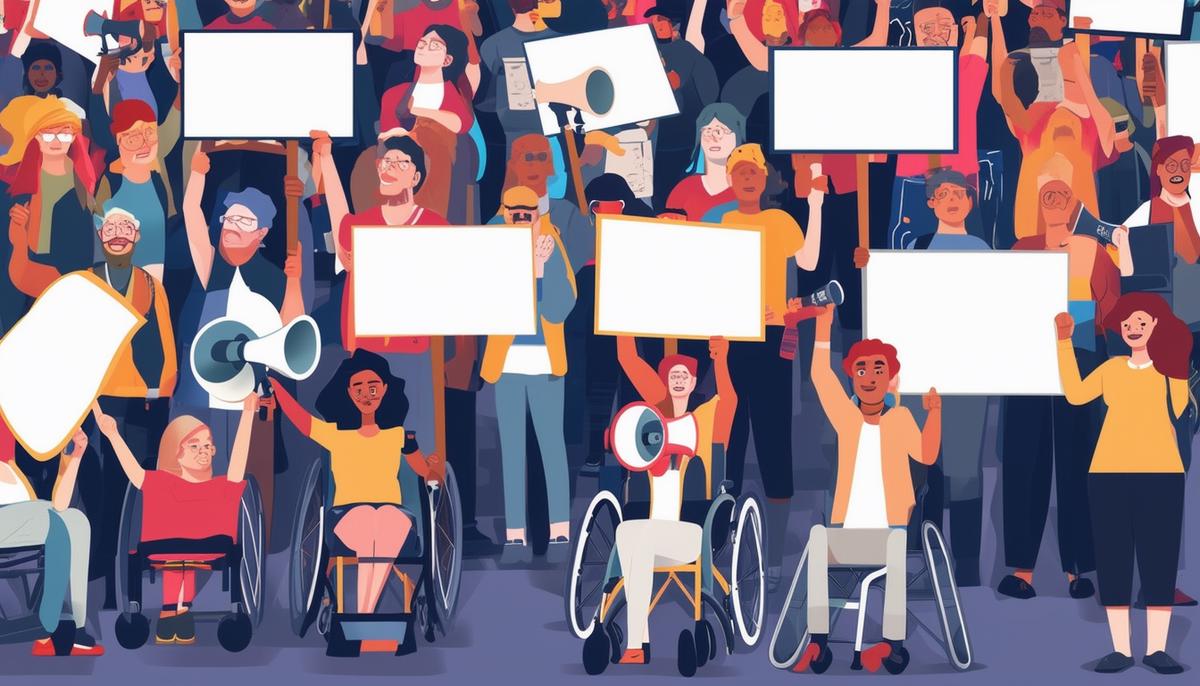
- Public demonstrations
- Campaigns to prioritize disability rights on legislative agendas
- Forging alliances with lawmakers and policymakers
Policy initiatives focus on enforcing legal protections against discrimination and ensuring equitable access to services in health care, education, and employment. Recent efforts have incorporated intersectional approaches, recognizing the compounded disadvantages faced by marginalized groups within the disability community.
Advocacy groups also work to reshape public perception, recasting disability as a rich aspect of human diversity. Through education and public awareness campaigns, they aim to dismantle stereotypes and elevate disabled voices.
Ongoing efforts address issues like healthcare access, economic security, and employment equality. The call for a living wage, increased accessibility in public spaces, and dismantling institutional biases within the justice system remain at the forefront of the disability rights agenda.
Future Directions for Disability Justice
The future of disability justice is marked by emerging trends that promise to redefine inclusivity and equal rights. Central to this vision is the integration of disability perspectives within broader social justice frameworks.
Key areas of focus:
- Technology: Innovations in digital accessibility and assistive technologies offer unprecedented opportunities for enhanced independence and engagement.
- Education: Teaching future generations the value of diversity and inclusion from a young age lays the groundwork for sustainable and systemic change.
- Intersectional integration: Embracing the principles of disability justice to form the scaffolding of an equitable society where all individuals can thrive.
Stakeholders at all levels are tasked with the responsibility to design and champion a future where disability inclusion is seamlessly integrated into society. This renewed commitment to equality, coupled with technological advances, stands on the precipice of meaningful change towards a more inclusive society.

Disability rights are an integral part of the broader social justice movement, emphasizing that true equality is achieved when every individual's dignity and rights are acknowledged and respected. The journey towards this goal is ongoing, urging us to remain committed to advocacy and policy changes that foster an inclusive society for all.
- Winter M. Quoted in: National Park Service. Disability History: The Disability Rights Movement. U.S. Department of the Interior; 2020.
- New Disabled South. Our Story. New Disabled South; 2023.
- Ford Foundation. Disability Inclusion at Ford. Ford Foundation; 2023.