As the landscape of voting laws shifts across the United States, the changes are poised to impact how citizens participate in upcoming elections. From restrictive measures to progressive reforms, these legislative adjustments will shape the democratic process in significant ways.
Recent Legislative Changes
Election laws are being reshaped across the United States, setting the stage for how millions will engage in democracy come 2024. In 2023, 14 states passed 17 restrictive voting laws, with mail voting taking the hardest hit. North Carolina's new law shortens the return period for mail ballots, eliminates ballot drop boxes, and complicates same-day registration. Mississippi criminalized third-party assistance in returning mail ballots, impacting voters with disabilities. Florida tightened regulations on groups registering new voters, while Idaho made it harder for students to vote by removing student IDs as valid identification.
Some states have introduced criminal penalties for routine errors by election workers, creating a challenging environment for those managing elections. Arkansas now makes it a misdemeanor to give an unsolicited mail ballot or application to a voter. In Florida, there's a law facilitating prosecution of people with past convictions who misregister due to confusion about their eligibility.
Progressives are countering with laws aimed at expanding voting rights. In total, 23 states passed 53 expansive laws in 2023. Michigan enacted 12 new laws, broadening voter registration options, simplifying mail ballot applications, and permitting online requests for mail ballots. Connecticut and New York expanded mail ballot access, while New York allowed voters to apply online for absentee ballots.
California, Connecticut, Minnesota, and Washington passed sweeping pro-voter laws. California broadened access to absentee voting, making it easier for all registered voters to vote by mail. Minnesota and Washington worked on extending early voting and same-day registration.
Gubernatorial vetoes also played a key role in this legislative landscape. Arizona's governor vetoed bills requiring voters to drop off mail ballots by the Friday before Election Day unless opting for in-person voting. Wisconsin's governor blocked restrictive bills, including one narrowing the definition of "indefinitely confined."
States like Wisconsin and Virginia are battlegrounds for legislative tug-of-war. Wisconsin, with 15 restrictive and three interference bills carried over, saw significant movement in its legislature, including proposals to dissolve the Wisconsin Elections Commission.
With legislators pre-filing and carrying over bills, the ground remains fertile for future actions. Florida and Missouri are likely to continue their restrictive trends, while states like South Carolina may push forward with expansive efforts like increasing early voting hours and registration opportunities.
Impact of Restrictive Voting Laws
Restrictive voting laws significantly impact voter turnout and access, particularly for marginalized communities. These laws create hurdles that can discourage or prevent engagement in the democratic process.
Limitations on mail voting, such as North Carolina's recent changes, exacerbate difficulties for:
- Those with limited mobility
- Rural residents
- People juggling multiple jobs or caregiving responsibilities
This disproportionately affects low-income communities. Mississippi's criminalization of third-party assistance in returning mail ballots targets voters who require additional support, such as those with disabilities or language barriers.
Stricter ID requirements represent another significant barrier. Florida's restrictions on voter registration groups make it challenging to register first-time voters, particularly students and low-income individuals. In Idaho, removing student IDs as valid identification essentially disenfranchises college-aged voters who may find it difficult to obtain alternative forms of ID.
The criminal penalties for election workers add another layer of difficulty. Laws like those introduced in Georgia and South Dakota, which impose severe consequences for routine errors, deter individuals from seeking these essential roles. This chilling effect can lead to longer lines, errors in processing, and ultimately, reduced access for voters.
The compounded restrictions are not just procedural nuisances but systematic obstructions. For communities already grappling with socio-economic challenges, these laws are akin to an electoral blockade. They hinder the convenience and feasibility that other voters take for granted, such as secure mail-in voting, straightforward voter registration, and accessible polling stations.
Addressing these barriers requires a conscientious and sustained effort. Laws need to be scrutinized, challenged, and, if necessary, overturned to ensure every citizen has an equal opportunity to participate in the democratic process. Ensuring accessibility to this right for everyone, particularly the marginalized and disenfranchised, is crucial to fostering a more equitable society.

Efforts to Expand Voting Access
Progressive states are leading the way toward equitable voting access through innovative reforms such as automatic voter registration (AVR), early voting, same-day registration, and online registration. These initiatives are yielding significant benefits, streamlining the electoral process, and bringing more citizens into the fold of democratic participation.
Automatic voter registration has emerged as a game-changer in expanding voter access. AVR systems generally work by automatically registering eligible citizens to vote when they interact with government agencies, such as the Department of Motor Vehicles, unless they opt out. Michigan has been a forerunner in implementing AVR, boasting impressive results: since enactment, voter registration rates have surged, highlighting the convenience and efficacy of this policy.
Early voting is another critical reform aimed at enhancing voter access, providing people with the flexibility to cast their ballots ahead of Election Day. States like Minnesota and Wisconsin have championed this cause, instituting policies that allow voting to commence weeks before the official election date. Early voting mitigates the constraints of a single voting day, accommodating those with inflexible schedules, long work hours, or other commitments.
Same-day registration represents another significant stride toward inclusive democracy. This policy allows eligible voters to register and vote on the same day, eliminating the sometimes arbitrary and burdensome deadlines that can disenfranchise people. Connecticut, famously a proponent of same-day registration, has reported substantial boosts in voter engagement, particularly during high-stakes elections.
Online registration, as evidenced in states like New York and Colorado, offers a modern, user-friendly approach to voter registration. This reform allows eligible voters to complete their registration online, accessible via computers, tablets, and smartphones. The ease and rapidity of online registration have propelled significant upticks in voter sign-ups, particularly among tech-savvy younger demographics and those residing in rural and underrepresented areas.
Collectively, these efforts and reforms symbolize a broader commitment to upholding democratic ideals and ensuring that every eligible American can exercise their right to vote without undue barriers. The positive outcomes observed—from heightened voter registration and turnout rates to more streamlined and efficient voting processes—offer a robust case for nationwide adoption.

Role of Advocacy Groups
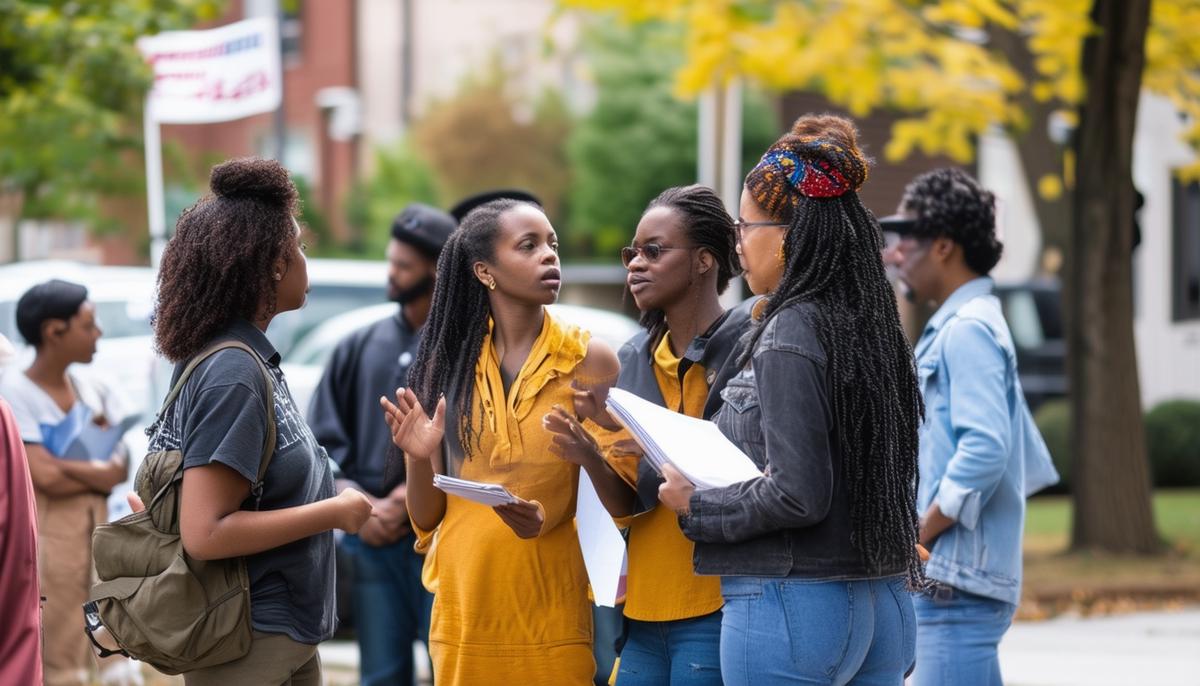
Advocacy groups like Black Voters Matter (BVM) play an instrumental role in expanding voting rights and fostering greater civic participation. BVM exemplifies the impact of grassroots organizing, voter education, and policy advocacy in ensuring that marginalized communities have an equal voice in the democratic process.
One of BVM's primary strategies is voter education, clarifying the electoral process for communities that have been historically disenfranchised. Through workshops, informational campaigns, and community events, BVM educates citizens on:
- Their voting rights
- The importance of their vote
- Specifics of voter registration and election procedures
Policy advocacy forms another cornerstone of BVM's work. The organization lobbies for laws and reforms that expand voter access and protect voting rights. This includes advocating for policies like automatic voter registration, expanded early voting, and the restoration of voting rights for formerly incarcerated individuals.
At the grassroots level, BVM partners with local organizations, churches, and community leaders to amplify their reach and mobilize voters directly. By focusing on building long-term community power, rather than just winning elections, BVM ensures sustained engagement among Black voters. The organization trains local activists, funds community programs, and conducts door-to-door canvassing to connect with voters on a personal level.
The power of these grassroots efforts was on full display during key electoral moments, such as the 2020 presidential election and the Georgia Senate runoffs. BVM's organizing and mobilizing efforts significantly contributed to record-breaking voter turnout among Black voters, which proved crucial in the election outcomes.
BVM's role extends to addressing underlying social issues that affect voter turnout and engagement. They advocate for:
- Economic justice
- Criminal justice reform
- Educational improvements
By tackling issues like voter ID laws, disenfranchisement due to criminal records, and barriers to convenient voting options, BVM addresses the broader social context that impacts voter engagement.
The impact of these advocacy efforts is transformative, particularly in states with a history of voter suppression. By empowering citizens with knowledge and resources, BVM and similar groups work to close the racial turnout gap exacerbated by restrictive voting laws. They remind marginalized communities that their voices matter and that collective action can lead to meaningful change.
The ongoing battle over voting laws is more than a political struggle; it's a fight for the very essence of democracy. Every legislative change influences who gets to have a voice. Staying informed and engaged is crucial as we progress through these pivotal moments in our electoral history.
- Brennan Center for Justice. Voting Laws Roundup: December 2023. New York University School of Law; 2023.
- Black Voters Matter. About Us. Black Voters Matter Fund; 2023.
- American Constitution Society. Black Voters Matter to Receive 2024 Progressive Champion Award. ACS; 2023.