
Global Vaccination Efforts
Vaccination equity is a critical global health imperative. The WHO set an ambitious target for 70% global vaccination coverage by mid-2022, requiring extraordinary efforts worldwide.
The COVID-19 Vaccine Delivery Partnership, led by the WHO, UNICEF, and Gavi, works to address low-coverage countries. Local teams tackle daily challenges while agencies like the World Bank provide overarching support.
Strong leadership is crucial for effective vaccine rollouts. Country leaders are urged to prioritize vaccinating:
- Healthcare workers
- The elderly
- Those with underlying conditions
While wealthy nations have surplus vaccines, others struggle with shortages. The G7's pledge to donate 1 billion doses falls short of the WHO's estimated 11 billion needed. A TRIPs waiver could enable local production in low-resource nations.
Booster uptake faces challenges like healthcare provider shortages and uneven community resources. The CDC's Partnering for Vaccine Equity program invests in local outreach to underserved areas.
Health equity requires ongoing advocacy and action. Each vaccine administered is a step towards overcoming the health crisis and creating a fairer world.

Challenges in Vaccine Distribution
Vaccine distribution faces several key challenges:
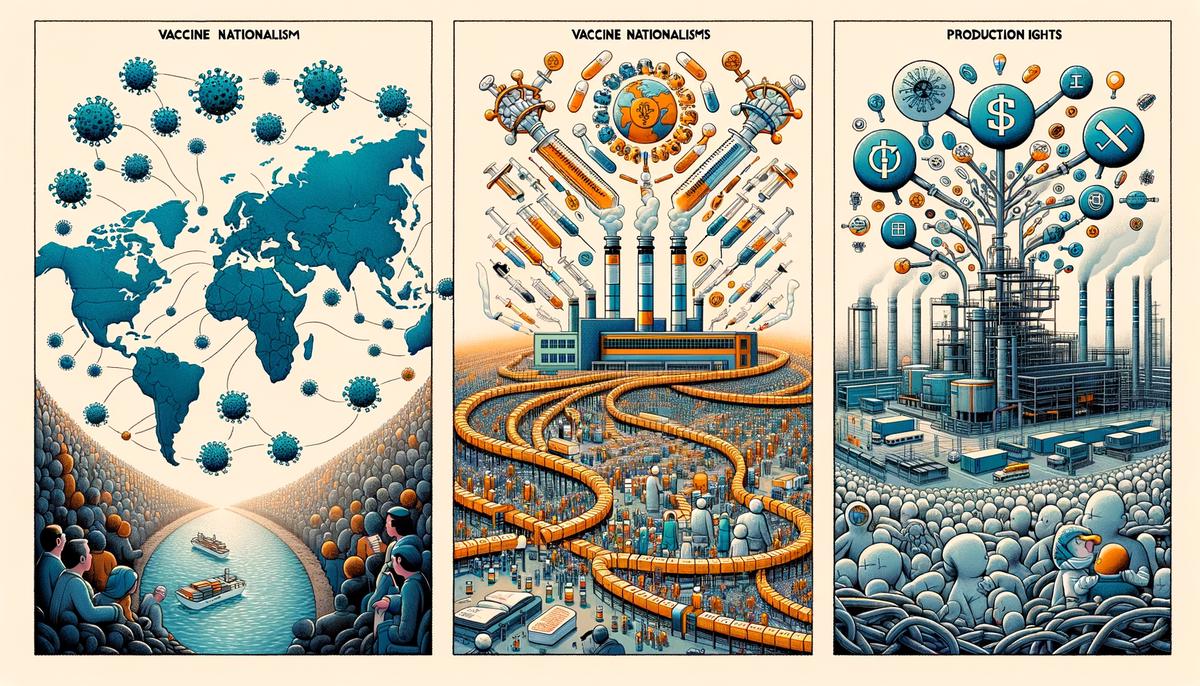
- Vaccine nationalism
- Supply chain issues
- Production rights constraints
Vaccine nationalism, where some nations hoard supplies, undermines global health efforts and perpetuates inequity. This self-centered approach leads to a fragmented response, leaving less fortunate countries struggling to protect their populations.
The global supply chain is vulnerable to disruptions from geopolitical tensions, trade barriers, and raw material shortages. Low-income countries often face delayed shipments and incomplete orders, exacerbating their struggles.
A Trade-Related Aspects of Intellectual Property Rights (TRIPs) waiver could allow countries with manufacturing potential to produce vaccines independently. This strategy could decentralize production, democratize access, and reduce reliance on wealthier nations.
Addressing these issues requires a shift from charity to solidarity. Increased transparency and cooperation among nations and stakeholders is essential. Engaging in open dialogues and constructing equitable agreements can help eliminate bottlenecks in distribution.
By confronting vaccine nationalism, reinforcing supply networks, and advocating for TRIPs waivers, we can work towards a more equitable global health landscape.
Health Equity and Social Determinants
Health equity science illuminates the social determinants that influence vaccination outcomes. The Social Vulnerability Index (SVI) is a critical tool for identifying vulnerabilities and guiding public health interventions.
Disparities in vaccination coverage across demographic and geographic lines stem from systemic inequities, including:
- Racial and ethnic minority status
- Rural isolation
- Housing instability
This data helps policymakers target interventions where they are most needed.
Housing and transportation significantly impact vaccination accessibility. Rural areas face challenges due to fewer vaccination sites and limited public transit. Urban areas present different obstacles, particularly for seniors or families in crowded housing conditions.
Racial and ethnic disparities further complicate these factors. In neighborhoods with a history of health inequities, trust in health authorities may be low. Engaging community leaders and using culturally-appropriate interventions can help overcome these barriers.
The SVI assesses vulnerabilities across themes like socioeconomic status and community resilience, guiding resource allocation. It enables decision-makers to design initiatives tailored to community identities.
Achieving health equity in vaccination requires bridging gaps with tangible, empathy-driven actions. By leveraging SVI data and implementing systemic changes, we can work towards a more equitable health system where disparities diminish and health as a human right flourishes.

Community-Based Approaches
Community-based approaches are crucial for vaccination equity, connecting diverse cultural landscapes with public health campaigns. The CDC's Partnering for Vaccine Equity (P4VE) program supports community-based organizations (CBOs) that are deeply rooted in their locales.
These organizations possess intimate knowledge of:
- Cultural norms
- Languages
- Community trust dynamics
Empowering CBOs with resources turns them into beacons of hope, capable of dispelling vaccine hesitancy through trust-based relationships.
The P4VE program's $156 million investment recognizes the importance of trusted messengers within communities. It emphasizes linguistically and culturally resonant communication to ensure each community's nuances are understood and respected.
Effective initiatives consider life context and accessibility. Mobile vaccination units for rural areas and community-led transportation for seniors embody equitable access. Local community leaders and CBOs hold not just the arm of the person receiving the vaccine, but their story, heritage, and lived experiences.
Community-based strategies are replicable and adaptable, paving the way for future public health initiatives. The synergy between local action and national support breathes new life into vaccination efforts.
This approach fosters connections, understanding, and the resolve that health equity is everyone's right. Through community-based efforts, this conviction reverberates through every street, town, and city, forging a healthier, more inclusive future for all.

Vaccination equity requires global cooperation and leadership. Each vaccine administered is a step toward a fairer world, where health is a right accessible to all, regardless of borders or circumstances.
- World Health Organization. COVID-19 Vaccine Delivery Partnership.
- Centers for Disease Control and Prevention. Partnering for Vaccine Equity (P4VE) Program.
- World Health Organization. Social Vulnerability Index (SVI).
- Urban Institute. Partnering for Vaccine Equity: Experiences of Community-Based Organizations.