
Environmental justice stands at the intersection of societal fairness and ecological stewardship, advocating for equal rights to clean air and water across diverse communities. This concept challenges us to consider how geography, race, and economic status intertwine to shape the environmental experiences of urban and rural populations alike.
Defining Environmental Justice
Environmental justice emerged at the crossroads of environmentalism and civil rights. It's a fight against pollutants that disproportionately affect certain communities. Inspired by the civil rights movement, this framework insists that everyone has a right to a healthy environment, regardless of race, color, or income.
At its core, environmental justice is about fair treatment in environmental matters. It ensures that all people have a voice in decisions that impact their health and surroundings. Environmental racism, a related concept, highlights discriminatory practices in housing, employment, and urban planning that result in communities of color bearing a higher burden of environmental hazards.
Both urban and rural areas face distinct environmental justice challenges:
- Urban residents often contend with industrial pollution and poor air quality
- Rural communities may struggle with pesticide exposure and contaminated water from nearby industries
The relationship between urban and rural areas can be unbalanced, with cities benefiting from rural resources while often exporting their environmental problems to less populated regions.
The environmental justice movement calls for addressing pollution and examining the structures that create environmental inequities. It brings together activists, policymakers, and community members to work towards a world where environmental benefits and burdens are distributed fairly.
Urban Environmental Injustice
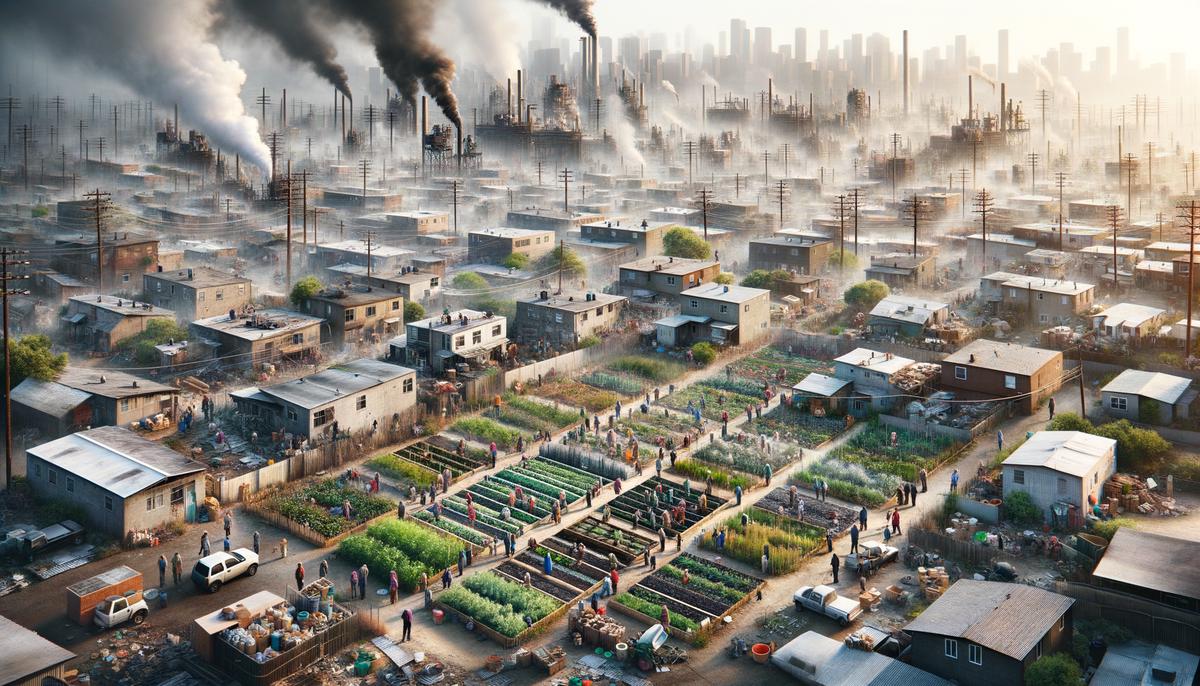
Urban areas, particularly those occupied by communities of color and low-income families, face significant environmental injustices. Air pollution from nearby highways and factories disproportionately affects these neighborhoods, leading to higher rates of respiratory issues and other health problems. Water quality is also a concern, with aging infrastructure contributing to contamination, as exemplified by the crisis in Flint, Michigan.
Zoning laws play a crucial role in perpetuating environmental injustice. These regulations often reinforce societal divides, allowing industrial sites to be placed near residential areas in disadvantaged communities. This proximity to pollution sources translates to higher health risks for residents already facing other socioeconomic challenges.
The impact of these environmental burdens goes beyond physical health, affecting overall quality of life through constant noise pollution and lack of access to green spaces. Despite these challenges, urban communities demonstrate resilience through grassroots efforts and advocacy. Local leaders and residents work tirelessly to demand action and push for policies that prioritize environmental equity.
Addressing urban environmental injustice requires a multifaceted approach. It involves:
- Strong advocacy
- Vigilant oversight of policymakers
- A commitment to ensuring that economic development does not come at the expense of community health
The goal is to create urban environments where all residents, regardless of their background or zip code, can thrive in clean and safe surroundings.
Rural Environmental Injustice
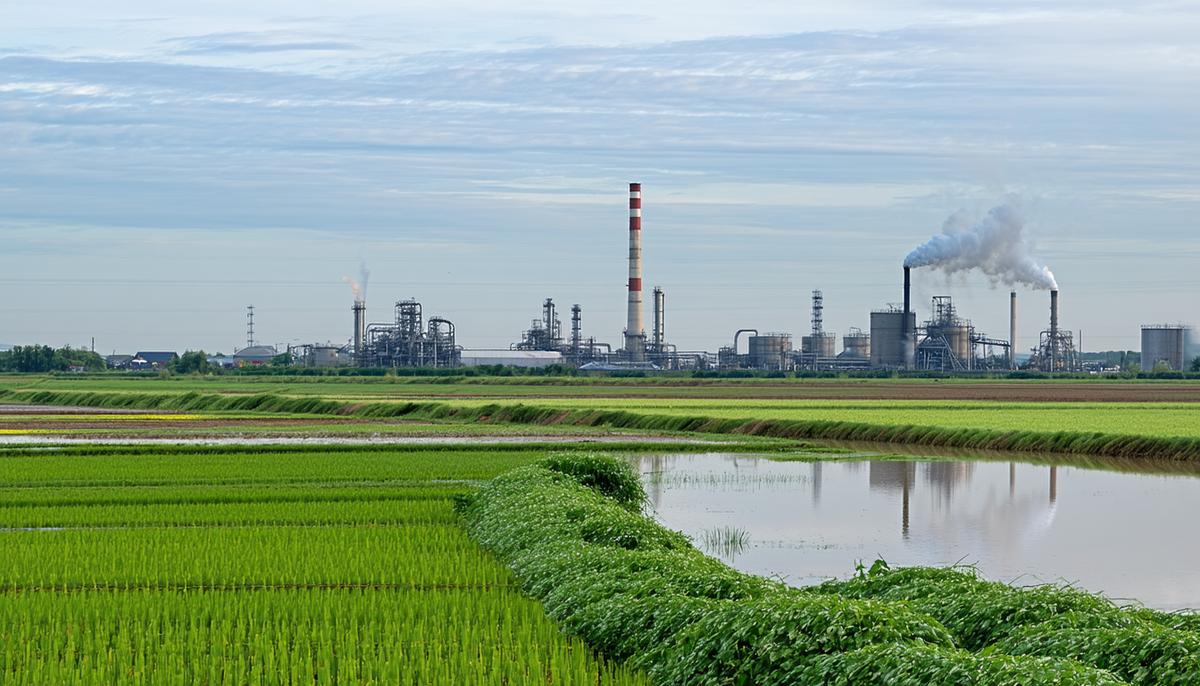
Rural communities face their own set of environmental challenges, often overlooked in the broader conversation about environmental justice. Industrial agriculture, while economically significant, poses substantial environmental risks. The extensive use of pesticides and fertilizers contaminates soil and water sources, affecting the health of rural residents.
Water pollution is a significant concern in rural areas. Runoff from farms carries nitrates and other pollutants into groundwater, compromising drinking water quality. This issue is compounded by the lack of resources and infrastructure to effectively address these environmental hazards.
Race and class intersect with environmental issues in rural America, with communities of color and low-income populations bearing a disproportionate burden. These groups often lack the financial means and political influence to demand change or resist the placement of hazardous facilities in their areas.
"Environmental justice is a seldom-used term in rural America, even though disproportionate environmental impacts and burdens are just as damaging there as they are in urban areas."
The relationship between urban and rural areas can exacerbate environmental injustice. Rural regions sometimes become dumping grounds for urban waste or host industries that primarily benefit urban consumers, such as industrial livestock operations. This dynamic creates a cycle where rural communities bear the environmental costs of urban consumption.
Despite these challenges, rural communities demonstrate resilience and innovation in addressing environmental issues. They form networks, collaborate with researchers and advocates, and develop local solutions to systemic problems. Addressing rural environmental injustice requires a comprehensive approach that considers economic systems, historical injustices, and current policies. It calls for sustainable agricultural practices, equitable resource distribution, and ensuring that rural voices are heard in environmental decision-making processes.
Comparative Analysis: Urban vs Rural
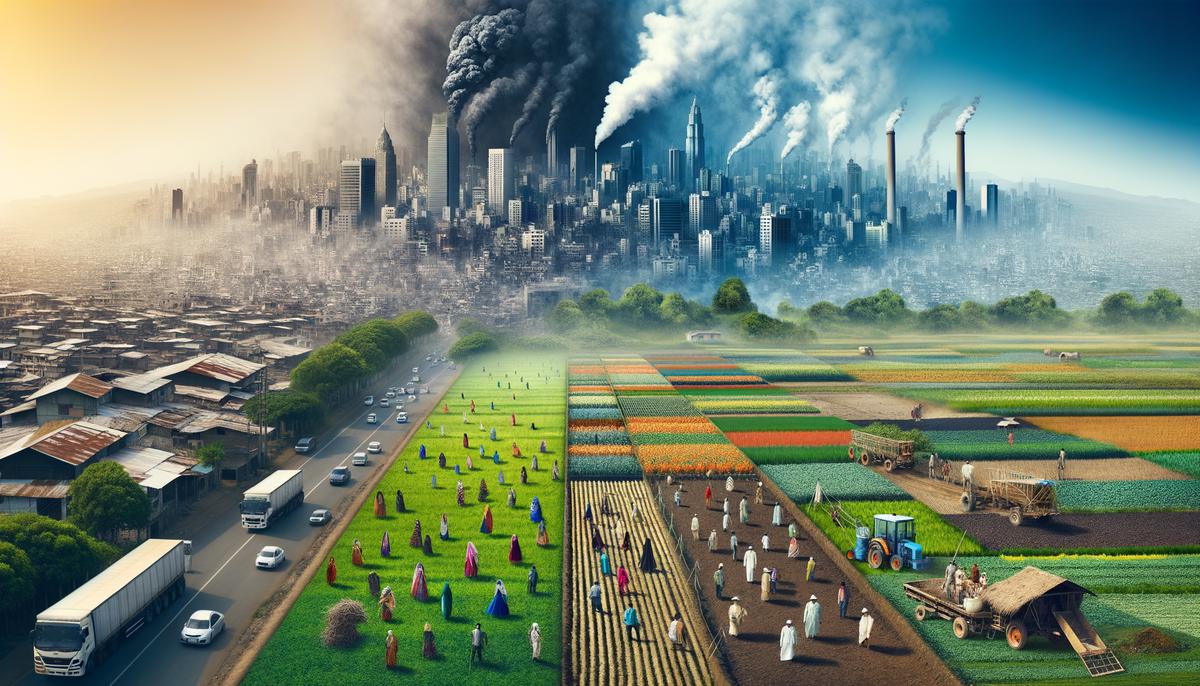
Urban and rural areas face distinct yet interconnected environmental justice challenges, shaped by geography, socio-economic status, and race. Urban centers contend with concentrated pollution from industrial activities and dense populations, while rural communities grapple with the environmental impacts of industrial agriculture and resource extraction.
In cities, marginalized communities often bear the brunt of environmental hazards due to historical segregation and discriminatory zoning practices. Rural areas, while seemingly less polluted, face challenges related to pesticide use, water contamination, and the degradation of natural resources.
Socio-economic status plays a crucial role in both settings:
- In urban areas, poorer communities have limited resources to fight against environmental injustices.
- Rural regions often lack the infrastructure and economic alternatives to resist environmentally harmful industries or practices.
Race intersects with these factors, amplifying disparities in both contexts. Communities of color in urban and rural areas frequently face higher environmental burdens, reflecting long-standing patterns of systemic discrimination.
Despite their differences, urban and rural environmental justice issues share common threads. Both face challenges where economic opportunities are often tied to environmental degradation. Additionally, there's often a cyclical relationship where rural areas bear the environmental costs of urban consumption and waste.
Addressing these issues requires a comprehensive approach that recognizes the unique challenges of each setting while acknowledging their interconnectedness. This includes:
- Fostering cross-geographical coalitions
- Sharing successful strategies
- Developing policies that ensure environmental protections and economic opportunities are equitably distributed across urban and rural landscapes
Policy and Legislative Efforts
Policy and legislative efforts are addressing environmental injustice across urban and rural areas, combining federal and state initiatives into a cohesive approach. This work aims to correct historical oversights and amplify the voices of marginalized communities in environmental decision-making.
The Environmental Justice for All Act, led by Congressman Raúl Grijalva, is central to these efforts. This legislation ensures low-income communities, Indigenous groups, and communities of color actively participate in shaping their environmental futures. The Act aims to strengthen the Civil Rights Act, asserting that everyone deserves clean air, water, and a voice in preserving these resources. It emphasizes transparency and public involvement, inviting traditionally excluded groups into the decision-making process.
The Act also acknowledges the link between environmental and economic justice. By aiding communities in transitioning from greenhouse gas-dependent economies, it promotes green jobs and sustainable livelihoods, connecting environmental sustainability with economic stability.
Federal agencies like the Environmental Protection Agency (EPA) are implementing these goals. The EPA's recent allocation of funds to communities most affected by environmental disparities showcases its commitment. One million dollars, distributed to ten communities under the Environmental Justice Showcase Communities effort, represents an investment to improve air quality, waste management, and overall environmental health.
EPA's regional projects in places like Bridgeport, Connecticut, and the North Shore of Staten Island, New York, illustrate the multi-faceted approach needed to address local environmental injustices. These showcase projects emphasize collaboration, uniting government, communities, and organizations to confront environmental inequities.
State-Level Progress
At the state level, progressive policies and local government actions are essential. States like Vermont have made significant progress in ensuring all voices are heard through legislative frameworks prioritizing climate resilience for overburdened communities. State governments serve as innovation hubs where creative solutions can develop, complementing federal efforts and creating a foundation for national movements.
Despite challenges, these legislative and policy efforts represent the potential for a more equitable future. Through strategic policies, dedicated funding, and inclusive frameworks, these measures guide the way forward, ensuring continued progress towards environmental equity.

Environmental justice demands a future where all communities, regardless of their location or demographics, can thrive in a healthy environment. It calls for a unified effort to address and rectify long-standing disparities, ensuring that equity becomes the foundation upon which progress is built.